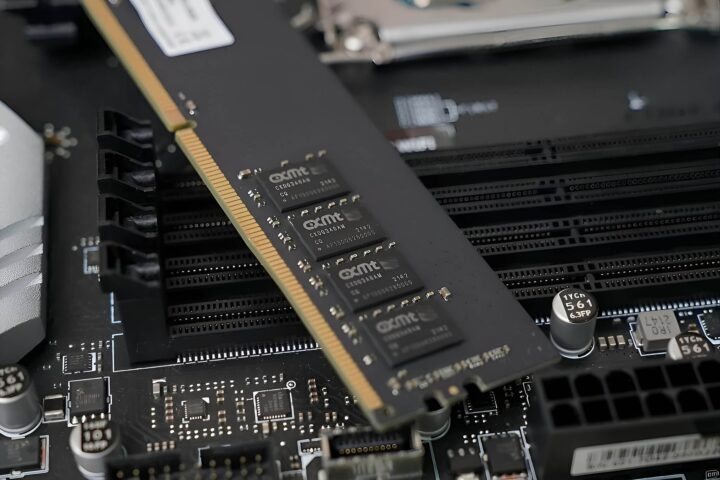
Desktop PCs **What is CXMT RAM? Is DDR5 cheaper than Samsung and SK Hynix?** When building a high-performance PC or upgrading a workstation, memory (RAM) is a critical component that often dictates overall system stability and speed. While industry giants like Samsung and SK Hynix have long dominated the market, a new player has been gaining significant traction: CXMT. But what exactly is CXMT RAM, and does its emergence mean you can expect lower prices for DDR5 modules compared to the established leaders? ### Understanding CXMT RAM CXMT (ChangXin Memory Technologies) is a Chinese manufacturer specializing in DRAM (Dynamic Random Access Memory) technology. Unlike many other brands that simply assemble components, CXMT is a true manufacturer of memory chips. In the hierarchy of the semiconductor industry, CXMT has positioned itself as a rising force, particularly in the production of DDR4 and, more recently, DDR5 memory. While Samsung and SK Hynix (along with Micron) represent the "Big Three" that control the vast majority of the global market share, CXMT is carving out a niche by scaling up its production of high-density memory chips. ### DDR5 Price Comparison: CXMT vs. Samsung and SK Hynix The core question for consumers and system integrators is whether choosing CXMT over Samsung or SK Hynix results in significant cost savings, especially with the transition to the DDR5 standard. **1. The Competitive Landscape** Samsung and SK Hynix benefit from massive economies of scale and advanced manufacturing processes that have been refined over decades. Their chips are often considered the industry gold standard for reliability and high-frequency stability. However, this premium positioning often comes with a higher price tag. **2. The CXMT Value Proposition** As CXMT expands its manufacturing capabilities, particularly for DDR5, it aims to compete on price. By optimizing its production lines to target the mainstream and mid-range markets, CXMT can offer DDR5 modules that are more budget-friendly than those utilizing Samsung or SK Hynix dies. **3. Is it actually cheaper?** In the current market, the answer is generally yes. When looking at the raw cost of DDR5 modules, products utilizing CXMT chips often sit at a lower price point than those utilizing Samsung or SK Hynix. This makes CXMT an attractive option for: * **Budget-conscious builders:** Users looking to maximize performance-per-dollar. * **Mass-market hardware:** Manufacturers of entry-level laptops and desktop systems where cost-efficiency is paramount. ### The Trade-off: Price vs. Provenance While CXMT offers a clear price advantage, the decision isn't purely about the bottom line. * **Samsung and SK Hynix** are often preferred by enthusiasts and professionals who require extreme overclocking headroom or mission-critical stability, as their chips have extensive testing and a long-standing reputation in high-end computing. * **CXMT** is increasingly becoming a viable, cost-effective alternative for standard computing tasks, providing a way to access the high bandwidth of DDR5 without the "brand premium" associated with the industry leaders. ### Conclusion CXMT is no longer just a name to watch; it is a functional player in the global memory market. For those looking to build a DDR5-based system, CXMT represents a legitimate way to reduce costs. However, whether the savings are worth it depends on your specific needs: if you are building a budget-friendly machine, CXMT is a strong contender; if you are chasing the absolute limits of stability and speed, the established giants like Samsung and SK Hynix remain the benchmark. 08/06/2026 · 4 min read