


News

Tips & Tricks

**Laptop SSD 1TB: Why You Only See 931GB and Who Should Upgrade Preemptively** If you’ve recently purchased a laptop with a 1TB SSD, you may have noticed something frustrating: your operating system reports a total capacity of only about 931GB. Before you assume you’ve been scammed or received a defective drive, there is a technical explanation for this discrepancy. ### The Math Behind the "Missing" Space The difference between the advertised capacity and the usable space comes down to how manufacturers measure data versus how computers actually read it. **Manufacturers use Decimal (Base 10):** Storage manufacturers use the metric system to define capacity. In this system, 1 kilobyte (KB) is 1,000 bytes, 1 megabyte (MB) is 1,000,000 bytes, and so on. Therefore, to a manufacturer, 1TB is exactly 1,000,000,000,000 bytes. **Computers use Binary (Base 2):** Operating systems, such as Windows, calculate storage using the binary system. In this system, units are based on powers of 2. A kilobyte (technically a kibibyte) is 1,024 bytes, a megabyte is 1,048,576 bytes, and a gigabyte is 1,073,741,824 bytes. When you divide the manufacturer's 1,000,000,000,000 bytes by the computer's binary gigabyte (1,073,741,824), the result is approximately **931.32 GB**. This isn't "lost" space; it is simply a difference in how the measurement is calculated. ### Who Should Opt for a 1TB SSD from the Start? While a 512GB drive is sufficient for basic office work and web browsing, certain users will find a 1TB SSD essential for a smooth experience. **1. Content Creators and Video Editors** High-resolution video files (4K and beyond) consume massive amounts of storage. When you factor in the operating system, software applications, and the temporary "scratch disk" space required for editing, a 512GB drive can fill up almost instantly. **2. Gamers** Modern AAA titles are massive. It is no longer uncommon for a single game like *Call of Duty* or *Baldur's Gate 3* to occupy well over 100GB. If you plan on keeping a library of several high-end games installed simultaneously, 1TB is the baseline for a functional setup. **3. Power Users and Professionals** If your workflow involves large datasets, high-resolution photography, or heavy multitasking with multiple professional suites (like Adobe Creative Cloud), you need the headroom. A larger drive ensures that your system doesn't slow down as the drive nears its capacity limit. **4. Users Seeking Longevity** SSDs perform most efficiently when they are not completely full. Overfilling a drive can lead to decreased performance and can theoretically impact the drive's lifespan. Investing in 1TB upfront provides a "buffer" that keeps your laptop running efficiently for several years.

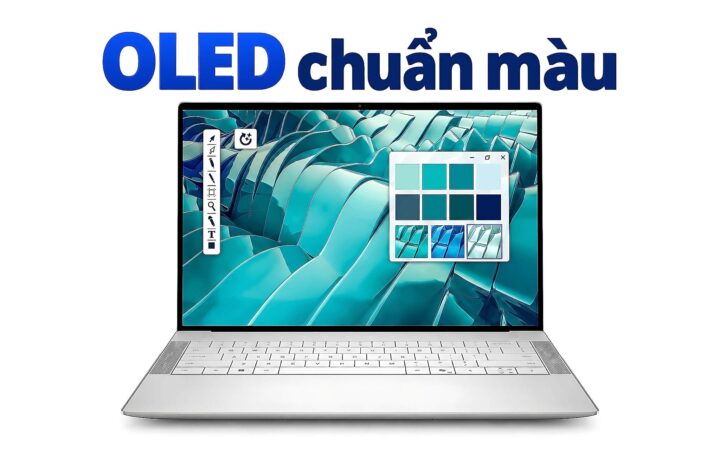
Ổ 512GB từng đủ cho phần lớn công việc văn phòng, nhưng một dự án video 4K, vài thư mục ảnh RAW hay ba tựa game AAA có…

Mina · 29/09/2026 · 12 min read
Unikey Và Evkey Trên Laptop - Cách Gõ Telex Mượt Và Sửa Mất Dấu
Tips & Tricks

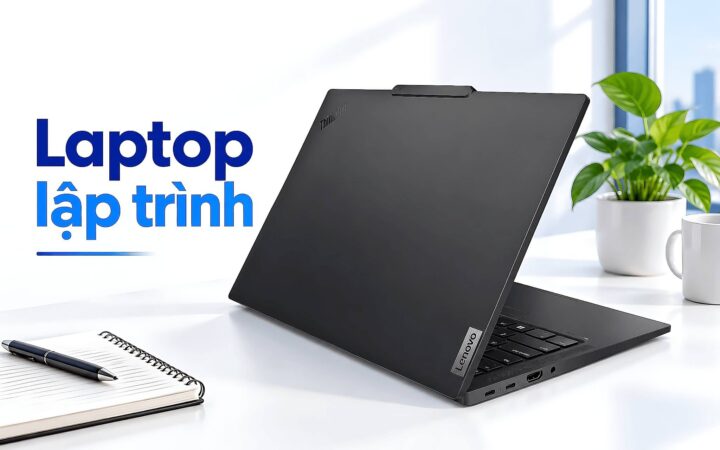
UniKey and EVKey on Laptops: How to Achieve Smooth Telex Typing and Fix Missing Accents For Vietnamese laptop users, the typing experience is defined by the software used to handle the complex Vietnamese tone system. Whether you are a student writing an essay or a professional coding or drafting emails, the choice between UniKey and EVKey can significantly impact your productivity. This guide explores how to optimize your Telex typing and resolve the common "missing accent" issues that plague many users. ### The Core Dilemma: UniKey vs. EVKey For years, UniKey has been the industry standard—a lightweight, reliable, and ubiquitous tool for Vietnamese input. However, as software ecosystems have evolved, EVKey has emerged as a popular alternative, specifically designed to address some of the long-standing technical friction points found in older input methods. While UniKey remains a staple due to its simplicity, EVKey has gained traction among power users for its ability to better handle modern web browsers and complex software environments where accents often fail to appear correctly. ### Mastering Smooth Telex Typing Telex is the most common input method for Vietnamese, relying on a combination of letters and numbers/keys to create tones and special characters. To ensure a seamless experience, consider the following: * **Consistent Input Methods:** Ensure your software is set strictly to "Telex." Mixing input methods or accidentally switching to VNI can lead to frustrating typos. * **Avoid Conflict:** One of the most common causes of "stuttering" or incorrect character placement is having multiple Vietnamese input methods running simultaneously. If you have both UniKey and EVKey installed, ensure only one is active at any given time. * **System-Level Conflicts:** On Windows, the built-in Vietnamese keyboard layout can sometimes clash with third-party software like UniKey or EVKey. For the smoothest experience, it is often best to set your Windows keyboard language to "English (US)" and let your specialized software handle the Vietnamese input. ### Troubleshooting the "Missing Accent" Problem There is nothing more frustrating than typing a full sentence only to realize the tone marks or special characters (like *ư* or *ơ*) failed to render. This "missing accent" bug is usually caused by one of three things: **1. Administrative Privileges** Many modern applications (such as web browsers, specialized design software, or games) run with elevated permissions. If your input method (UniKey/EVKey) is running with standard user permissions, it may not have the "authority" to inject characters into those high-level windows. * **The Fix:** Right-click your input method icon and select "Run as Administrator." This grants the software the necessary permissions to interact with all active windows. **2. Compatibility with Web Browsers and Modern Apps** Some users find that while UniKey works perfectly in Microsoft Word, it struggles in Google Chrome or certain specialized software. This is where EVKey often shines. EVKey includes specific features designed to improve compatibility with modern web-based applications and complex UI frameworks. **3. The "Double Character" or "Ghosting" Effect** Sometimes, instead of missing an accent, the software might double-type a character or fail to combine a tone correctly. This is often due to a conflict between the software's "Auto-correct" features and the input method's logic. * **The Fix:** Check the settings in your input method. Disable "Enable Unicode Clipboard" or "Auto-correct" if you notice the software is fighting against your natural typing rhythm. ### Summary For most users, UniKey remains a reliable, no-frills choice. However, if you frequently encounter issues where accents disappear in browsers or professional software, switching to EVKey and ensuring you are "Running as Administrator" is the most effective way to restore a smooth, uninterrupted typing workflow.

29/09/2026 · 13 min
Laptop 240Hz Chơi Game Bắn Súng - Chọn Gpu Nào Và Màn Oled Hay Ips
Tips & Tricks

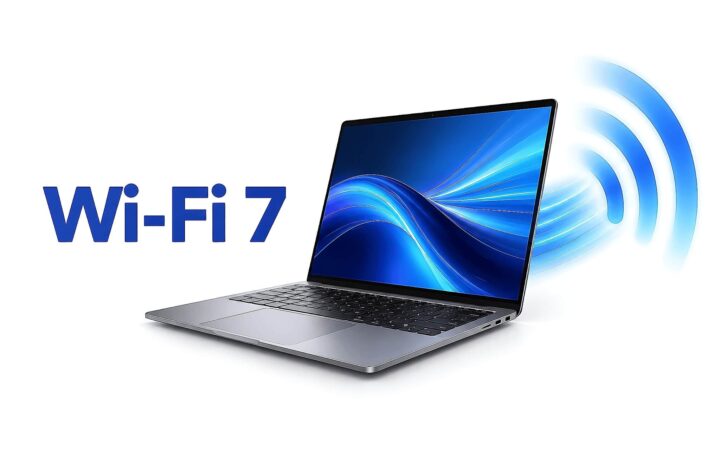
High-Refresh Gaming Laptops for FPS Titles: Choosing the Right GPU and Display Technology When you're playing fast-paced shooters like *Valorant*, *CS2*, or *Apex Legends*, every millisecond counts. To stay competitive, many gamers look toward laptops with 240Hz refresh rates to ensure the smoothest possible motion. However, a high refresh rate is only half the battle. To truly make the most of that 240Hz panel, you need to understand the interplay between your GPU and your display technology-specifically, whether you should opt for an IPS or an OLED panel. ### The GPU: The Engine Behind the Refresh Rate A 240Hz screen is only as good as the frames it receives. If your laptop's GPU cannot output 240 frames per second (FPS) at your chosen resolution, that high refresh rate is essentially wasted. For competitive shooters, the goal is high, stable frame rates. If you are playing at 1080p, a mid-range GPU like an NVIDIA GeForce RTX 4060 can often push the high frame rates necessary to saturate a 240Hz panel. However, if you intend to play at 1440p or higher, you will likely need to step up to an RTX 4070, 4080, or 4090 to maintain that 240Hz fluidity. When selecting a GPU for a high-refresh gaming laptop, prioritize raw performance and stability over extra features. In the world of FPS gaming, a consistent 240 FPS is far more valuable than a fluctuating 300 FPS that frequently dips during intense firefights. ### Display Technology: IPS vs. OLED Once you have the power to drive those frames, you have to decide how you want to see them. This is where the debate between IPS and OLED panels begins. #### IPS: The Reliable Standard IPS (In-Plane Switching) has long been the industry standard for gaming laptops. * **Pros:** IPS panels are highly reliable, offer excellent brightness, and-crucially for gamers-they are generally more resistant to "burn-in" (permanent image retention). They also tend to be more affordable, allowing you to allocate more of your budget toward a more powerful GPU. * **Cons:** Compared to OLED, IPS panels typically have lower contrast ratios and "black" levels that appear more like a dark gray. They also generally have slower response times, though high-end gaming IPS panels have narrowed this gap significantly. #### OLED: The Visual Powerhouse OLED (Organic Light Emitting Diode) technology has revolutionized laptop displays by allowing each individual pixel to turn off completely. * **Pros:** The primary advantage of OLED is its infinite contrast ratio and perfect blacks. Colors are incredibly vibrant, and the response times are nearly instantaneous, which can lead to extremely crisp motion in fast-moving scenes. * **Cons:** OLED panels can be more expensive. There is also the long-term concern of "burn-in," where static elements (like a game's HUD or a taskbar) can leave a permanent ghost image on the screen over time. Additionally, while OLEDs are great for motion, some users find the way they handle brightness fluctuations (PWM dimming) to be taxing on the eyes. ### The Verdict: Which is Right for You? The choice depends entirely on your priorities as a player. If you are a **hardcore competitive player** focused solely on climbing the ranks in *Counter-Strike* or *Valorant*, an **IPS panel** paired with a high-end GPU is often the most pragmatic choice. You get the reliability, the brightness, and the raw performance needed to maintain those high frame rates without worrying about screen longevity. If you are a **multimedia enthusiast** who plays shooters but also enjoys cinematic single-player games and watching high-quality content, **OLED** is the way to go. The visual immersion provided by OLED's contrast and color depth is unmatched, making it a premium experience for those who want their gaming sessions to look as stunning as they feel.

27/09/2026 · 11 min
Browse by topic
Chọn Laptop Amd Theo Nhu Cầu - Đọc Tên Chip Ryzen Trước Khi Mua Máy
Laptops · 26/09/2026 · 11 min read

Choosing an AMD Laptop: A Guide to Ryzen Processors Before You Buy When shopping for a laptop, the processor is the heart of the machine. For many users, the AMD Ryzen lineup offers a compelling alternative to Intel, often providing superior multi-core performance and integrated graphics efficiency. However, navigating the complex web of model numbers and suffixes can be daunting. To ensure you get the right machine for your specific needs, it is essential to understand how to read AMD Ryzen chip nomenclature before you make your purchase. ### Understanding the Ryzen Naming Convention AMD uses a standardized naming system that tells you exactly where a processor sits in the performance hierarchy. A typical Ryzen processor name consists of several key components: **1. The Brand (Ryzen)** This identifies the processor family. **2. The Generation (e.g., 5, 6, 7, or 8)** The first digit following "Ryzen" indicates the generation. Generally, a higher number represents a newer architecture with improved efficiency and features. For example, a Ryzen 7 7000 series chip is more recent than a Ryzen 7 5000 series chip. **3. The Segment (e.g., 3, 5, 7, or 9)** The second digit tells you the performance tier: * **Ryzen 3:** Entry-level, ideal for basic tasks like web browsing, streaming, and office work. * **Ryzen 5:** Mid-range, the "sweet spot" for students and general productivity. * **Ryzen 7:** High-performance, designed for heavy multitasking, photo editing, and gaming. * **Ryzen 9:** Enthusiast-grade, built for professional video editing, 3D rendering, and extreme gaming. **4. The Model Number (The remaining digits)** The final digits differentiate specific models within the same tier and generation. ### Decoding the Suffixes: The Most Important Part While the numbers tell you the tier, the letter at the end of the model name is perhaps the most critical piece of information for laptop buyers. This suffix indicates the processor's power consumption and intended use case. **U-Series (Ultra-Low Power)** Designed for thin-and-light ultrabooks. These chips prioritize battery life and portability over raw power. They are perfect for students or office professionals who need a machine that lasts all day during commutes and meetings. **HS/PS Series (High Performance / Slim)** These are high-performance chips optimized for thinner, more powerful laptops. They offer a balance between high-speed processing and thermal management, making them ideal for creative professionals and casual gamers who want a portable yet capable machine. **H/HX Series (High Performance / Extreme Performance)** These are the heavy hitters. Found in thick, powerful gaming laptops and mobile workstations, these chips prioritize maximum performance above all else. They consume more power and generate more heat, but they provide the muscle needed for intensive AAA gaming and professional-grade rendering. ### Matching the Chip to Your Needs To make an informed decision, you must align the processor's capabilities with your daily workflow: * **For Basic Productivity (Browsing, Word, Excel, Netflix):** A **Ryzen 3 or Ryzen 5 (U-series)** is more than sufficient. You will benefit most from a long-lasting battery and a lightweight design. * **For Multitasking and Content Creation (Large spreadsheets, Photoshop, light video editing):** Look for a **Ryzen 5 or Ryzen 7 (HS or U-series)**. This provides the extra cores needed to handle multiple demanding applications simultaneously without sacrificing too much portability. * **For Gaming and Professional Workloads (AAA Gaming, 4K Video Editing, 3D Modeling):** You should prioritize a **Ryzen 7 or Ryzen 9 (H or HX-series)**. These processors are designed to handle sustained, high-intensity workloads that would throttle a lower-power chip. By understanding these naming conventions, you can move past the marketing hype and select a laptop that matches your actual requirements, ensuring you don't overpay for power you won't use-or underpower yourself on a task that requires it.

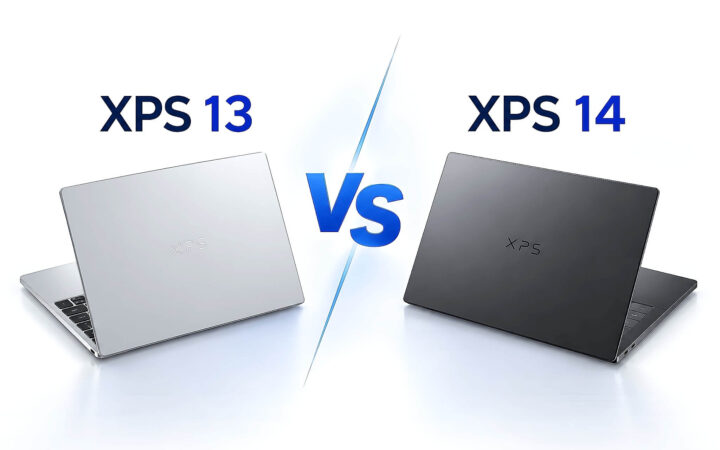
An AMD laptop from 2025 or 2026 could be a $950 office machine, a color-accurate OLED creative powerhouse, or a 64GB RAM…

Windows Bản Quyền Và Rủi Ro Kích Hoạt - Phân Biệt Oem Retail Volume
Tips & Tricks · 19/09/2026 · 13 min read

**Windows Licensing: Understanding the Risks of Activation and the Differences Between OEM, Retail, and Volume Licenses** When purchasing a new computer or upgrading an existing one, one of the most critical decisions a user faces is choosing the right Windows license. However, the market is often flooded with various activation methods, leading to confusion between legitimate licenses and risky workarounds. To navigate this landscape safely, it is essential to understand the fundamental differences between OEM, Retail, and Volume licenses, as well as the inherent risks of unauthorized activation. ### The Three Pillars of Windows Licensing To understand how Windows is distributed, we must first categorize the three primary licensing models: **1. Retail Licenses (FPP - Full Packaged Product)** Retail licenses are the most flexible option available to consumers. Typically sold as a standalone product (either in a physical box or as a digital download), a Retail license is tied to the user rather than the hardware. This means if you upgrade your PC or replace your motherboard, you can transfer the license to your new machine. It is the most expensive option, but it offers the highest level of mobility and long-term value. **2. OEM Licenses (Original Equipment Manufacturer)** OEM licenses are designed for hardware manufacturers (like Dell, HP, or Lenovo) to pre-install on computers at the factory. Unlike Retail versions, an OEM license is "locked" to the first motherboard it is activated on. If that motherboard fails or the computer is replaced, the license cannot be transferred to a new device. While this makes them more affordable, they are non-transferable and strictly tied to the specific hardware they were first activated on. **3. Volume Licenses (VL)** Volume licensing is intended for organizations, such as corporations or educational institutions, that need to deploy Windows across hundreds or thousands of devices. These licenses allow administrators to manage multiple installations through a single central key. Because these are designed for enterprise environments, they are not intended for individual consumer sale. ### The Risks of "Activation" and Unofficial Keys Because legitimate Retail and OEM keys can be expensive, a gray market has emerged involving "cheap" activation keys sold on various platforms. This is where significant risks arise. **The Danger of Unauthorized Activation** Many low-cost keys found online are actually Volume Licenses that have been illegally stripped from a corporation and sold to individuals. While the key might work initially, it violates Microsoft’s Terms of Service. The risks of using these unauthorized or "cracked" activation methods include: * **Security Vulnerabilities:** Using "activators" or "cracks" to bypass Windows activation is one of the most common ways malware, ransomware, and spyware are introduced into a system. These tools often require you to disable your antivirus, leaving your data completely exposed. * **License Deactivation:** Microsoft actively monitors for misused Volume Licenses. If a key is flagged as being used outside of its intended organizational scope, the activation can be revoked at any time, leaving your system unactivated. * **Lack of Support and Updates:** Unofficial or illegitimate licenses may not receive critical security updates or technical support from Microsoft, leaving your operating system vulnerable to new exploits. ### Summary Choosing the right Windows license is a balance between cost and flexibility. For users who plan to upgrade their hardware frequently, a **Retail** license is the best investment. For those buying a pre-built machine, **OEM** is the standard. However, users should remain highly cautious of suspiciously cheap keys; the perceived savings of an unauthorized license are often outweighed by the risks to system security and long-term stability.

A Windows key costing only a few dollars might activate successfully, but an "activated" status does not prove a license is valid.…