
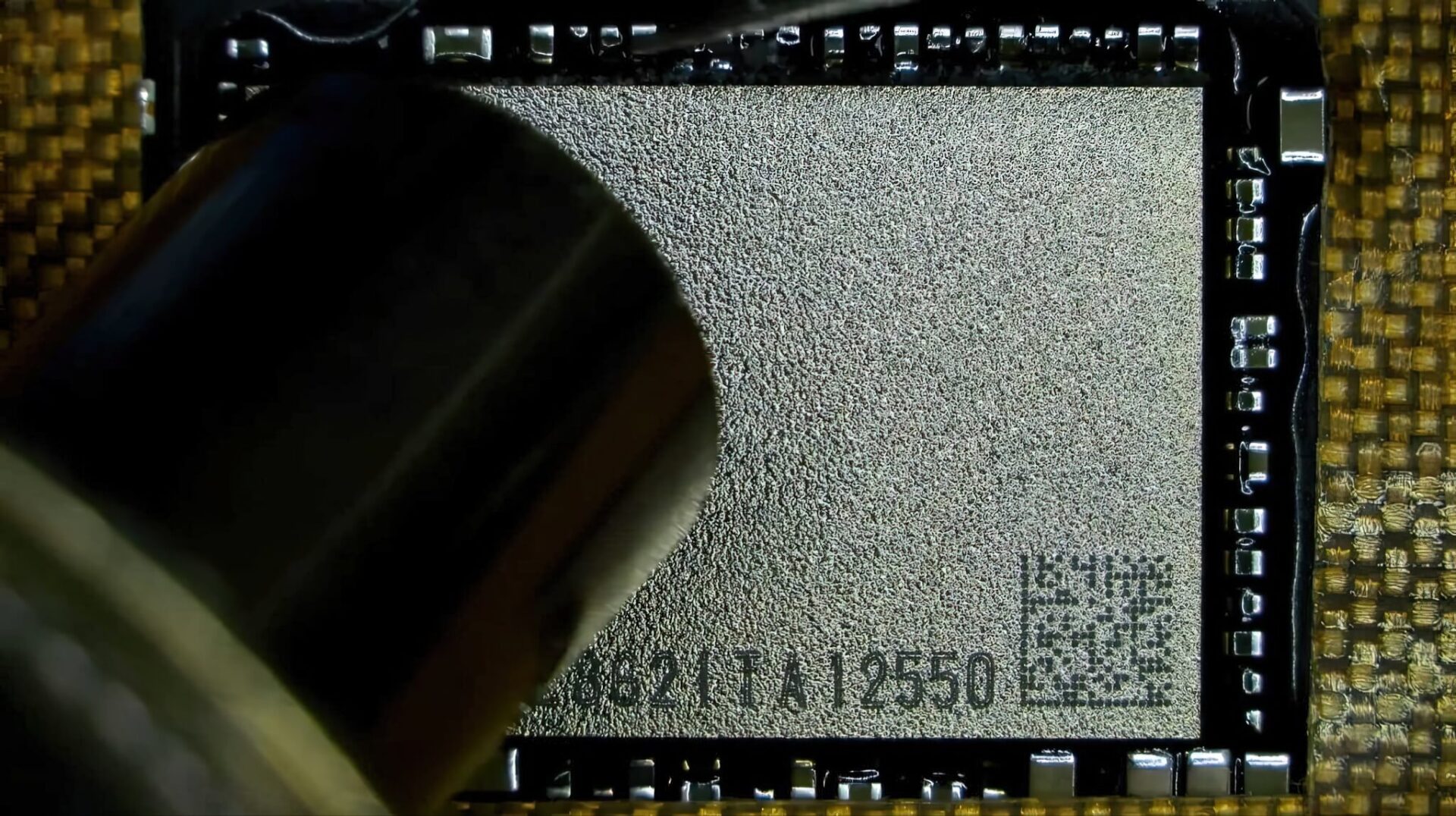
The fact that Apple resolutely solders components and locks down memory upgradeability on Mac lineups has long been a major concern for global users, forcing us to choose the right configuration right at the moment of purchase. With the MacBook Neo, although it is an excellent laptop in its price range, users still face a maximum storage limit of only 512GB from the manufacturer. This means that if your workload increases after a period of use, you will be stuck: either living with cumbersome external hard drives or spending money on a new machine. However, a tech wizard recently took a bold step by breaking through this barrier to equip the MacBook Neo with a 1TB drive. This serves as proof that hardware limits can be broken by human intelligence, but the cost in both money and technical skill is an entirely different story that not everyone can undertake.
Dissecting the MacBook Neo Motherboard and the Sophistication of Tech Wizards
To perform this high-risk modification, YouTuber DirectorFeng dissected the MacBook Neo, giving us a close-up look at the exquisite interior design of Apple. The most valuable part of the machine's structure is the logic motherboard containing the extremely compact A18 Pro chip, arranged so sophisticatedly that there is almost no wasted space. In reality, this space optimization helps the MacBook Neo maintain its sleek and lightweight appearance, but it turns manual repair or upgrading into an extreme challenge. To replace the memory chip, the practitioner must use a hot air gun and specialized tweezers to remove the original NAND flash chip from the motherboard. This is a process that requires millimeter-level precision and master-level temperature control, as even a small mistake can instantly turn the expensive motherboard into a lifeless piece of scrap metal.
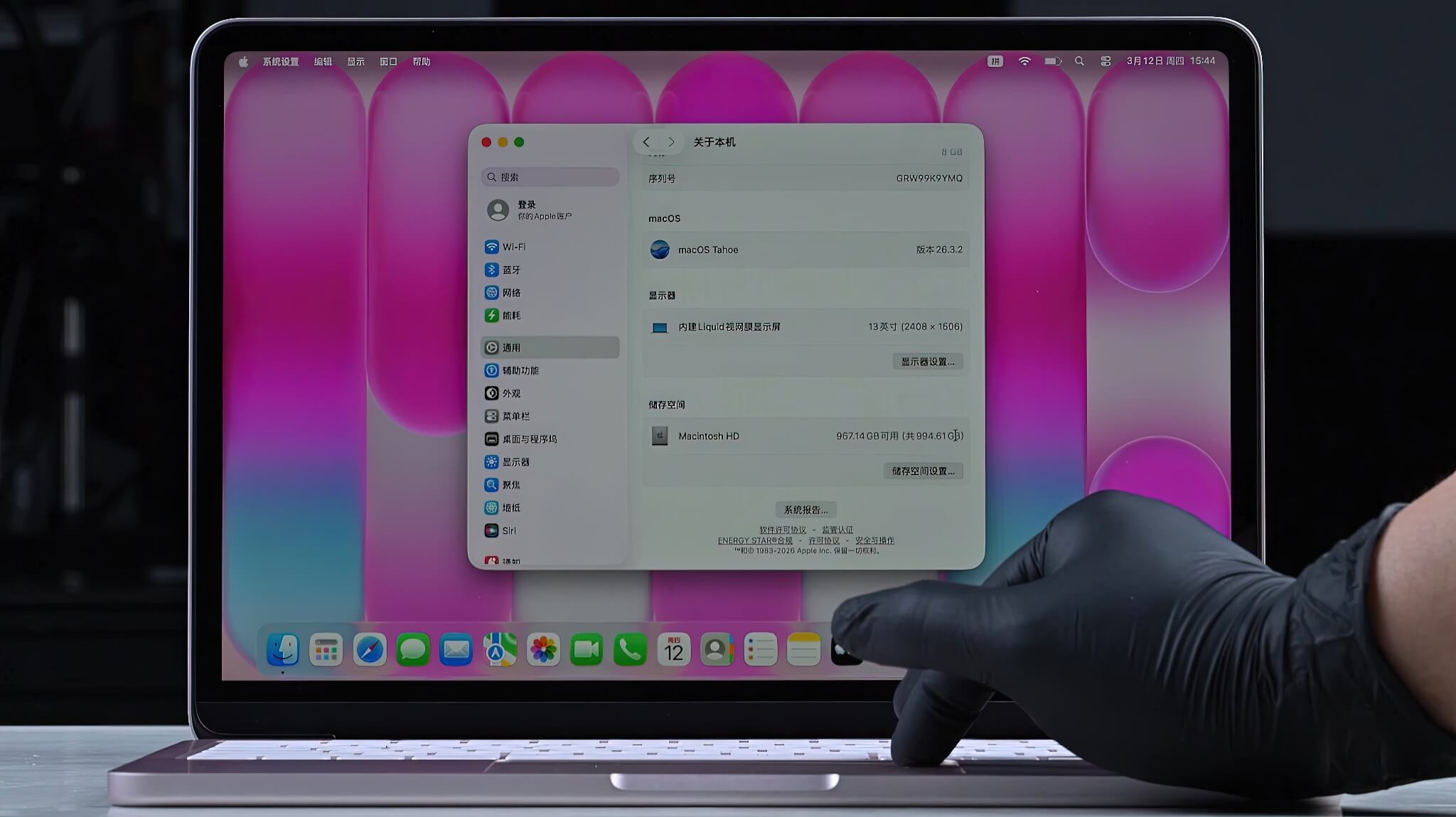
It doesn't stop there; after the new 1TB memory chip is placed in position, the post-processing stage involves many complex steps that non-professionals can hardly imagine. The soldering area must be meticulously cleaned with specialized chemicals and flux must be applied to ensure the tiny chip pins make perfect contact with the motherboard. Interestingly, after installation, the macOS operating system still correctly recognizes the new capacity without any firmware errors. To ensure the new memory chip is firmly secured under temperature fluctuations during heavy workloads, the technician must also apply BGA underfill and place the entire motherboard into a specialized oven so that the temperature is distributed uniformly, helping the solder joints achieve maximum durability. In reality, this modification is not merely a component replacement; it is like a highly artistic micro-surgery that requires expensive supporting machinery typically only seen in advanced laboratories.
Real-world Performance of the 1TB Mod and the Apple Tax Trade-off Problem
The results of this modification are truly impressive, as the MacBook Neo now not only has vast storage space but also receives a significant improvement in data processing speed. Through the Blackmagic Disk Speed Test, the new 1TB drive shows noticeably higher read and write speeds compared to standard versions with lower capacities. The most valuable aspect here is the ability to handle heavy files: you can work smoothly with high-quality 4K videos or manage a massive photo library much more fluidly thanks to the expanded memory bandwidth. However, if you are dreaming of this solution to save on the "Apple Tax"-which is already famous for being expensive-you need to look at the reality more soberly.
https://www.youtube.com/watch?v=5cPTql0-Tgk
If you are looking for safety and sustainability for your work, reality shows that deep hardware modifications always carry significant risks regarding long-term stability. Apple could easily release future software updates to identify and lock devices with non-genuine components, or simply deny your warranty immediately. For an average user, buying the base version of the MacBook Neo for $599 with a 256GB drive and then attempting to mod it to 1TB is a risky journey that could be more expensive than you think when factoring in both the components and the labor costs for a skilled technician. This modification is truly more of a technical demonstration than a smart consumer option for the masses.