
Nintendo has officially confirmed: all first-party exclusive games released for Nintendo Switch 2 will be priced between $70 and $80 USD, including older titles upgraded from the original Switch version. This is one of the announcements that caught the gaming community by surprise during the recent Switch 2 launch event.
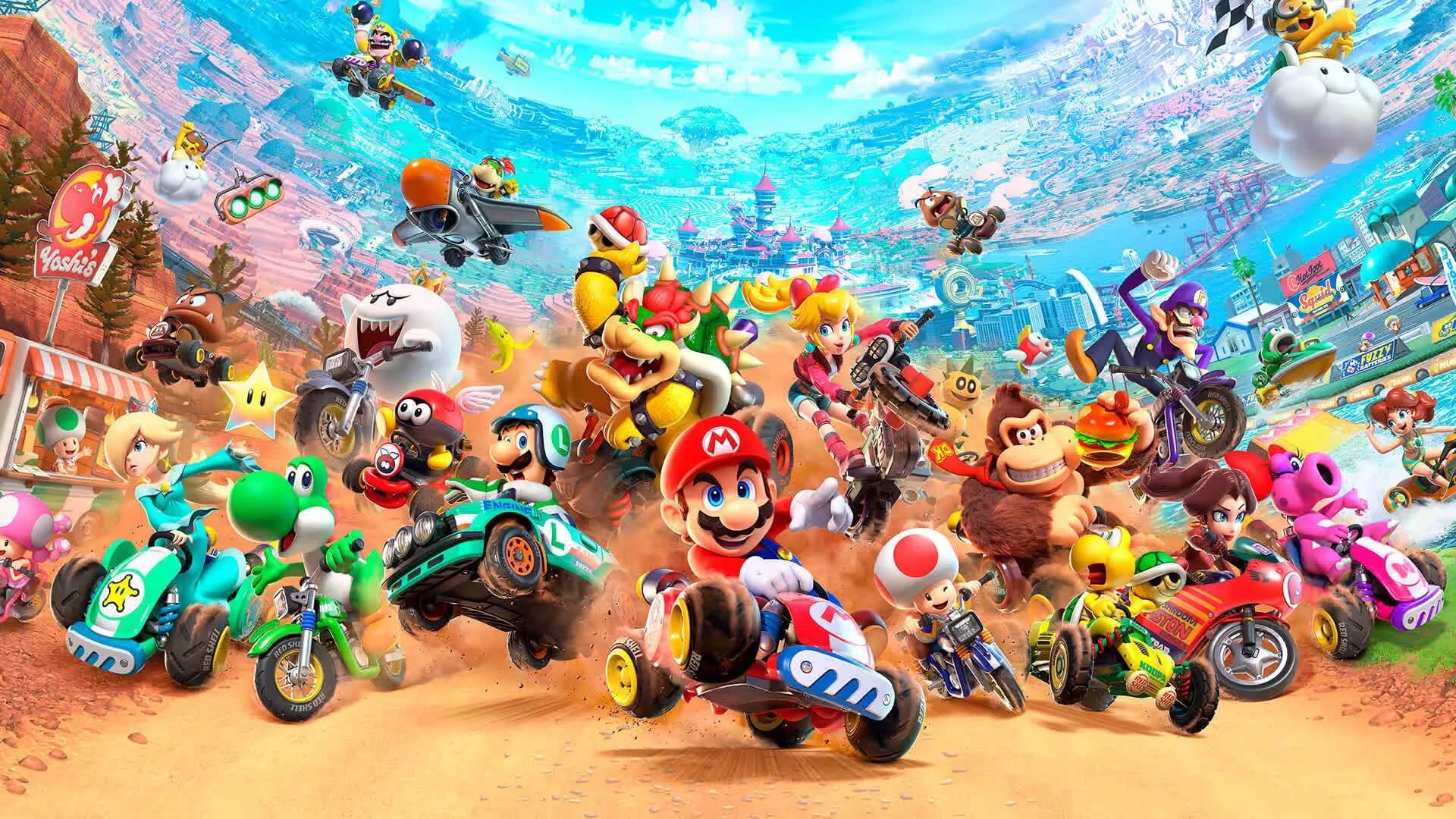
This price change is reportedly due to several factors: rising production costs, added new content, tariffs, and shifts in product positioning strategy. Notably, Mario Kart World - the flagship title launching alongside Switch 2 - has been announced at $80 USD, which is higher than the $70 USD standard currently applied to most AAA games.
Switch 2 games see price hikes due to expanded content and improved graphics
Not only new titles, but many famous games previously released on the original Switch are also being upgraded to "Nintendo Switch 2 Edition" at a higher price point. For example: The Legend of Zelda: Breath of the Wild will increase to $70 USD, while Tears of the Kingdom, Kirby and the Forgotten Land, and Super Mario Party Jamboree will all be priced at $80 USD upon re-release.

Nintendo stated that some games will receive free updates to improve resolution and frame rates - such as Super Mario Odyssey, Super Mario 3D World, or Pokémon Scarlet and Violet. However, games labeled as "Switch 2 Edition" will require users to pay an additional fee to upgrade, rather than receiving a free update like on Xbox or PlayStation consoles.
This has raised concerns about a consumer-unfriendly business strategy by requiring users to pay again for games they already own. Although specific figures for upgrades from Switch to Switch 2 have not been released, the $10-$20 USD price difference between versions suggests that upgrade costs will not be cheap.
Tariffs, production costs, and inflation are the main causes
In addition to content upgrades, the sharp increase in Switch 2 game prices is also related to external factors. According to reports from the U.S. Bureau of Labor Statistics, the $70 USD price point in 2021 is equivalent to approximately $75-$80 USD in 2025 due to inflation - which helps explain part of the decision to raise prices.

Furthermore, new tariffs imposed by the U.S. government have also forced Nintendo to adjust its pricing strategy. When moving production lines from China to Vietnam to avoid tariffs, Nintendo did not expect that the U.S. would continue to impose a 46% tariff on goods from Vietnam and 24% on products from Japan - the company's home country.
Skyrocketing production costs, combined with shipping costs and supply chain disruptions, have forced Nintendo to push the Switch 2 console price up to $450 USD and games up to $80 USD to compensate. Although many devices were shipped early to the U.S. to avoid tariffs, this is only a short-term solution.

Analysts also pointed out that manufacturing the Switch 2 in the U.S. is nearly unfeasible. The cost of building factories, hiring personnel, and establishing domestic supply chains could take up to 5 years, while production costs in the U.S. are significantly higher.
Insight: Nintendo's application of $70-$80 USD pricing for all Switch 2 exclusive games, including upgraded titles, clearly reflects the current upward pricing trend in the gaming industry. However, the company's decision to implement a paid upgrade model instead of the free model used by Sony or Microsoft may alienate loyal fans. Amidst escalating production costs and market instability, consumers will have to be more cautious when investing in consoles and game libraries in the coming time.