
AMD Strix Halo Heads to Desktops: A Chance for Mini PCs Without a Discrete GPU
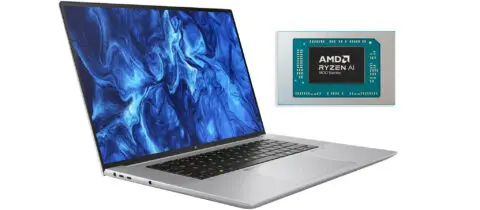
In a recent interview, AMD CEO Lisa Su drew attention by confirming that Strix Halo, the high-end APU line originally built for laptops, will soon come to desktop platforms. The news has tech enthusiasts excited, because Strix Halo offers more than a powerful CPU. Its integrated GPU is strong enough to compete with many entry-level and mainstream discrete graphics cards.
Strix Halo is a major step forward for AMD, packing 40 graphics Compute Units into the integrated GPU, which brings performance close to that of entry-level discrete GPUs. Its die is larger than that of the standard Strix Point chips, a clear sign that AMD is investing seriously in high-performance APUs.
However, because it was designed for mobile platforms, Strix Halo uses the FP11 socket, which is not compatible with the AM5 socket common on desktops today. That has led many people to doubt the chip could make it to desktop PCs. But according to reports, AMD could take an approach similar to Minisforum, which has already used custom motherboards for the Ryzen 7745HX and 7945HX, to get Strix Halo running on desktops.
Strix Halo on the Desktop: Powerful, Compact and Practical
When a representative from ASUS China brought up a desktop Strix Halo during the interview, Lisa Su replied: “Yes, yes, of course!” This reinforces the rumor that AMD is genuinely serious about the plan. One potential approach is to use a socketed platform like the Framework Desktop, which already supports the Ryzen AI 300 series (Krackan Point) for both laptops and PCs.

If this comes to pass, we could see a new generation of desktops that play games well without a discrete GPU, and handle multitasking or AI inference efficiently thanks to the powerful integrated GPU. Platforms such as the BD790i, Framework, or custom mini-ITX motherboards could serve as the basis for AMD to bring Strix Halo to desktop PCs.
Users would get:
- A PC as compact as a console, with impressive performance
- Solid AAA gaming without a discrete graphics card, thanks to a strong iGPU
- RAM and SSD upgrades, just like a regular PC
There are still some limitations, such as not being able to swap the CPU or choose coolers as freely as on AM5, but it remains an ideal choice for users who need high performance in a small space.
Strix Halo: A New Future for Desktops Without a Discrete GPU
Although AMD has not yet announced an official roadmap, CEO Lisa Su's positive response, along with platforms like the BD790i already on the market, suggests that a desktop Strix Halo is no longer far-fetched. As users increasingly favor power-efficient mini PCs that save space and still handle graphics well, Strix Halo could well be AMD's answer to the new trend.
Some experts say that if implemented well, Strix Halo could open a new era for desktops that need no discrete GPU, save power and are easy to set up, suitable not only for gamers but also for content creators, programmers and office users.
AMD has a big opportunity to extend its APU ecosystem beyond laptops. If it succeeds, the company could capture a sizable share of the midrange desktop and mini-PC market, where users are looking for a solution that is “powerful, compact and power-efficient.”
Let's wait for official moves from AMD in the near future. Strix Halo for desktops could be the company's next big push in 2025!