
More than five years have passed since 5G began its global rollout, bringing ultra-high-speed internet with low latency to hundreds of millions of people. However, building 5G networks has faced many challenges.
High-frequency signals do not travel as far as before, so more base stations are required compared to 4G technology. With limited land availability, telecommunications service providers in Japan have been forced to find innovative solutions.
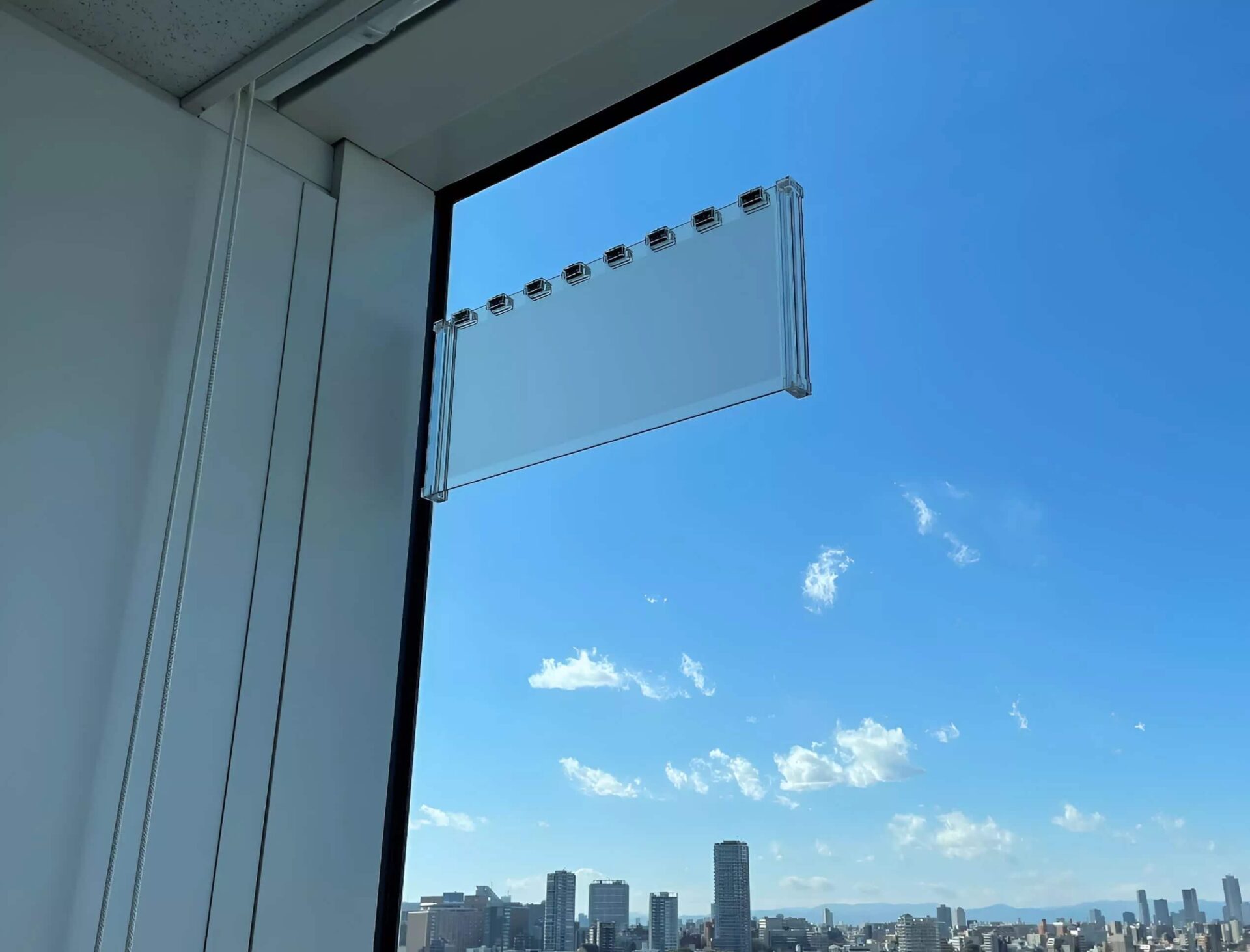
This solution comes from modern glass antennas, the result of a collaboration between glass manufacturer AGC, mobile carrier NTT Docomo, and infrastructure company JTower. Called WAVEANTENNA, this device turns ordinary windows into inconspicuous 5G base stations by sandwiching a special transparent conductive material-similar to the material used in laminated windshields-between two panes of glass.
In an image shared by JTower, this material appears to blend seamlessly into the glass; only the cables reveal the presence of the antenna-though these wires are also very delicately designed, running straight into the roof.
Shota Ochiai, a marketing director from AGC, described this implementation as "the world's first antenna capable of turning a window into a base station that can be mounted inside a building's window, turning outdoor spaces into service areas without disrupting the urban landscape or the building's appearance."
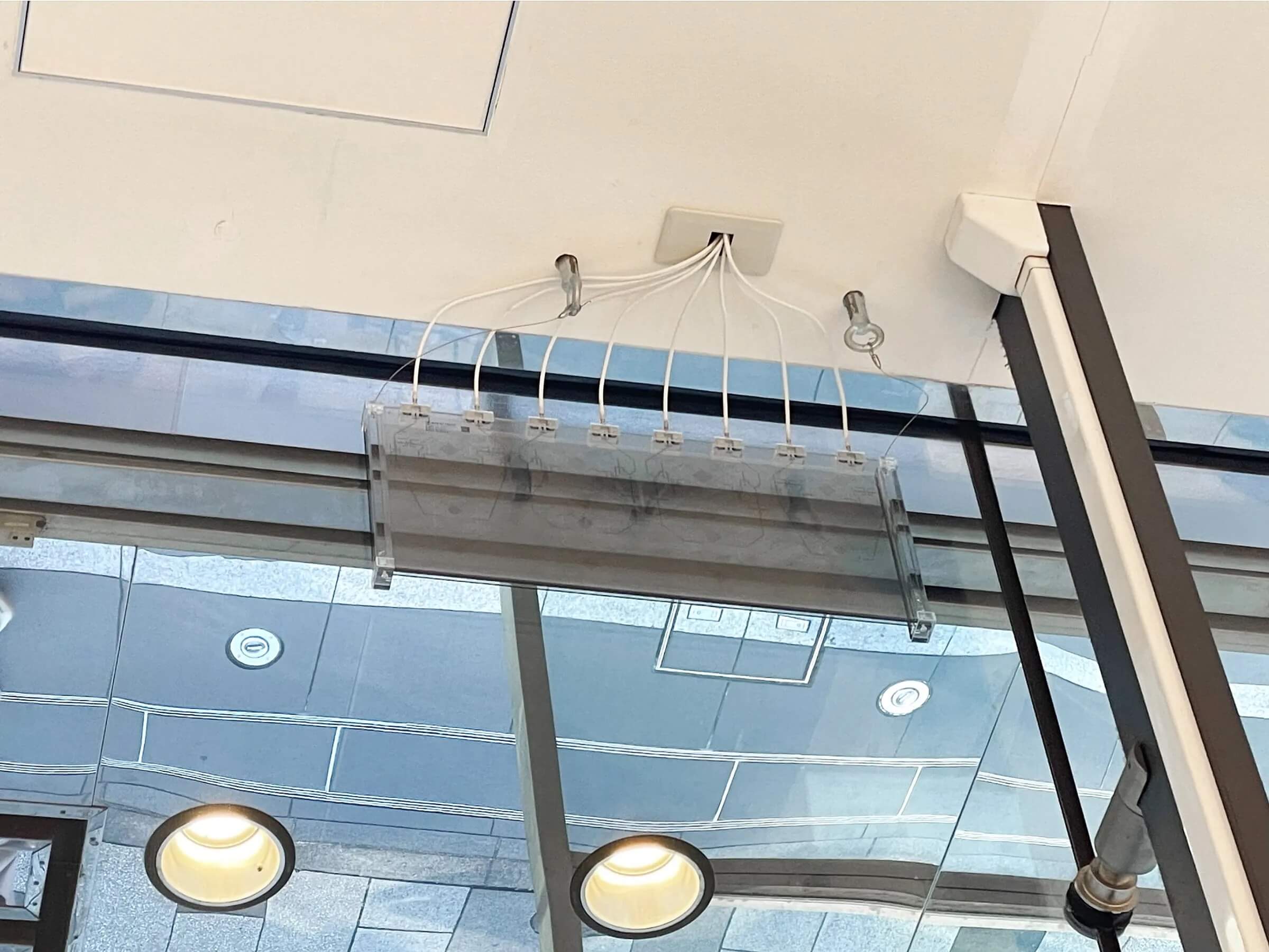
This method also solves another problem. Akinobu Ueda from NTT Docomo stated that it was previously very difficult to obtain permission from building owners to install small base stations on the middle and lower floors of buildings.
Another prominent aspect of these glass antennas is that the glass thickness can be precisely designed to minimize loss and reflection from radio signals absorbed or reflected by the window structure. "I don't think the idea of using transparent conductive material as an antenna has existed before," Kentaro Oka from AGC added.
Regarding connectivity, AGC stated that this antenna has been optimized to operate with frequencies in the 5G Sub6 band, ranging from 3.7 to 4.5 GHz. Although this has not yet reached the ideal mmWave frequencies of 30-300 GHz primarily used in 5G, it is still a significant step forward from 4G. It also serves another purpose: lower frequencies allow for better penetration through buildings.
Glass antennas are not just for urban landscapes. AGC has developed specific versions for vehicles, helping to minimize connectivity loss while moving. This technology is already present in the US, with one of its customers being the remote-controlled car-sharing platform Halo in Las Vegas.
It is worth noting that this technology was first introduced in 2020. A new version was released last year, allowing multiple providers to share the same window infrastructure. One of these upgraded antennas officially went into operation for the first time last month in a window in Tokyo's bustling Shinjuku area.
According to Techspot