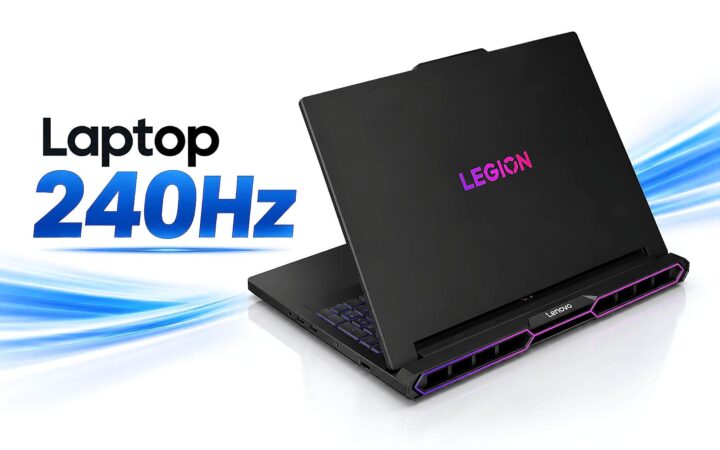
Tips & Tricks High-Refresh Gaming Laptops for FPS Titles: Choosing the Right GPU and Display Technology When you're playing fast-paced shooters like *Valorant*, *CS2*, or *Apex Legends*, every millisecond counts. To stay competitive, many gamers look toward laptops with 240Hz refresh rates to ensure the smoothest possible motion. However, a high refresh rate is only half the battle. To truly make the most of that 240Hz panel, you need to understand the interplay between your GPU and your display technology-specifically, whether you should opt for an IPS or an OLED panel. ### The GPU: The Engine Behind the Refresh Rate A 240Hz screen is only as good as the frames it receives. If your laptop's GPU cannot output 240 frames per second (FPS) at your chosen resolution, that high refresh rate is essentially wasted. For competitive shooters, the goal is high, stable frame rates. If you are playing at 1080p, a mid-range GPU like an NVIDIA GeForce RTX 4060 can often push the high frame rates necessary to saturate a 240Hz panel. However, if you intend to play at 1440p or higher, you will likely need to step up to an RTX 4070, 4080, or 4090 to maintain that 240Hz fluidity. When selecting a GPU for a high-refresh gaming laptop, prioritize raw performance and stability over extra features. In the world of FPS gaming, a consistent 240 FPS is far more valuable than a fluctuating 300 FPS that frequently dips during intense firefights. ### Display Technology: IPS vs. OLED Once you have the power to drive those frames, you have to decide how you want to see them. This is where the debate between IPS and OLED panels begins. #### IPS: The Reliable Standard IPS (In-Plane Switching) has long been the industry standard for gaming laptops. * **Pros:** IPS panels are highly reliable, offer excellent brightness, and-crucially for gamers-they are generally more resistant to "burn-in" (permanent image retention). They also tend to be more affordable, allowing you to allocate more of your budget toward a more powerful GPU. * **Cons:** Compared to OLED, IPS panels typically have lower contrast ratios and "black" levels that appear more like a dark gray. They also generally have slower response times, though high-end gaming IPS panels have narrowed this gap significantly. #### OLED: The Visual Powerhouse OLED (Organic Light Emitting Diode) technology has revolutionized laptop displays by allowing each individual pixel to turn off completely. * **Pros:** The primary advantage of OLED is its infinite contrast ratio and perfect blacks. Colors are incredibly vibrant, and the response times are nearly instantaneous, which can lead to extremely crisp motion in fast-moving scenes. * **Cons:** OLED panels can be more expensive. There is also the long-term concern of "burn-in," where static elements (like a game's HUD or a taskbar) can leave a permanent ghost image on the screen over time. Additionally, while OLEDs are great for motion, some users find the way they handle brightness fluctuations (PWM dimming) to be taxing on the eyes. ### The Verdict: Which is Right for You? The choice depends entirely on your priorities as a player. If you are a **hardcore competitive player** focused solely on climbing the ranks in *Counter-Strike* or *Valorant*, an **IPS panel** paired with a high-end GPU is often the most pragmatic choice. You get the reliability, the brightness, and the raw performance needed to maintain those high frame rates without worrying about screen longevity. If you are a **multimedia enthusiast** who plays shooters but also enjoys cinematic single-player games and watching high-quality content, **OLED** is the way to go. The visual immersion provided by OLED's contrast and color depth is unmatched, making it a premium experience for those who want their gaming sessions to look as stunning as they feel. 27/09/2026 · 11 min read
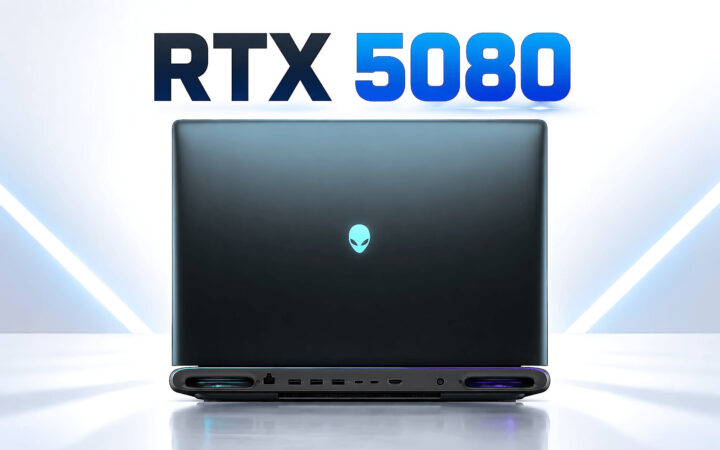
Tips & Tricks Choosing an RTX 5080 Laptop: When is it a better value than the 5070 Ti or the 5090? 24/09/2026 · 10 min read
Laptops Lenovo Legion Pro Rollable - Gaming laptop with a unique rollable screen 09/01/2026 · 5 min read