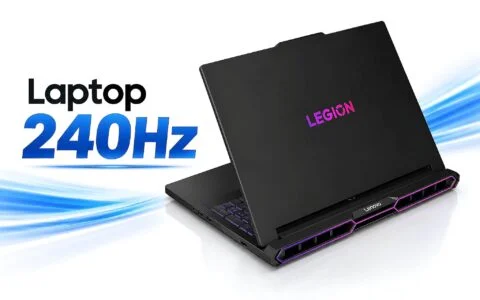
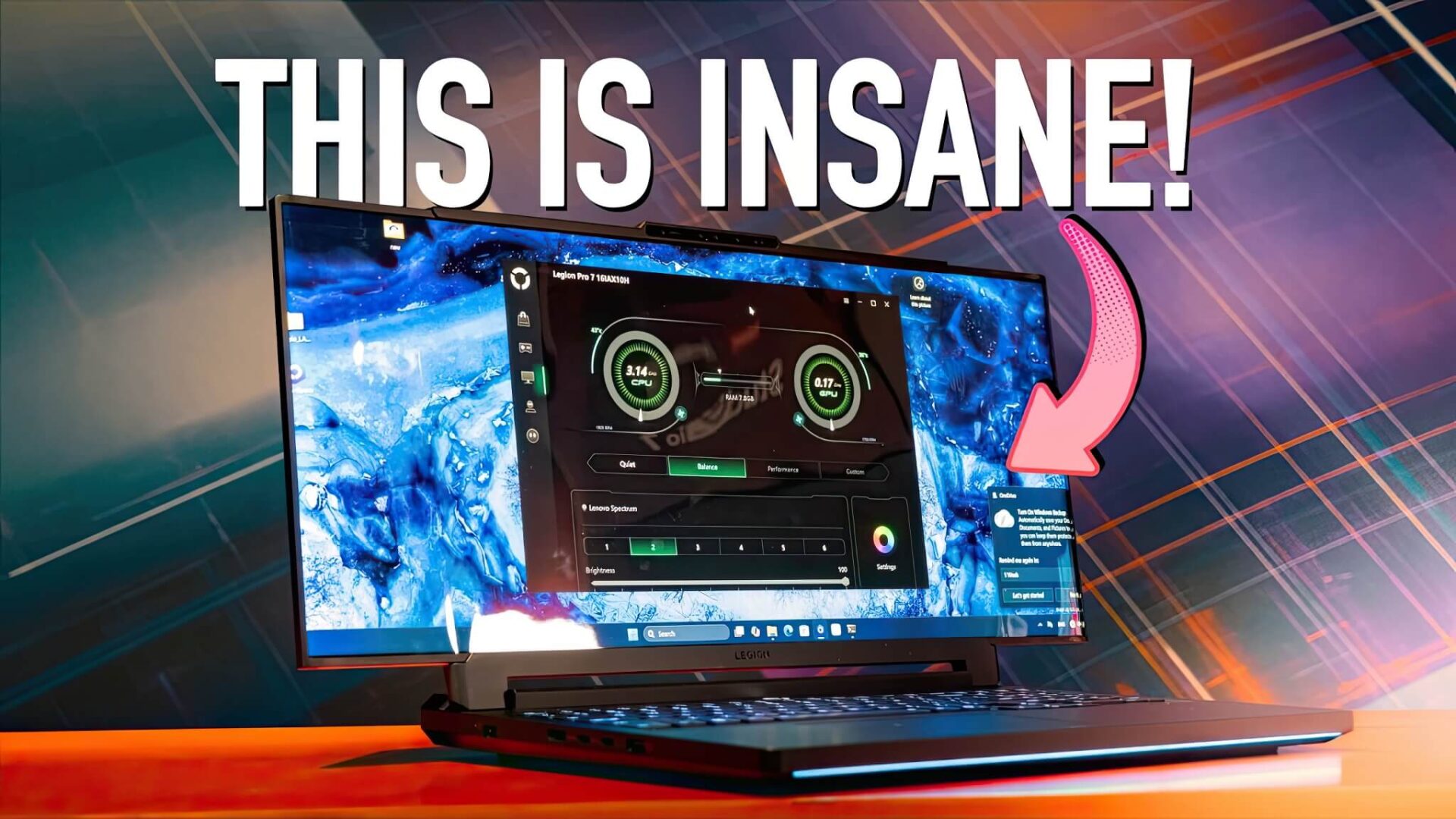
Lenovo, one of the world's leading PC makers, has spent years experimenting with rollable display technology, aiming to give mobile devices a larger screen without bulky external accessories. Most of those efforts have focused on office productivity, but the company's latest concept tries to deliver something once considered out of reach: an ultrawide laptop. The Legion Pro Rollable pairs a rollable OLED panel with the well-known Legion Pro 7i chassis, creating a premium gaming machine that can switch between three different aspect ratios.
How the Lenovo Legion Pro Rollable works and its powerful hardware
Fully retracted in Focus Mode, the Legion Pro Rollable looks just like the standard 16-inch laptop we all know. The magic happens inside, though, with a dual-motor, tension-based mechanism. It lets the screen expand into a 21.5-inch Tactical Mode or a 24-inch Arena Mode. Lenovo has not revealed the exact aspect ratios, but the change in size is remarkable for a mobile device.

According to Lenovo, it used low-friction materials and a dedicated tensioning system to ensure durability and to keep transitions between modes smooth and quiet. In practice, though, the experience at CES may not have lived up to the theory. Tom's Hardware reported that at least one demo unit made fairly loud creaking noises during operation. Still, this is only a concept, and Lenovo is positioning it for esports athletes who need extra screen space while traveling to compete, although the potential market for that group may be quite limited.
Running games smoothly at high frame rates on such a large display demands extremely powerful hardware. The Pro Rollable's Legion Pro 7i platform is built to meet those demands with top-tier components. If the concept is commercialized and put on sale, it is expected to come with a laptop RTX 5090 graphics card and the highest-end Intel Core Ultra processor, most likely the recently announced X9 388H.
AI assistants for gaming and other tech devices
Lenovo is also using this concept to showcase two AI-powered gaming assistants. They can automatically adjust display settings and offer in-game help based on contextual cues. Specifically, these tools can fine-tune screen settings, boost frame rates, zoom in on specific elements, change lighting, and even give players advice on how to play.
https://www.youtube.com/watch?v=lDGzE-xech8
This gaming-focused Pro Rollable marks a shift from Lenovo's earlier expandable laptop designs, which relied mainly on extending the screen vertically. The unusual ultrawide aspect ratio leaves room for extra work windows, programming code, or background video while users juggle multiple tasks.
Looking back at last year's CES, Lenovo introduced the Lenovo ThinkBook Plus Gen 6, which has now become the first rollable-screen laptop to reach consumers. This year's show also features a related concept, the Rollable XD Concept, which lets part of the screen fold up onto the laptop's lid. Lenovo's other concepts at CES 2026 include AI glasses, an AI hub housing two ThinkStation PGX workstations, an AI-enabled monitor, and an adaptive keyboard. The company also confirmed that one of its previously announced mobile devices, the Legion Go 2 handheld gaming console, will become the second model in the lineup to support Valve's SteamOS platform.