
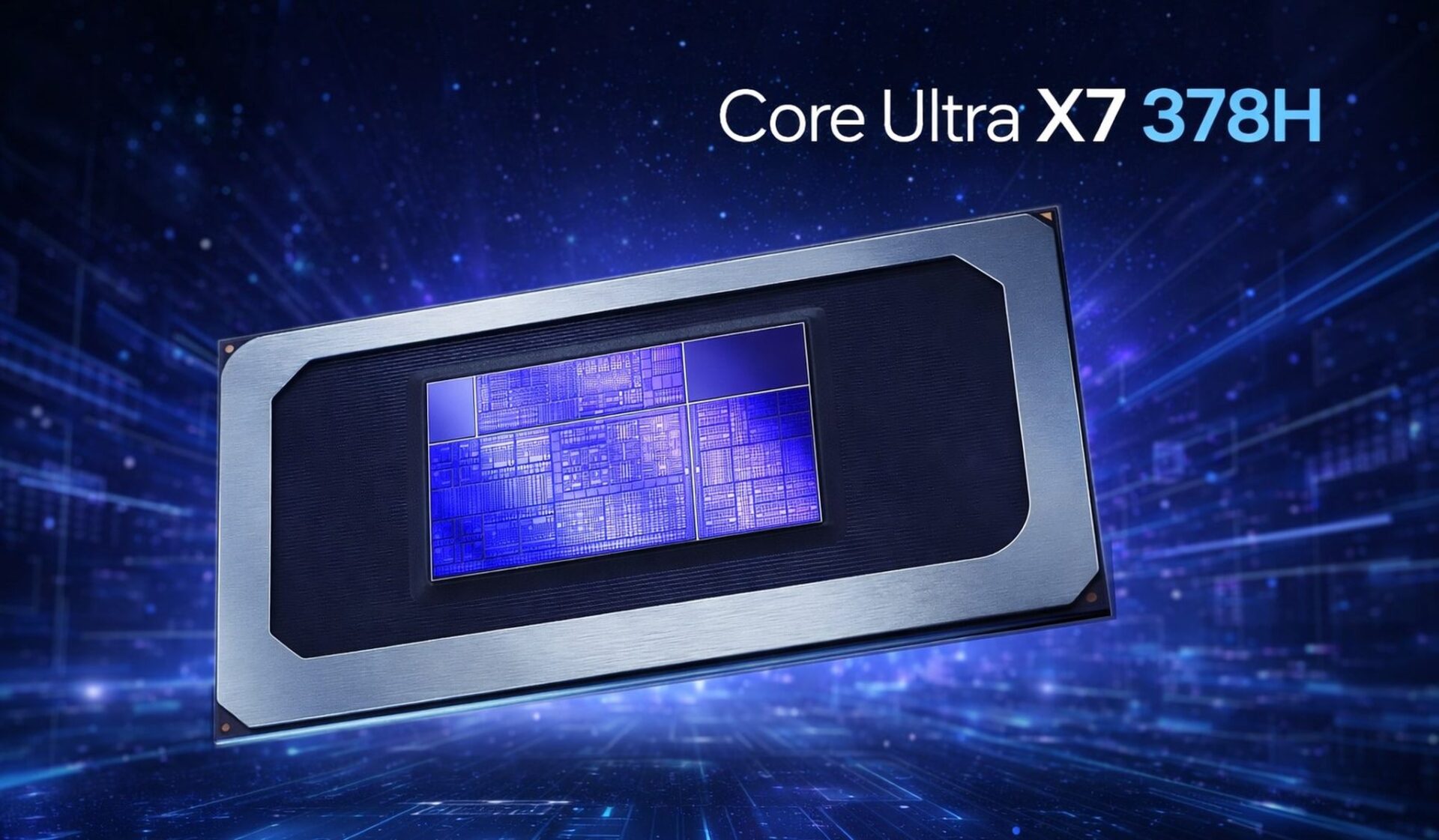
Intel has quietly added the 378H to ARK with 16 cores, a 5 GHz turbo frequency, and a 25W base power. Compared to the 368H released in Q1/2026, the new model maintains nearly identical core specifications. This is noteworthy for those waiting for Panther Lake laptops, as the new chip name may appear on spec sheets without a corresponding increase in actual performance benefits. The crux of the story, therefore, lies in how Intel segments its SKUs, not in raw speed.
How is the Intel Core Ultra 9 378H actually different from the 368H?
Intel's ARK page confirms that the 378H is in the Launched state, utilizing a 4 P-core + 8 E-core + 4 LP-E-core architecture, featuring 16 cores and 16 threads, 18 MB of cache, a 15W-80W power range, and support for up to 96 GB LPDDR5X 9600 MT/s. The integrated graphics continue to be the Arc B390 with 12 Xe-cores, meaning this remains a platform sufficient for thin-and-light laptops handling heavy workloads, media processing, and high-level local AI. With the hard data now available, buyers no longer need to guess about the basic configuration. This is the factor that makes the 378H easy for OEMs to include on spec sheets right from the start.
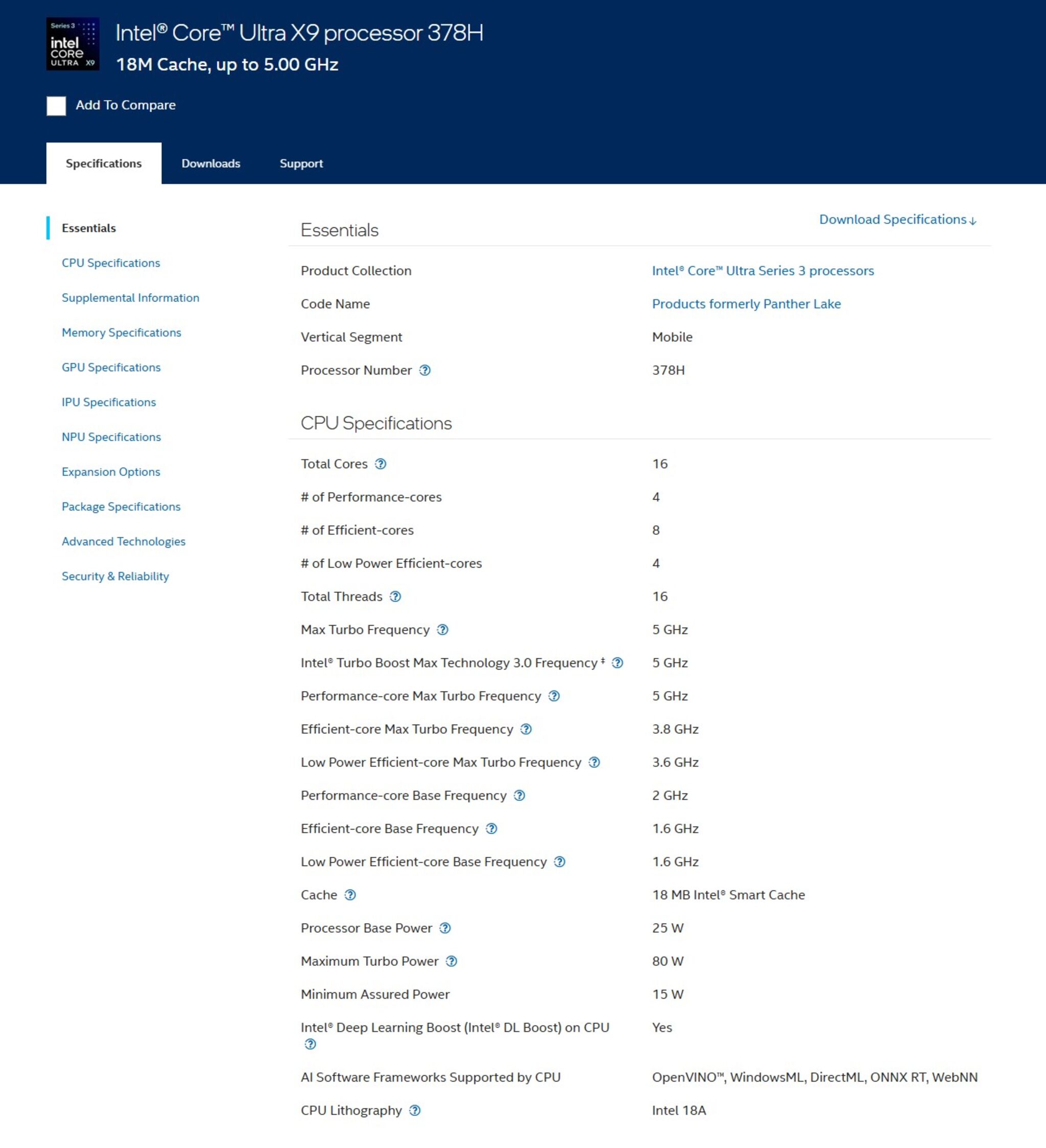
The clearest difference from the 368H lies in the Embedded Options Available section: the new model is No, while the 368H is Yes. In short, the 368H remains open to devices with longer lifecycles or embedded requirements, whereas the 378H is pulled closer to the consumer laptop segment. This is an advantage for Intel in terms of product segmentation, but it also poses a risk for buyers who might assume a new model number automatically means a faster chip. A new name does not necessarily mean new performance.
One point that needs clarification is that the original article referred to this chip as the Core Ultra X7 378H, while Intel's ARK page currently lists it as the Core Ultra X9 processor 378H. Intel has not provided a specific press release to explain this discrepancy, so the most reliable information at this time remains the specifications on ARK. This detail suggests that this is primarily a segment-splitting SKU. Buyers should read carefully before considering this a true upgrade.
What should Panther Lake laptop buyers look for?
For end-users, the 378H is not currently a strong enough reason to delay a laptop purchase. If two laptop models have the same RAM, the same cooling system, and the same power limits, the difference in experience compared to the 368H is likely to be very minimal: opening many tabs, video conferencing with AI effects, photo editing, or video rendering will still depend more on how the OEM builds the machine rather than the chip's name. A new SKU does not automatically transform into a better laptop. The trade-off lies in expectations.
For manufacturers, this chip model is more useful on paper. Intel is expanding the Panther Lake lineup by clearly separating consumer chips from chips intended for long-lifecycle devices, similar to how the company maintains high iGPU configurations like the Intel Arc B390 for models requiring stronger graphics. This approach helps product teams position devices more precisely, but the downside is that the market will face an additional layer of confusing nomenclature if real-world benchmarks are not provided. Buyers should look at the complete system rather than focusing solely on the SKU.
In the Vietnamese market, the most visible impact will be that laptop spec sheets at the end of the year may feature models that sound very new but offer little actual difference. This detail is even more important to monitor as the pricing story for Panther Lake still contains many variables. If OEMs use the 378H to refresh their product lists without changing the cooling, battery, or screen, buyers will find it difficult to perceive any added value after spending their money. That is the point to be cautious about.
Overall, the 378H is worth noting because it shows that Intel is optimizing the Panther Lake lineup based on usage goals, not just processing power. If you are waiting for a new laptop, look at the complete machine and independent reviews before considering this a reason to upgrade. The real comparison points remain cooling, battery life, the display, and the actual retail price. A new chip name is only one part of the story.