
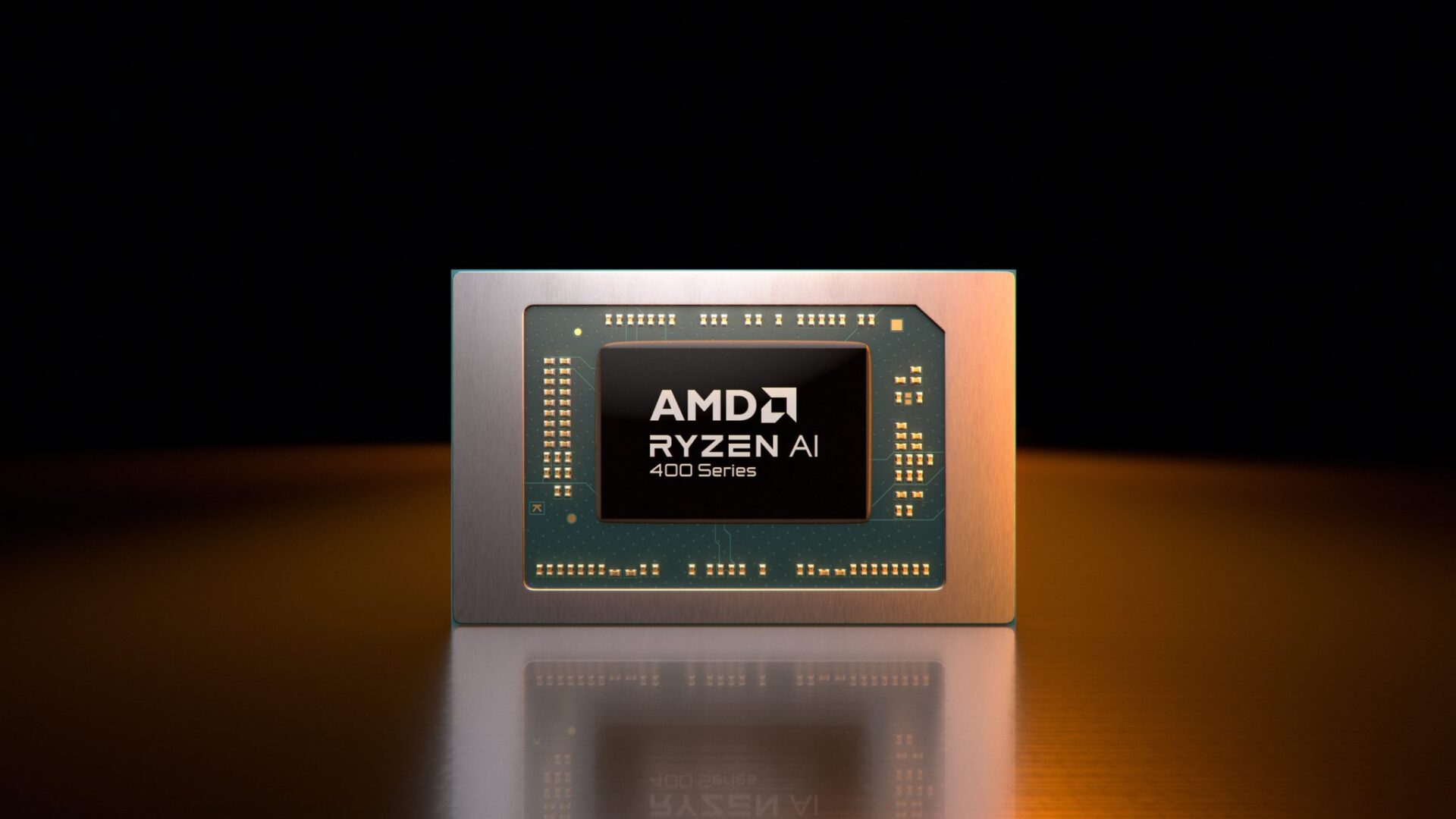
AMD has just introduced Ryzen AI 400 for laptops, featuring up to 12 Zen 5 cores, a 60 TOPS NPU, and memory support up to 8533 MT/s. Compared to Ryzen AI 300 and Lunar Lake, this generation shows that the AI laptop race has shifted from software promises to real performance within the same power envelope. The group of users directly impacted are those waiting for business laptops or ultrabooks that still want to handle local AI processing. Notably, AMD is positioning Ryzen AI 400 as the flagship platform for the 2026 AI laptop class, and this is when buyers must start looking at real-world experiences instead of just reading TOPS tables.
What just happened and what data validates it?
AMD announced 7 SKUs, ranging from Ryzen AI 9 HX 475 down to Ryzen AI 5 430, with the two flagship models using 4 Zen 5 cores plus 8 Zen 5c cores, totaling 12 cores and 24 threads, a maximum clock speed of 5.2 GHz, Radeon 890M 16 CU graphics, and a power range of 15-54W. This configuration shows that AMD is targeting the thin-and-light segment that still wants to handle heavy office work, photo editing, running local AI models, and basic creative tasks. Documentation on the AMD Ryzen AI 400 series page also confirms this is the new flagship product direction for the company's AI laptops. The biggest selling point is not just the 60 TOPS NPU, but how the CPU, iGPU, and NPU are packaged to reduce dependence on discrete GPUs in thin machines.
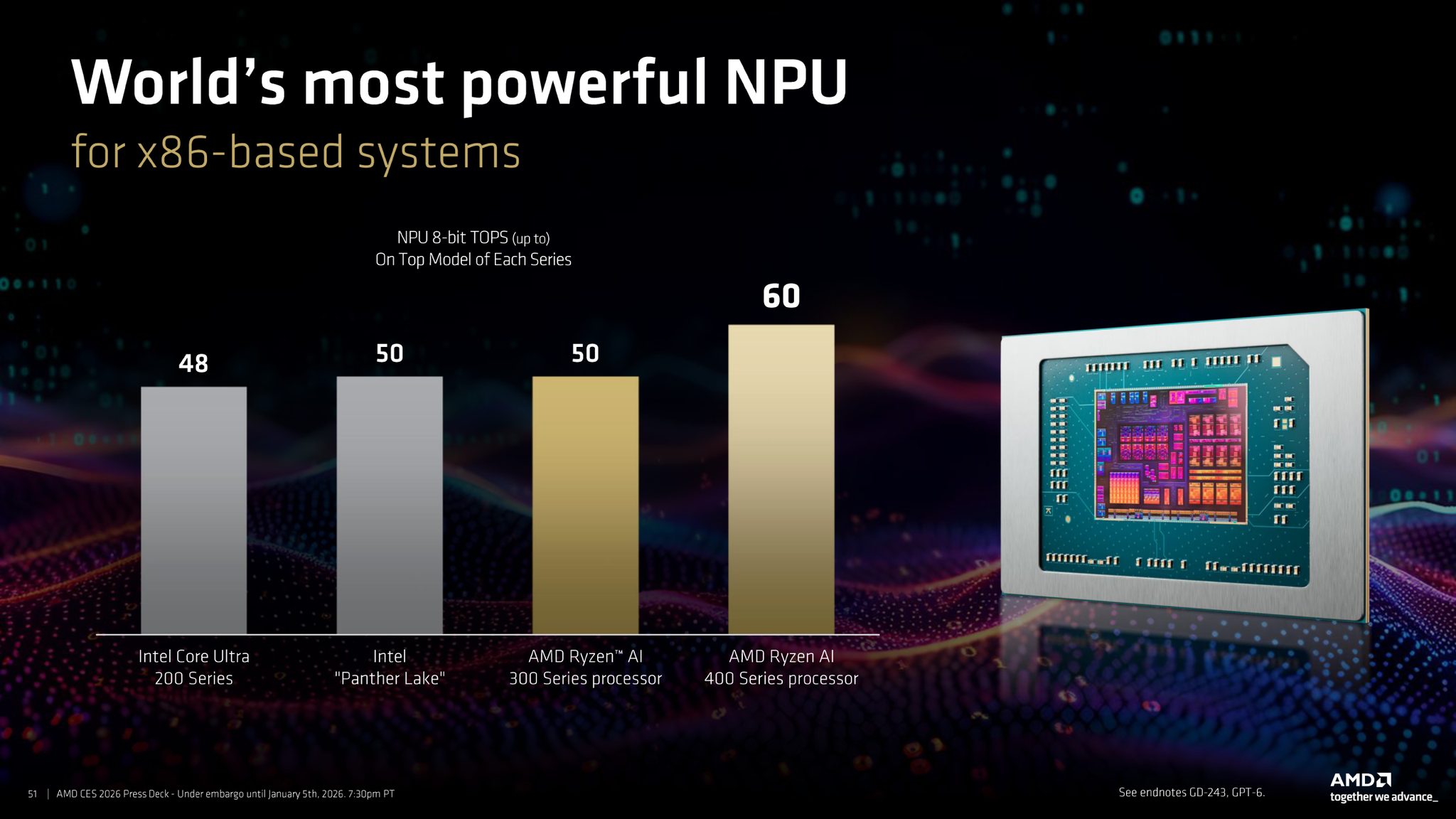
AMD also placed the Ryzen AI 9 HX 470 28W alongside the Core Ultra 9 288V 30W, claiming the new platform is 29% faster on average in office multitasking, 12% in gaming, and 71% in creative content workloads, while being 5.5% higher in UL Procyon AI Vision compared to Lunar Lake with a 48 TOPS NPU. These figures are still internal data, so real-world reviews are needed, but at least they show AMD has started speaking in terms of specific workloads rather than just shouting AI PC slogans. According to the company's roadmap, these chips will appear in laptops, mini PCs, and AIOs from Acer, Asus, Dell, HP, Lenovo, and many other brands in 2026. This makes Ryzen AI 400 a platform to watch from the early stages rather than waiting for commercial machines to hit the shelves to discuss further.
What is the practical impact on users or businesses?
For laptop buyers in 2026, the greatest value of Ryzen AI 400 lies in consolidating three needs into a single platform: a CPU powerful enough for long-term work, an iGPU sufficient for general graphics, and an NPU that has surpassed Microsoft's Copilot+ threshold. This is useful for the group that doesn't need a discrete GPU but still wants live subtitle translation, background blur in meetings, light photo processing, or document summarization directly on the device. The primary market for this chip series is business laptops and ultrabooks, where battery life, cooling, and weight are as important as performance. Looking at the market landscape, Ryzen AI 400 is forcing AI laptops closer to actual daily usage needs.
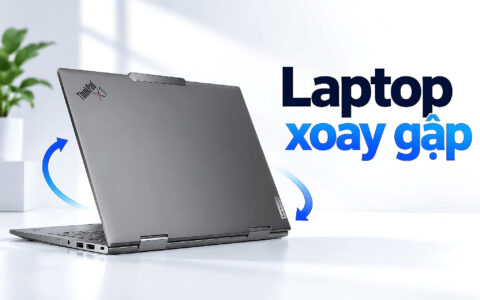
A notable signal is that many manufacturers have already begun incorporating these new chips into their product plans, such as the ThinkPad X13 Gen 7, which is moving towards a compact design that still requires local AI. In other segments, ASUS Zenbook also shows that the market is shifting toward thin laptops that still want to process AI directly on the device. The trade-off is that buyers will need to look closely at the RAM, cooling, and screen of each specific model, as having the same Ryzen AI 400 name does not guarantee the same experience. In short, this is a generation worth waiting for, but purchasing decisions must still be based on reviews of complete products rather than just the chip name.
Reference source: ASUS Zenbook.