

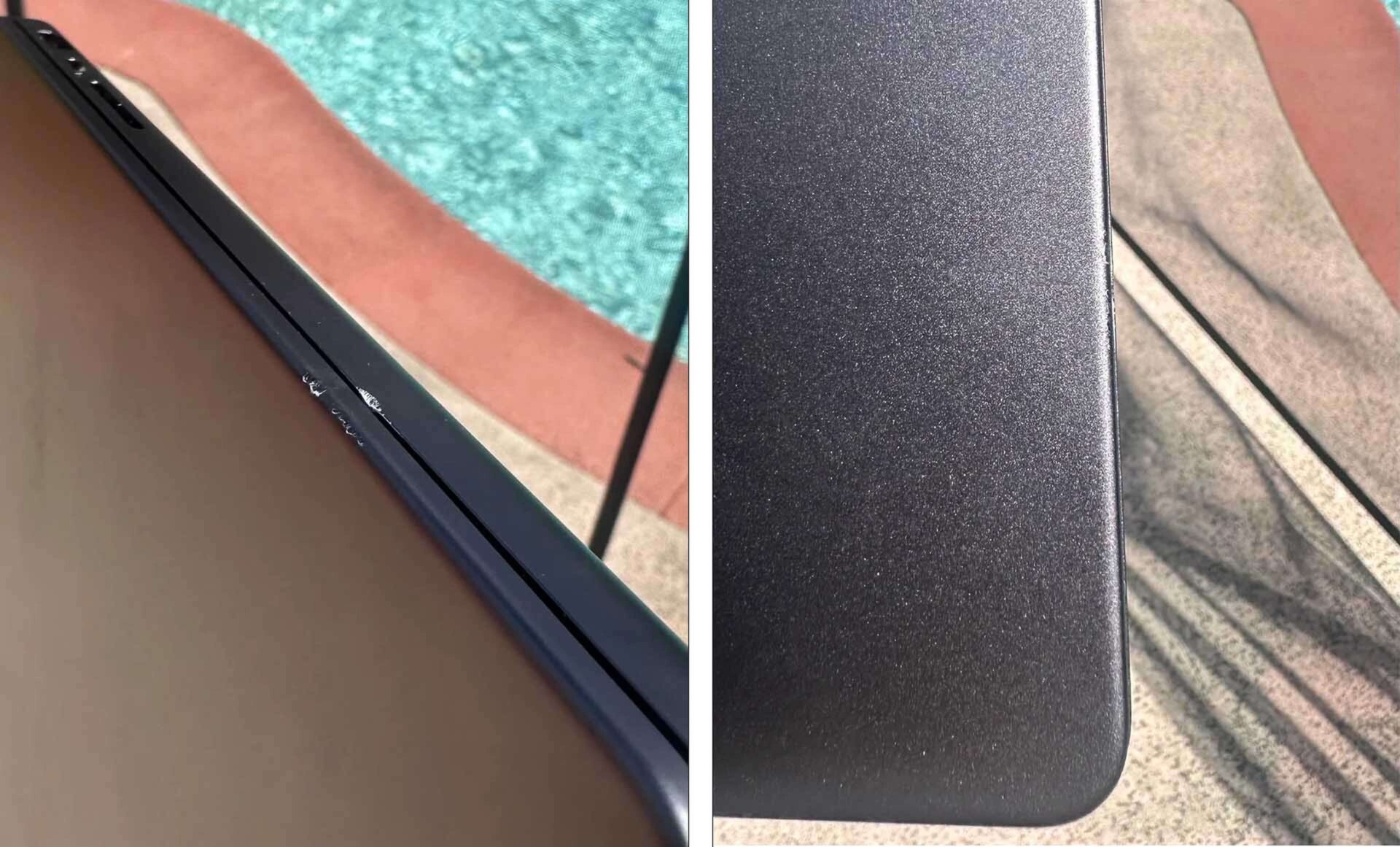
With just one careless moment involving an unzipped backpack, a nearly brand-new MacBook Pro fell down approximately 25 stairs, repeatedly striking against the stone steps. For many thin and light laptop models, this scenario usually means a cracked screen, a dented chassis, or extremely high repair costs. However, in this case, the visible damage was quite minor: a few scratches on the outer shell and a slight 1 mm misalignment of the chassis. This story is not only surprising but also highlights a very practical factor for everyday users: chassis durability can sometimes be just as important as technical specifications.
MacBook Pro falls down stairs but chassis only sustains minor damage
What caught many people's attention was that the machine had been purchased less than three weeks prior. According to a report in MacBook Pro falls from a 25-step staircase, the laptop flew out of the backpack when the user swung the bag over their shoulder, forgetting to zip it. From a height of about 13 feet, the device hit the edge of a step and tumbled down the entire staircase. After removing it from the torn protective sleeve, the owner noted light scuffs on several points of the shell and a slight tilt on the left side of the screen edge, but no cracked glass or broken panel was found.
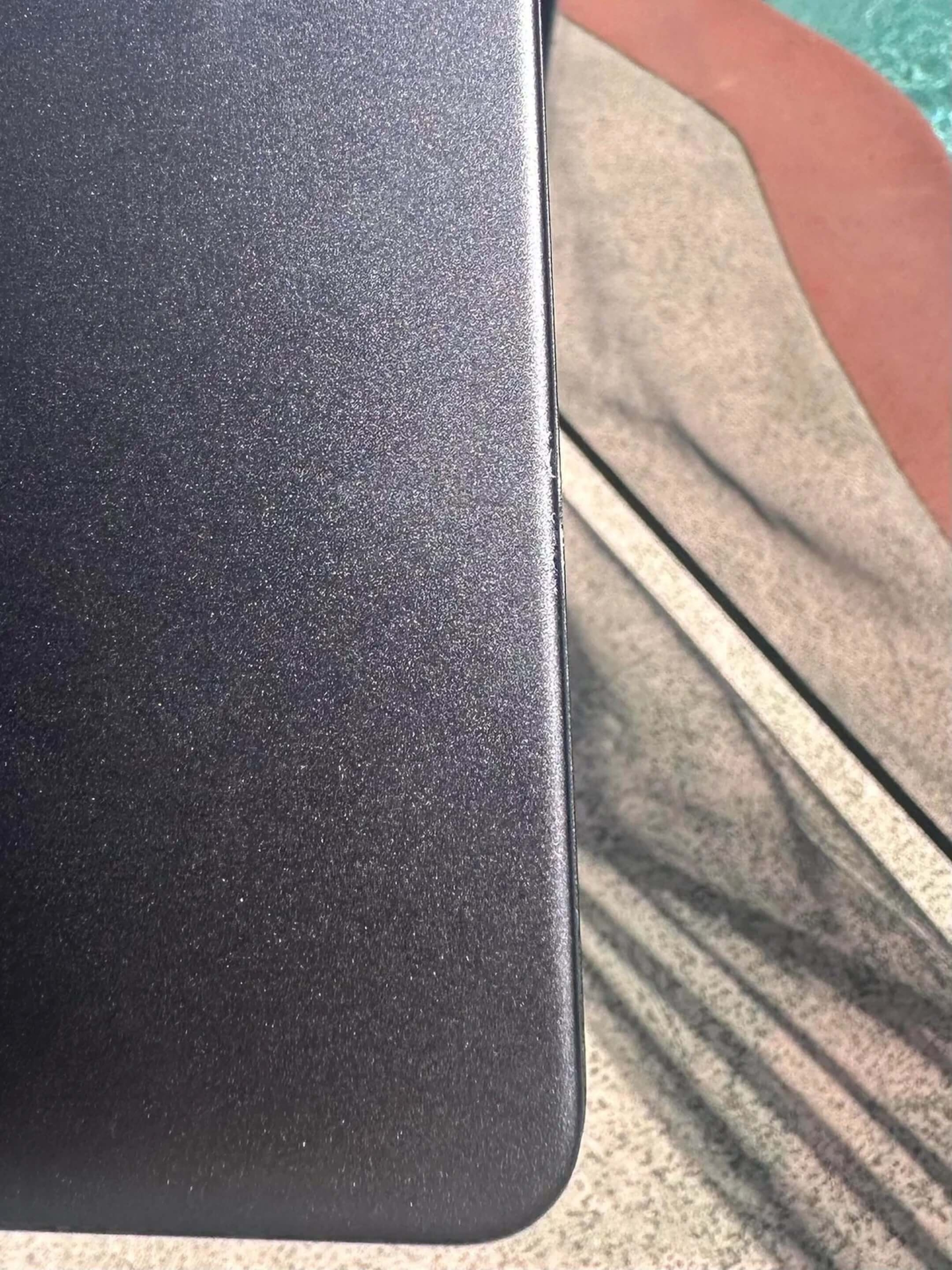
From a practical usage perspective, this result is much better than expected. A fall down multiple stone steps is usually enough to bend a laptop lid, misalign hinges, or cause heavy dents in the aluminum shell. Therefore, the fact that the machine only sustained light scratches shows that the frame absorbed the impact quite effectively. For those who carry a laptop daily, this is a very practical advantage.
How does the unibody aluminum design help in heavy impacts?
The reason MacBook Pro is often mentioned in impact stories lies in its aluminum unibody design. Simply put, the chassis is formed from a single solid structure, which helps distribute impact forces better instead of concentrating them on a few weak points like seams or joints. When a device falls, the hard shell may accept scratches or very minor deformations in exchange for protecting the more expensive components inside. This is also the direction many manufacturers are pursuing, especially as new platforms like the NVIDIA N1 motherboard demand laptops that are thin, powerful, and sturdy enough to withstand mobile usage intensity.
| Post-fall details | Practical significance |
|---|---|
| Fell approximately 13 feet down 25 stairs | Impact level strong enough to damage many thin and light laptops |
| Only light scratches and ~1 mm chassis misalignment | Shows the shell and frame withstand impact better than expected |
| No screen cracks reported immediately after the fall | Reduces the risk of needing immediate expensive component replacement |
However, shell durability does not mean everything inside is completely safe. After a fall like this, the risks that are not visible to the naked eye are what need attention: hinges may gradually misalign after a few days, the cooling assembly might shift, or the battery might experience shock and show abnormal behavior later. Modern laptop mainboards do not have many moving parts, but connectors, sockets, screw mounts, and thin cables can still be silently affected. Therefore, the fairest conclusion is that the MacBook Pro demonstrated excellent external impact resistance, but time is still needed to confirm its long-term condition.
What should users check after such a fall?
If a laptop has just experienced a similar accident, the first step is not to breathe a sigh of relief and continue using it as normal. Users should check the lid's opening and closing mechanism, the alignment of the chassis, strange noises when the fan runs, and unusual heat on the bottom surface. The keyboard, trackpad, and ports should also be tested immediately, as these are areas where subtle faults can arise after a shock. Even if the machine still boots up fine, backing up data early is a very worthwhile step to avoid late-emerging risks.
In the following days, users should monitor temperature, charging stability, screen backlight bleeding or flickering, as well as the sturdiness of the hinges when opening and closing them multiple times. Due to the increasing pressure for thin and light designs, new models like the Ryzen AI 400 launch are being scrutinized very closely regarding chassis rigidity and thermal efficiency. This story reiterates a simple truth: high performance is easily seen on a spec sheet, but chassis durability is what provides daily peace of mind.