
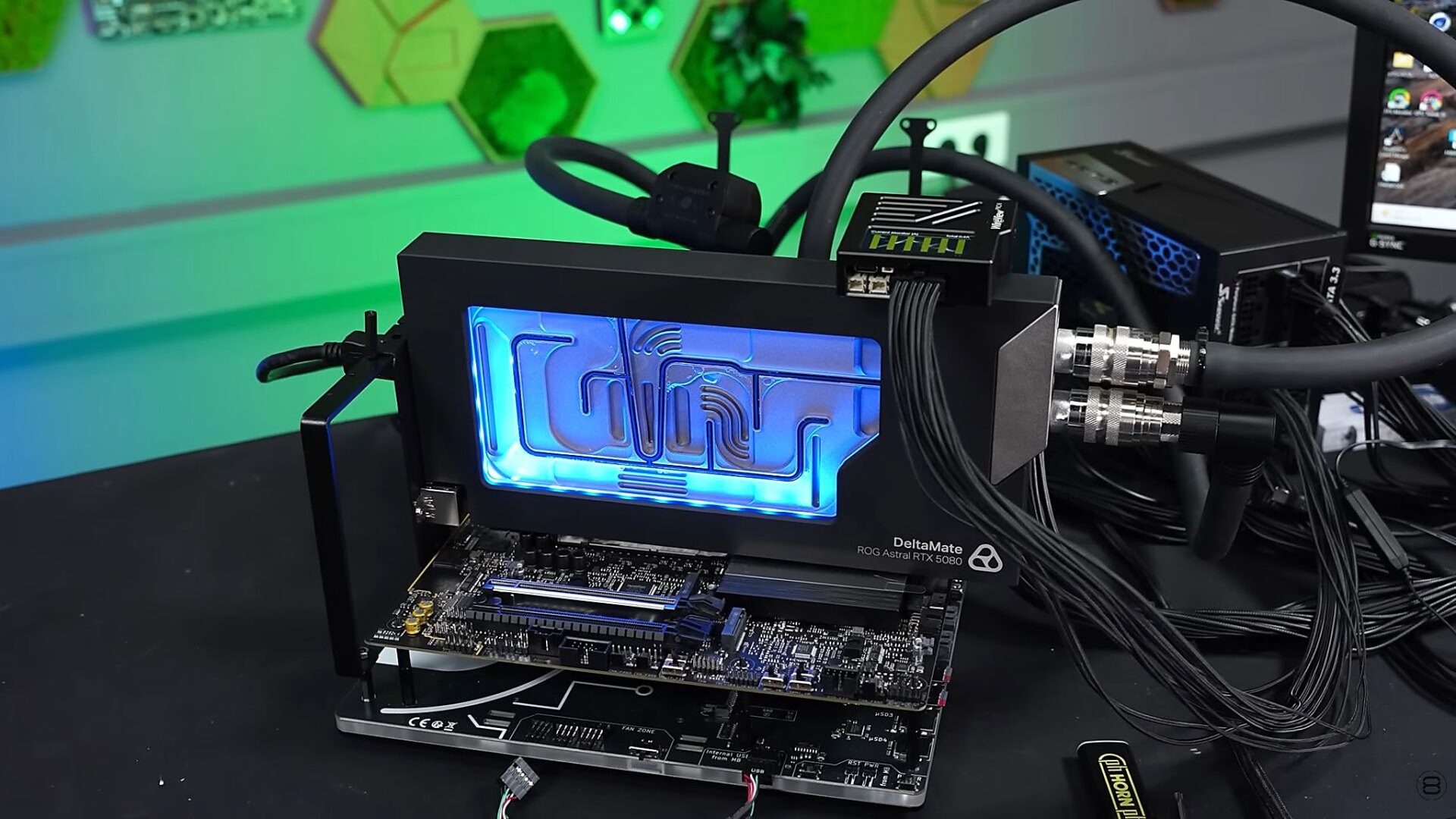
ASUS ROG Astral RTX 5080 is already part of the high-end graphics card segment, but a new demo from Der8auer shows that there is still significant room for temperature reduction if switching to dedicated water cooling. With the Thermal Grizzly Deltamate RTX 5080 block, this card model was recorded to drop nearly 20 degrees Celsius under heavy load compared to the stock air cooler. That difference is not just beautiful in terms of specifications, but also directly impacts noise levels, clock speed stability, and peace of mind when the machine has to run heavy games or long renders. However, this is clearly not a choice for the masses, as the trade-off is high cost and significant hardware modification risks.
How much does the Thermal Grizzly Deltamate RTX 5080 reduce temperatures?
According to the test summarized by Wccftech from Der8auer's video, the ROG Astral RTX 5080 with the original air cooler runs FurMark at approximately 70 degrees Celsius for the GPU, while the memory fluctuates around 64-66 degrees Celsius. After switching to the Deltamate water block, the GPU temperature after more than 10 minutes of stress testing dropped to nearly 49 degrees Celsius, while the VRAM stayed around 44 degrees Celsius. From a practical usage perspective, this reduction is enough to prevent the fans from ramping up high, limiting noise during extended gaming sessions and reducing the risk of thermal throttling when the system operates in a hot room.
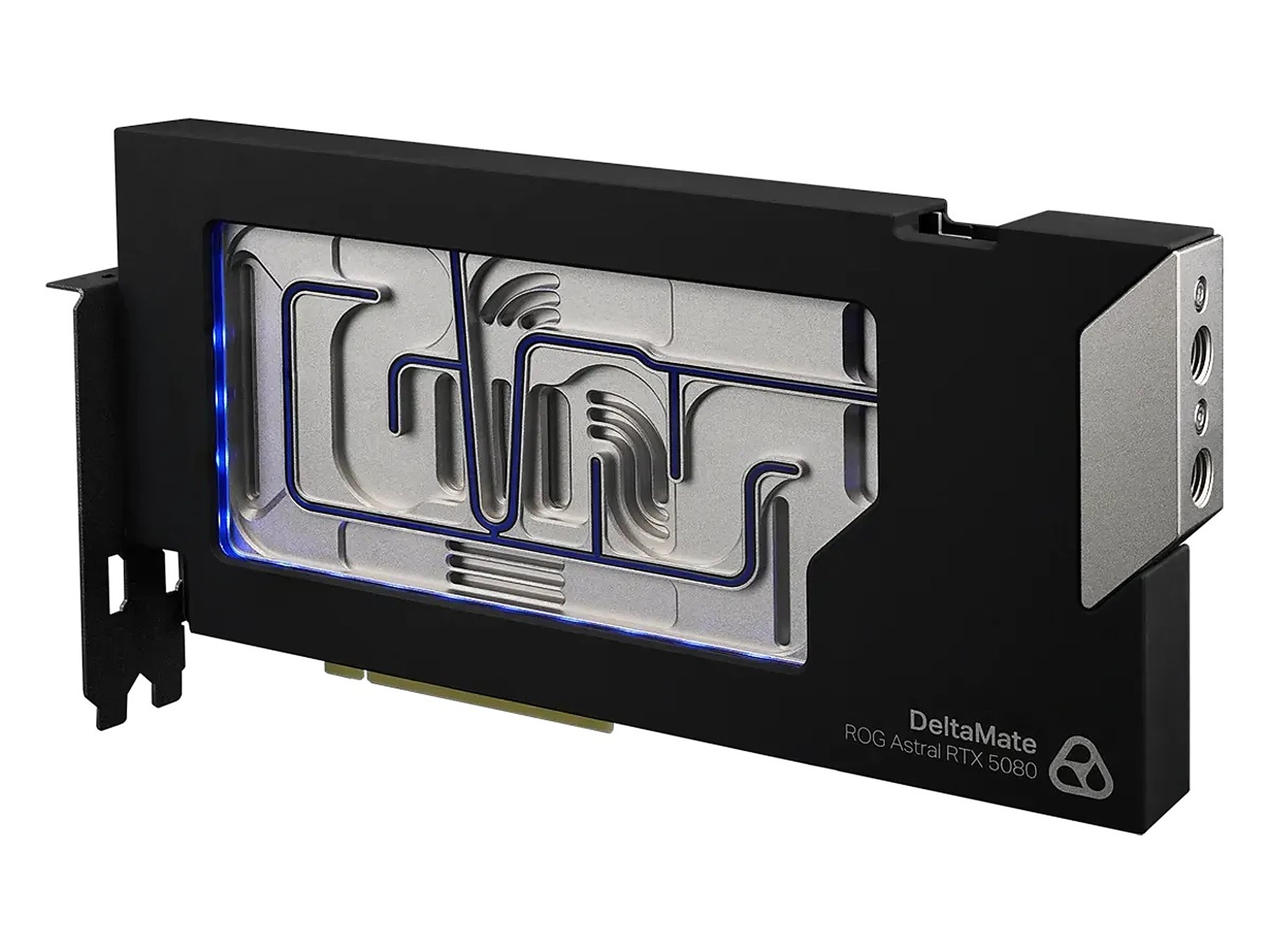
Notably, Thermal Grizzly did not design this block in a conventional way. On the official Thermal Grizzly introduction page, the Deltamate RTX 5080 uses a dual coldplate design, where the coldplate for VRAM and VRM weighs over 900 grams, while the GPU cooling surface utilizes a 0.2 mm micro-fin structure to increase the heat exchange area. This is a product aimed at true custom loop enthusiasts, not a plug-and-play upgrade.
In that context, the nearly 20-degree Celsius reduction should not be interpreted as "the stock card is too bad." The air cooler on the ROG Astral RTX 5080 is still sufficient for most general users, especially when the card is used for daily gaming rather than being subjected to continuous heavy loads like FurMark. The value of the Deltamate lies in the fact that it provides extra thermal headroom for high-end builds that have already optimized everything else-from case airflow to power supplies and fan speeds-but still want a cooler and quieter system.
What do high-end users gain and what do they sacrifice when modding a GPU cooler?
For expensive PC builders, this story is quite similar to the refinements that ASUS once pursued in the power delivery stage, such as ROG Equalizer: the ultimate goal is still to make the system more stable under heavy loads. When GPU and VRAM temperatures drop, radiator fans or case fans can run slower to maintain low noise levels, while the card gains more headroom to maintain stable clock speeds longer in 4K gaming, video editing, or local AI tasks.
| Factor | Practical Benefit | Trade-off to Accept |
|---|---|---|
| GPU/VRAM Temperature | Significant reduction under heavy load, less heat inside the case | Must remove the original cooler and reinstall it precisely |
| Noise Level | Can reduce fan speeds for quieter operation | Requires a compatible water cooling system to reach full potential |
| Stability | Less thermal pressure during extended gaming or rendering | Higher risk of warranty voiding and installation errors compared to general users |
| Cost | Suitable for systems with heavy investment in custom loops | The block alone is over 600 USD, not including the rest of the water loop |
Furthermore, the price of this product is a very clear barrier. Wccftech cites a price of approximately 643 USD, which is enough to turn an already expensive RTX 5080 into an investment item suitable only for enthusiasts willing to spend. Therefore, the most reliable message from Der8auer's demo is not that "everyone should change their block," but rather that for the specific group of users who enjoy hardware modification, Deltamate shows that custom water cooling can still create a massive difference in temperature, noise, and stability on today's most high-end GPUs.
From the perspective of high-end PC builders, Hall Effect keyboards and new hardware mods all follow the same logic: spending more money in exchange for a more stable experience. With Thermal Grizzly and the Deltamate RTX 5080, the greatest value lies not in showing off beautiful temperature numbers, but in keeping the system quieter, cooler, and easier to control when the machine is under heavy load for many hours. Thermal Grizzly is thus turning the Deltamate RTX 5080 into an upgrade that is very niche but extremely convincing for high-end builds that have already optimized almost every other heat point.