
The era of running pirated Windows and Office with free activation tools has just come to an end. With the November 2025 Patch Tuesday update, Microsoft successfully patched a key vulnerability, putting the KMS38 activator out of action. The tool, developed by the Massgrave group (short for Microsoft Activation Scripts), had been the most popular and supposedly the safest way for non-paying users to activate Windows and Office, and even to receive the full official security patches.
Almost immediately, users who had activated their PCs this way began receiving notices asking them to buy a legitimate license from Microsoft. In this situation, buying a Windows 11 key for just 10 USD, or an Office 2021 Pro key for about 39 USD, on the secondary market is the safest way to avoid losing activation and data.
KMS38 "Put to Rest": The Fight Against Piracy Escalates
The KMS38 tool had survived and thrived for years, circulating widely on tech forums, piracy-sharing sites, and even on platforms owned by Microsoft such as Azure DevOps and GitHub. Its open and long-running presence drew a large community of users. Although the tool is open source, which lets the community inspect it for malware, many people still see Microsoft's decision to block it as a necessary step to protect its ecosystem.
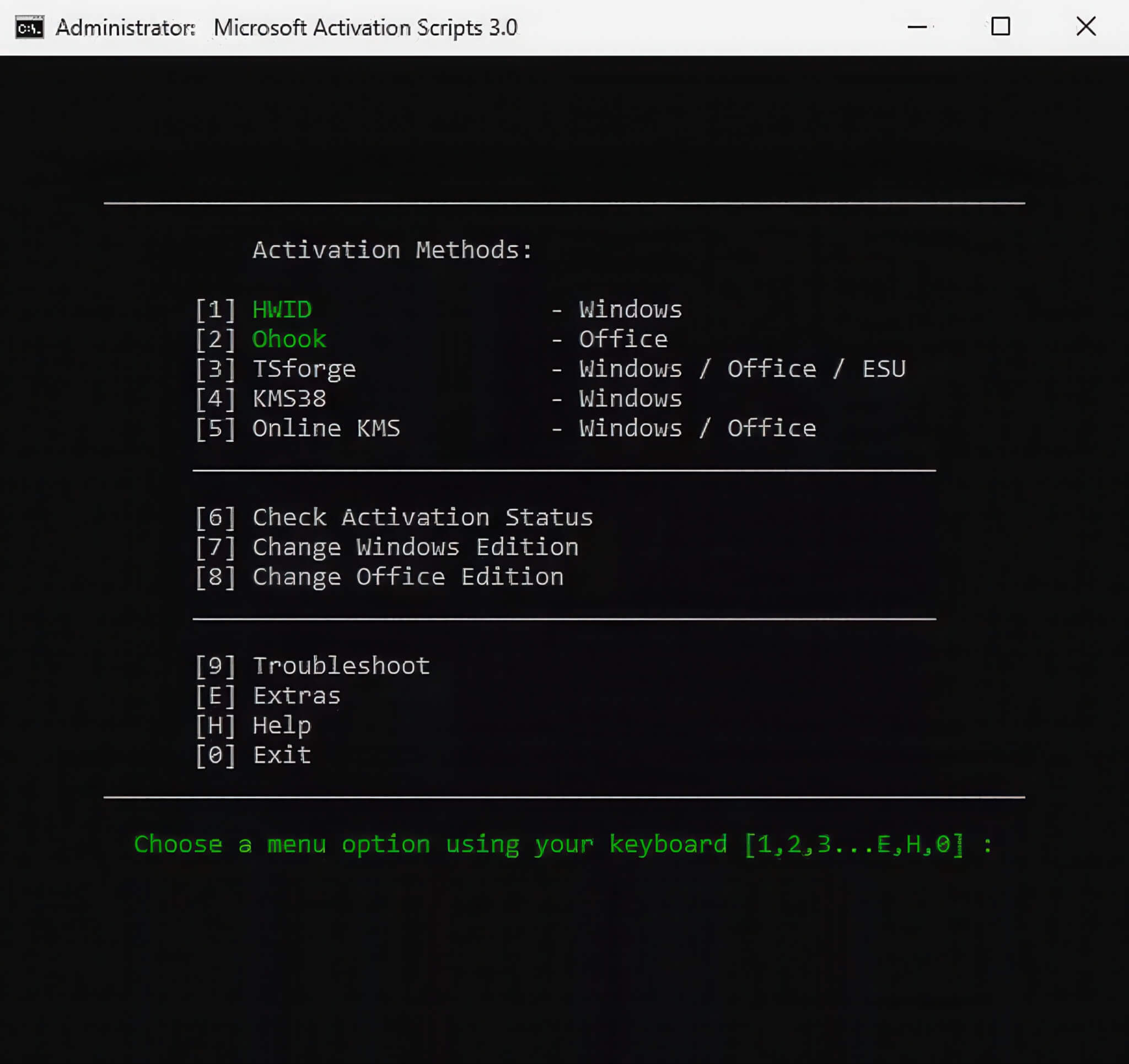
In its latest update announcement, the Massgrave group confirmed that the core KMS activation option has been shut down for good by Microsoft. The developers now recommend that the community switch to alternative activation methods such as HWID (Hardware ID) or TSforge, which still work. The group also said it hopes to find a way around Redmond's new controls soon.
The closing of the KMS38 loophole came just a few weeks after Microsoft tightened another screw: blocking every known method of installing Windows 11 without an online Microsoft account. That includes removing the ability to install Windows 11 with a local account when there is no internet connection.
Microsoft Abandons Its Lenient Stance on Piracy
In the past, pirated copies of Windows and Office were always a challenge for Microsoft, but the company usually took a relatively relaxed attitude. At one point, founder Bill Gates acknowledged that the spread of pirated copies had helped Windows become the dominant desktop operating system worldwide. Recent legal and technical actions, however, show that Microsoft is making a sharp strategic shift.
Redmond is moving its focus to business models built on subscription services, such as Microsoft 365 and integrated AI services. Tighter control over software activation is a necessary step to protect revenue from these services and push users toward legitimate licenses. The decision to permanently remove the old activation methods shows Microsoft's determination to reshape its software market.