
Official Microsoft support for Windows 10 has officially ended, but users can still receive free security updates for one more year. Some installations, however, now need an important servicing update before they can enroll in the Extended Security Updates plan. Microsoft officially ended Windows 10 support in October but offered an extra year of free security updates to people who still rely on the older operating system. Even so, some users have been unable to sign up for the Extended Security Updates (ESU) program. A new critical patch, KB5071959, now fixes the problem and restores enrollment.
KB5071959: An Emergency Patch for the ESU Enrollment Problem
KB5071959 is an out-of-band patch designed for users who have not yet enrolled in the ESU program. According to Microsoft, it resolves a bug that caused the enrollment wizard to fail during ESU sign-up. Installing the update prevents further errors and lets users complete enrollment successfully.
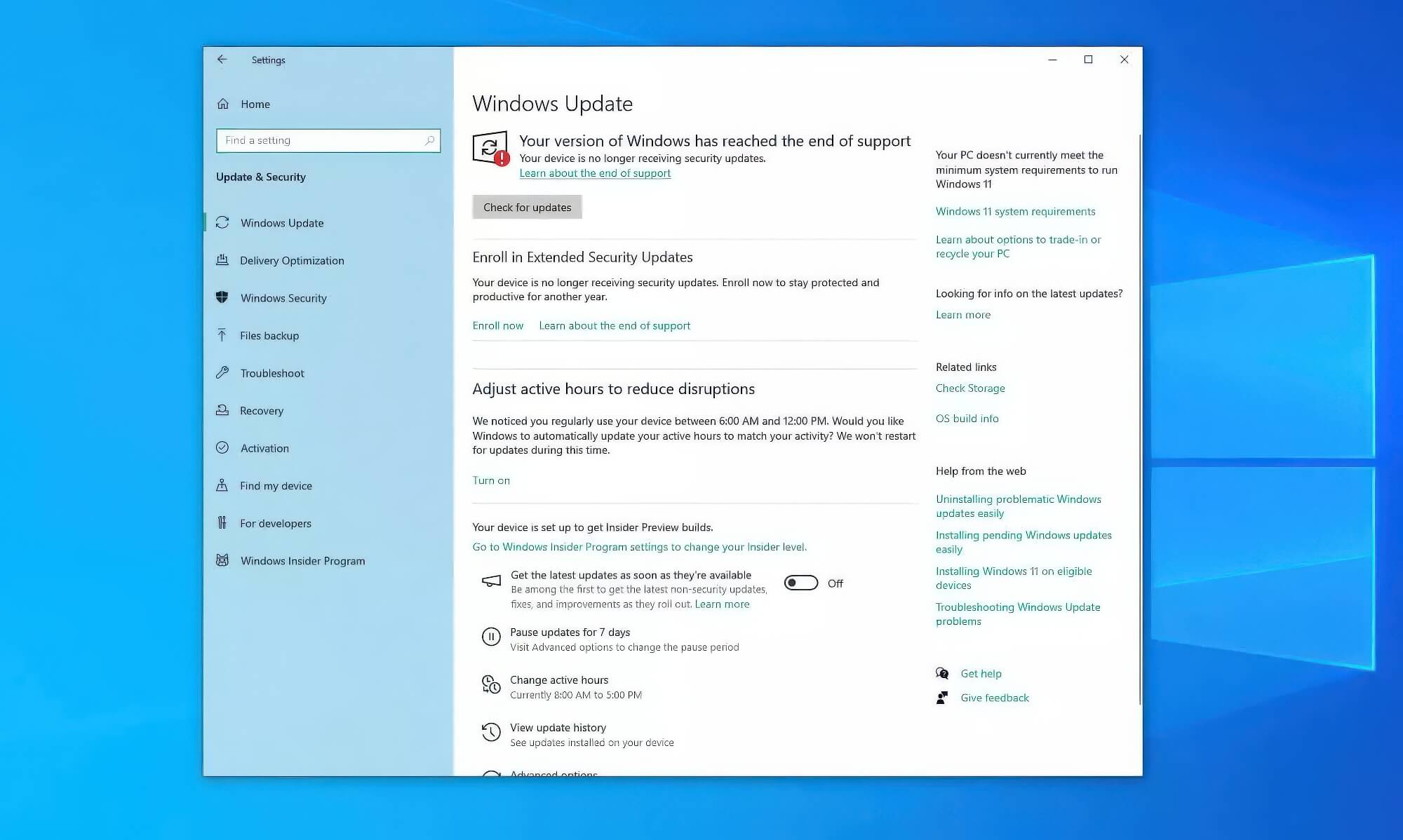
Windows Latest reports that the enrollment problem affected users in the European Union (EU), where the wizard said enrollment was "temporarily unavailable." Users outside the EU ran into a generic "something went wrong" error message. Microsoft has confirmed the issue and is now offering KB5071959 to users looking for one more year of free system updates. The patch is bundled with a Servicing Stack Update, which is designed to improve the reliability of the Windows Update process and is a core component of the operating system's update mechanism.
KB5071959 was released as part of this month's Patch Tuesday and will appear in the update list only for users who are running into the enrollment problem. Once enrollment is complete, users can keep receiving security updates over the coming months.
Windows 10 Security Extensions and Options Outside Microsoft
Extended security patches are available to all Windows 10 end users through 2026. After that, regular users will no longer get free support. Business customers and educational institutions, however, can access a paid ESU package through October 2028. There are even a few exceptions that extend support as late as January 13, 2032.
Third-party providers such as 0patch also offer "micropatching" services to keep Windows 10 secure beyond those dates. That gives organizations an option if they don't want to move to Windows 11 or can't upgrade their hardware. Microsoft's decision to provide an extra year of free support for individual users is an effort to keep the ecosystem safe, even as it formally ends mainstream support.
The release of the out-of-band patch KB5071959 shows Microsoft's commitment to making sure users who want to keep running Windows 10 can do so as safely as possible within the one-year window of free security support.