
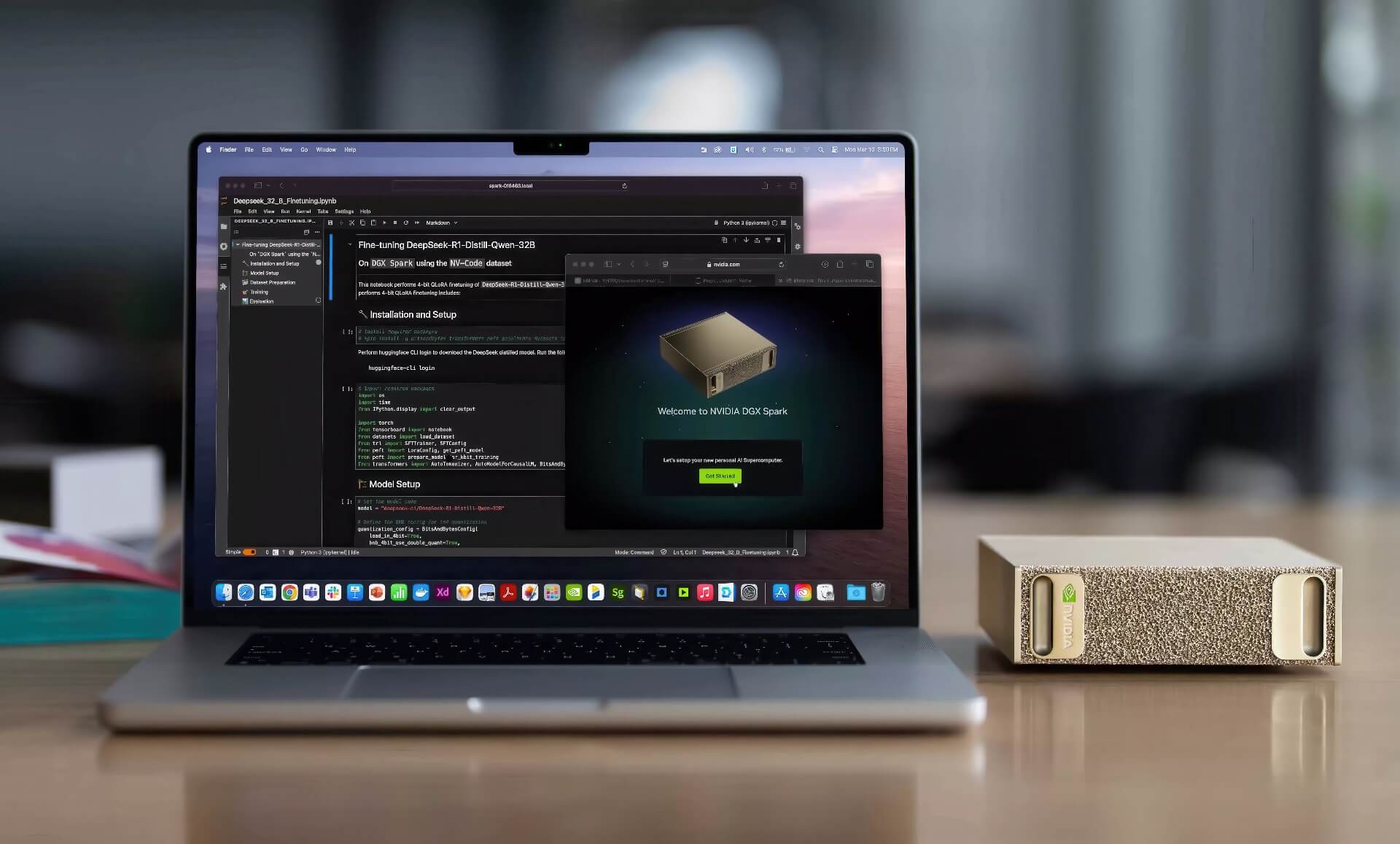
The DGX Spark Mini PC from Nvidia, a device specialized for AI workloads and research, has been tested with blockbuster titles like Cyberpunk 2077. The results reveal a clear reality: the gaming performance of this $4,000 machine is disappointingly poor, highlighting the massive architectural divide between intensive computing hardware and entertainment graphics hardware. Although the device has finally shipped after long delays, buyers should be aware that its primary purpose is running AI models, not conquering high-frame-rate demanding games.
Technical Challenge: Running Cyberpunk 2077 on a non-specialized ARM chip
Gamers and Reddit community member Retrotom embarked on a complex technical challenge. He sought to launch Cyberpunk 2077 on the DGX Spark, a device utilizing an ARM chip and running Linux. To achieve this, he had to use Box64, an x86-to-ARM translation layer. This layer acts as a bridge, allowing Linux programs compiled for the x86_64 architecture to run on the DGX Spark's ARM platform. The process required deep technical knowledge, including self-compiling Box64 and handling complex instruction sets to install Steam and launch the game.
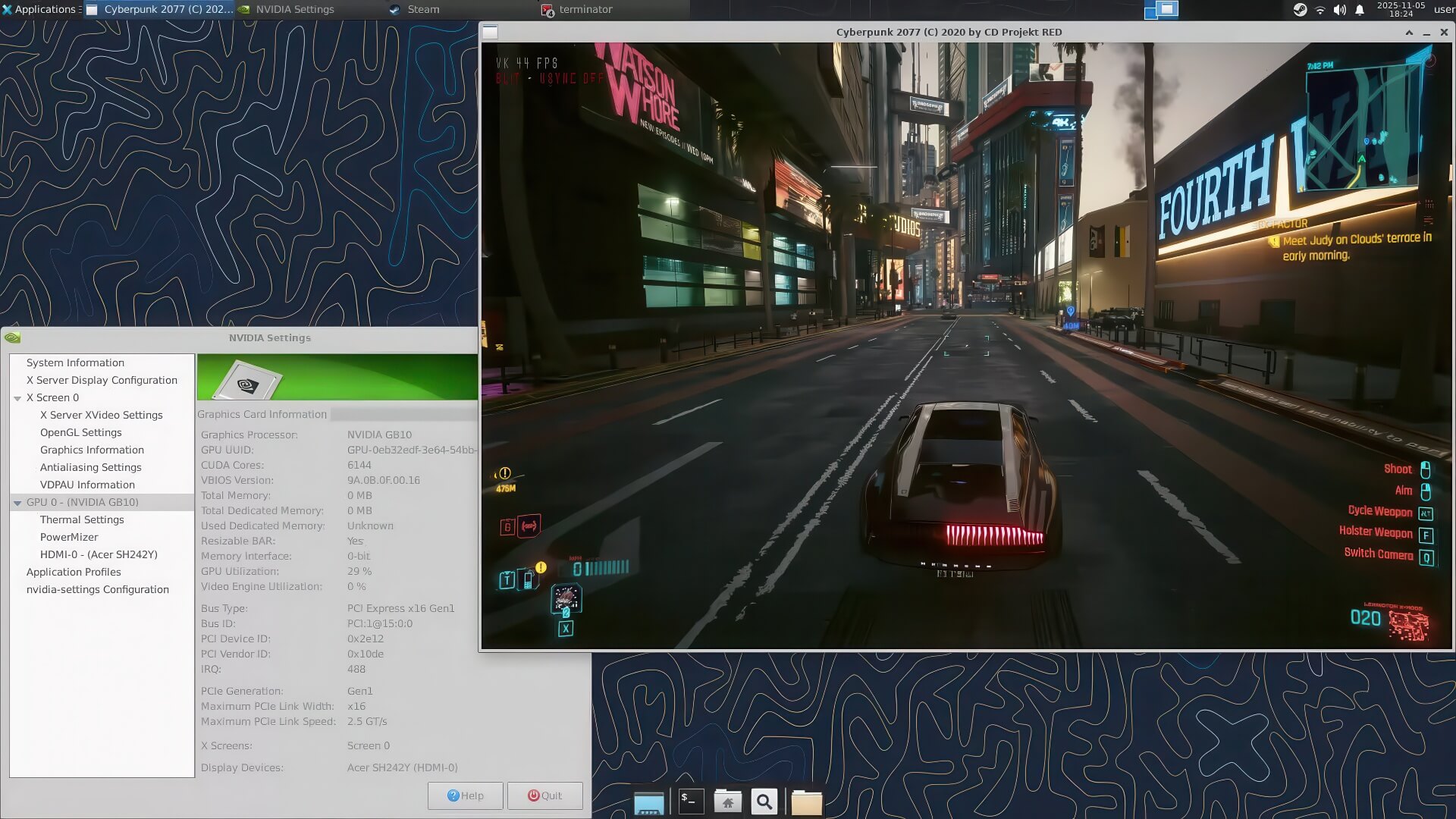
Technical success was achieved, but computational performance was disappointing. According to Retrotom's report, when running the game at 1080p resolution with medium graphics settings, the frame rate only fluctuated around 50fps. This is particularly noteworthy because the DGX Spark does not support DLSS-a technology created to improve performance for Nvidia GPUs when playing heavy games. Although stability was not perfect (some crashes occurred), the system generally maintained a certain level of stability.
Retrotom expressed enjoyment in the process, calling playing x86 PC games on an ARM platform an "interesting" experience. However, he issued a very strong warning: "Don't waste $4,000 on a DGX Spark with the intention of gaming." Clearly, investing in specialized AI hardware does not equate to owning a powerful gaming machine.
Analysis of Limitations: Why doesn't AI power translate into FPS?
Other tests also reinforce this observation. The YouTube channel ETA Prime used the RPCS3 emulator to run Skate 3 (an old PS3 game) on the MSI EdgeXpert (a Spark-based device) and only achieved about 60 FPS at 1080p. This highlights the limitations of the DGX Spark in an entertainment role. The issue lies in the fact that the architecture of the AI chips in the DGX Spark is optimized for the parallel computations required for Large Language Models (LLM) and data training, rather than for real-time 3D graphics rendering.
https://www.youtube.com/watch?v=aKcmx1cWTHc
With a $4,000 budget, gamers have many superior options from specialized PC gaming brands like Alienware or Origin. In fact, building a DIY PC with high-end components (such as an RTX 5090 and Ryzen 7 9800X3D) would offer much higher performance value per dollar. This experiment serves as a confirmation that while AI chips are the future of computing, traditional GPUs remain the irreplaceable foundation for the world of entertainment and gaming.