

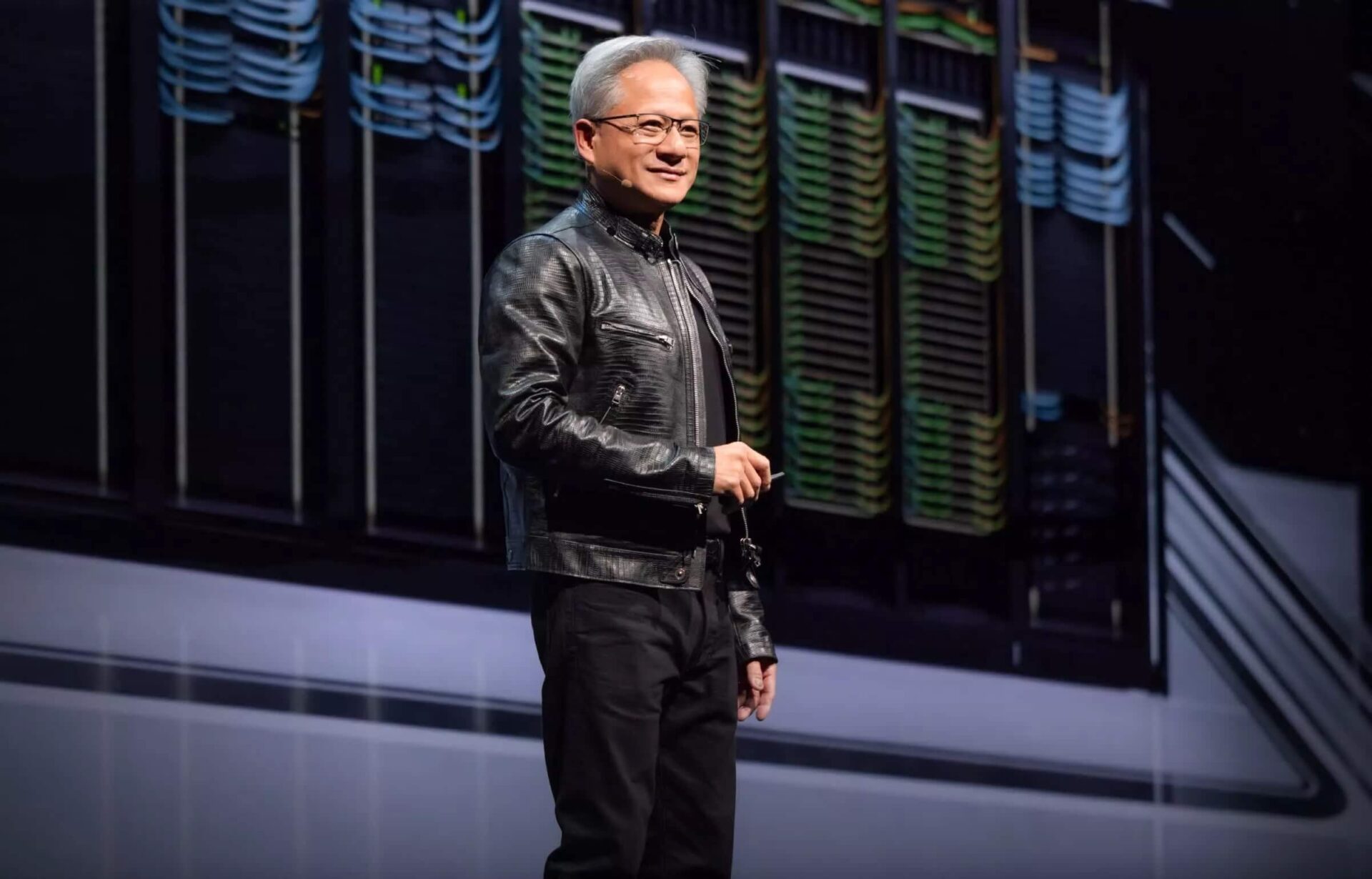
At the GPU 2025 technology conference, Nvidia CEO Jensen Huang announced a series of advanced AI acceleration GPUs, including Blackwell Ultra B300, Vera Rubin, and Rubin Ultra. These GPUs are designed to significantly improve AI performance, particularly in AI model training and inference tasks. Among them, Nvidia Blackwell Ultra B300 is a major highlight, promising to reshape the AI technology landscape with more powerful processing capabilities and significantly increased memory capacity.
Nvidia Blackwell Ultra B300: A Massive Leap in AI
Expected to launch in the second half of 2025, the Blackwell Ultra B300 increases memory capacity from 192GB to 288GB HBM3e, while simultaneously boosting FP4 tensor computing performance by 50% compared to the Blackwell GB200. This helps support larger AI models and improves inference capabilities on frameworks like DeepSeek R1.
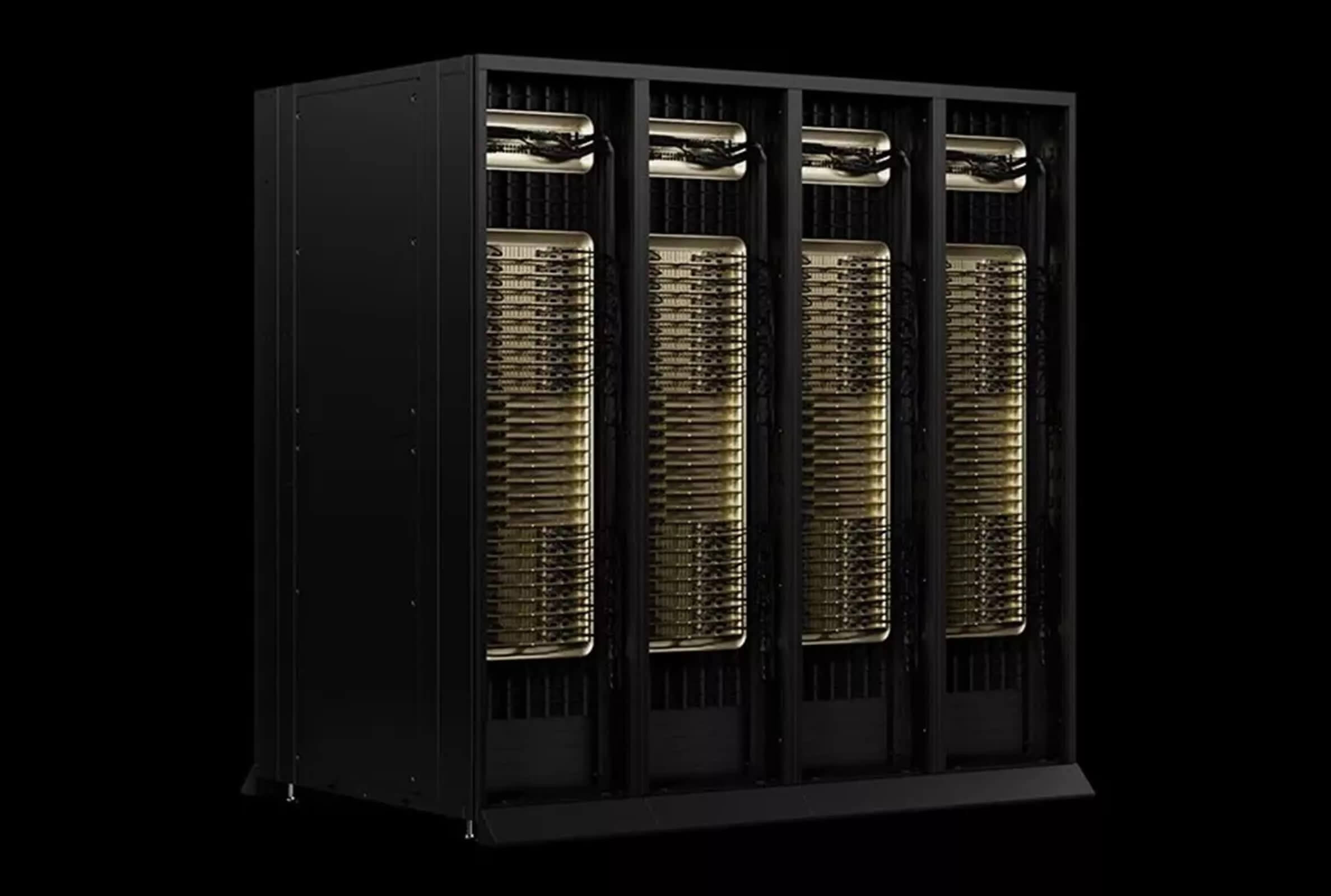
In a full NVL72 rack configuration, the Blackwell Ultra B300 can reach up to 1.1 exaflops of FP4 inference computing, far surpassing the previous generation. Beyond being a standalone GPU, Nvidia also introduced B300 NVL16 server solutions, GB300 DGX Station systems, and GB300 NV72L full racks, helping enterprises deploy more powerful AI supercomputers.
Combining eight NV72L racks forms the Blackwell Ultra DGX SuperPOD, which includes 288 Grace CPUs, 576 Blackwell Ultra GPUs, 300TB of HBM3e memory, and achieves a total processing capacity of 11.5 ExaFLOPS FP4. These systems can be interconnected to build large-scale AI supercomputers, which Nvidia calls "AI factories."
Vera Rubin and the Next-Generation GPU Roadmap
First introduced at Computex 2024, the Vera Rubin GPU generation is expected to launch in the second half of 2026, bringing breakthrough improvements in AI training and inference. This GPU features tens of terabytes of memory, paired with Nvidia's custom-designed Vera CPU with 88 custom Arm cores and 176 processing threads.
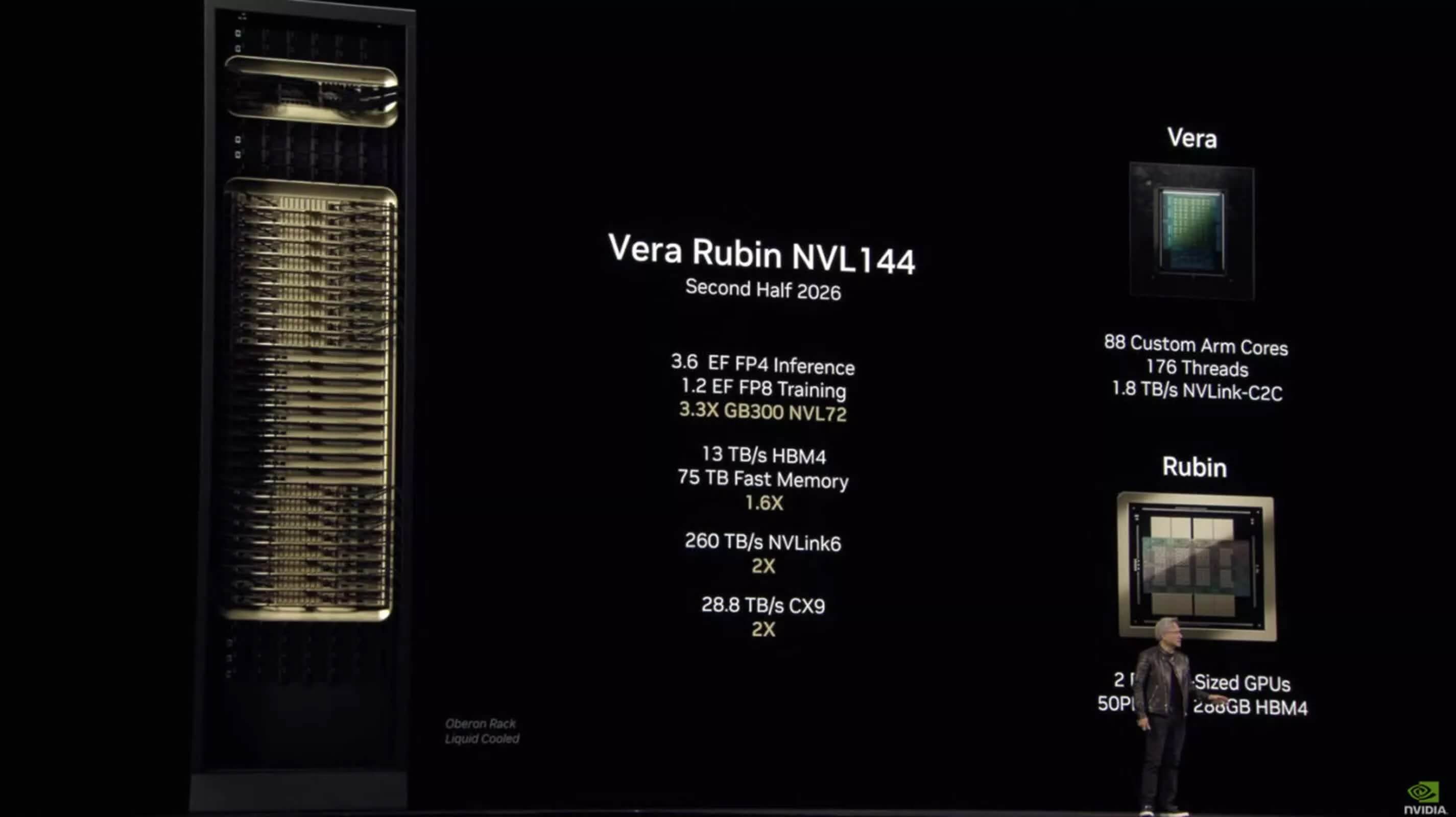
With an architecture consisting of two chips on a single substrate, Vera Rubin achieves a performance of 50 petaflops FP4 inference per chip. When configured in an NVL144 rack, this system can reach 3.6 exaflops FP4, accelerating the training process of complex AI models.
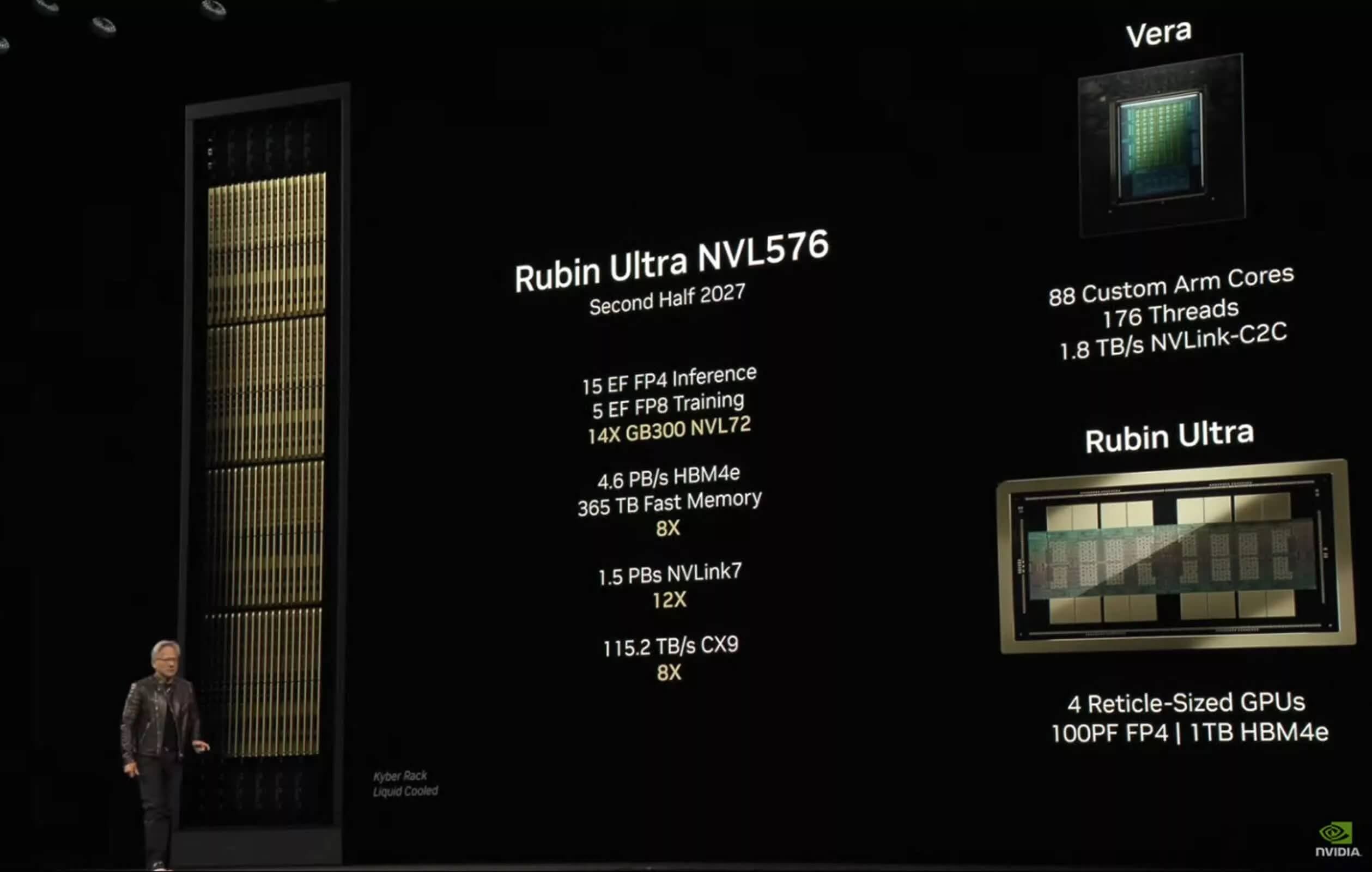
Built upon the Vera Rubin architecture, the Rubin Ultra version is expected to launch in the second half of 2027. This GPU will utilize an NVL576 rack configuration, where each GPU has four maximum-sized substrates, providing 100 petaflops FP4 per chip. The total capacity of the Rubin Ultra system reaches 15 exaflops FP4 inference and 5 exaflops FP8 training, outperforming Vera Rubin. Notably, each Rubin Ultra GPU will feature 1TB of HBM4e memory, bringing the total memory of the entire rack to 365TB.
Nvidia's Direction and the Future of AI
In addition to Blackwell Ultra B300 and Vera Rubin, Nvidia also announced a new generation GPU architecture named Feynman, expected to launch in 2028 alongside the Vera CPU. Although detailed information is still limited, Feynman is expected to push AI computing capabilities to a new level.
In his speech, CEO Jensen Huang emphasized the importance of "AI factories," where data centers act as production lines for data to serve AI models. He also mentioned the potential of physical AI, which helps develop smarter humanoid robots by training AI models in simulated environments before applying them to the real world.
Summary and Nvidia's Outlook in the AI Race
https://www.youtube.com/watch?v=_waPvOwL9Z8
The launch of the Nvidia Blackwell Ultra B300 and the development plans for new GPU generations like Vera Rubin and Rubin Ultra have affirmed Nvidia's ambition to lead the AI technology industry. With breakthrough improvements in memory, performance, and scalability, these GPUs not only meet the increasing demands of AI but also open a new future for AI supercomputers. Nvidia's roadmap shows a strong focus on building advanced AI foundations, helping the company maintain its leading position in the high-performance computing field.