
Chip giant Qualcomm has just announced the acquisition of Arduino, the Italian open-source hardware and software manufacturer. This move demonstrates Qualcomm's ambition to expand its edge computing technology ecosystem, targeting the creative and educational communities. Although the deal's value was not disclosed, Qualcomm stated that Arduino will continue to operate independently once the transition is complete.
Expanding influence to the global creative community
According to Qualcomm's statement, the acquisition of Arduino will help the company expand its product portfolio and edge technology, while providing better support for students, educators, entrepreneurs, and engineers in realizing their technological ideas. Arduino products are not typically used directly in commercial products, but they play a crucial role in the prototyping, testing, and STEM education stages.
https://www.youtube.com/watch?v=QxPBCBX8ac8
The Arduino community currently has over 33 million members worldwide-including electronics enthusiasts, programmers, and inventors. Once the deal is finalized, they will have the opportunity to access Qualcomm's entire technology and hardware platform, opening up numerous possibilities for developing innovative products and small-scale AI projects. This is also how Qualcomm builds relationships with developers, potentially expanding the influence of Qualcomm hardware in the future.
Currently, the deal is still awaiting regulatory approvals. Qualcomm predicts that this process will proceed smoothly without significant opposition.
Introducing the new Arduino Uno Q - A major leap in hardware
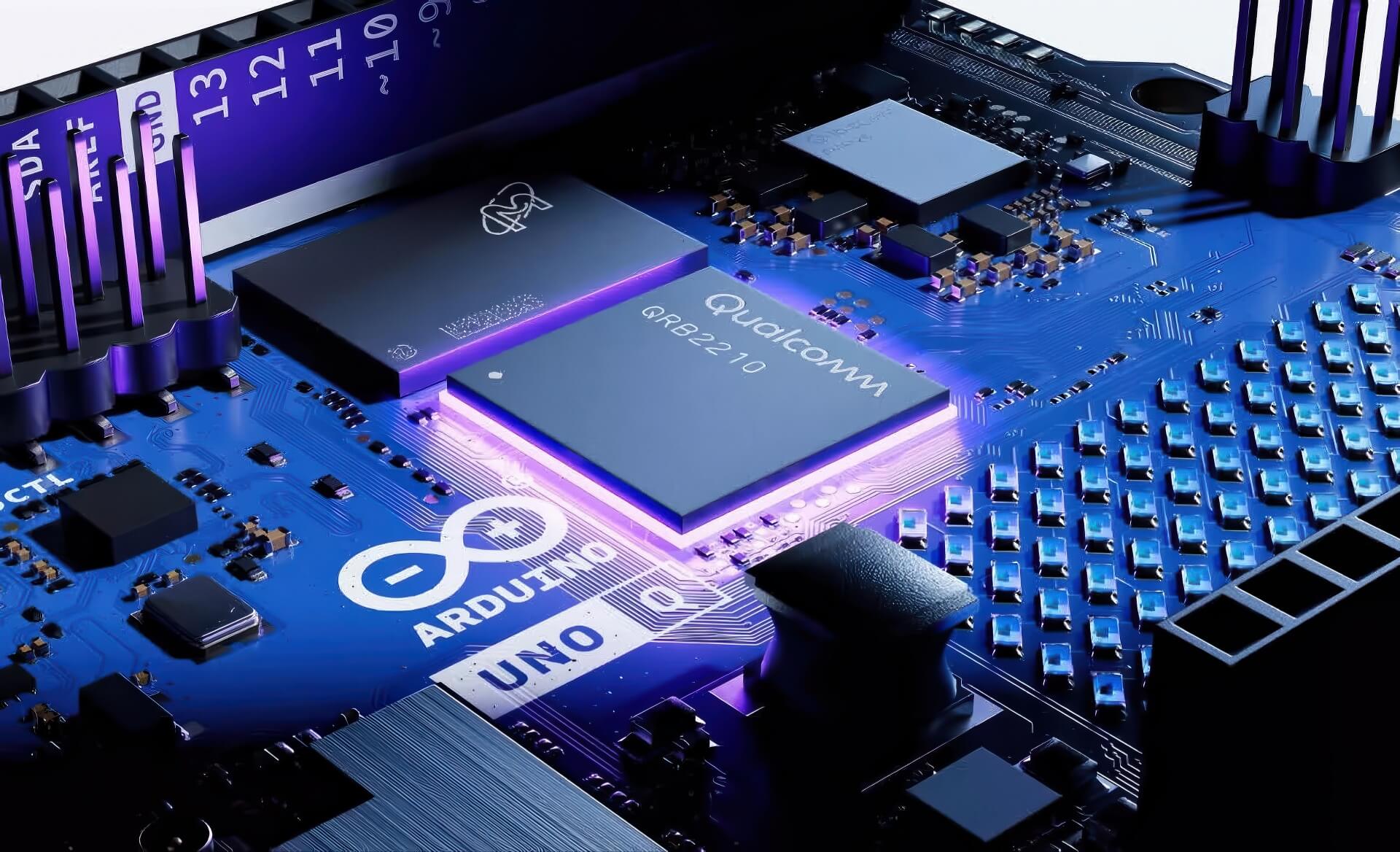
Alongside the acquisition announcement, Qualcomm and Arduino have launched a new product called the Arduino Uno Q, described as Arduino's first "dual-brain" board. The device integrates a Linux Debian-supported microprocessor with an STM32U585 microcontroller, providing flexible processing capabilities between general computing and control tasks.
The Arduino Uno Q is equipped with the Qualcomm Dragonwing QRB2210 platform, featuring 2 GB RAM, 16 GB eMMC storage, Wi-Fi 5, Bluetooth 5.1 connectivity, and USB-C. The product is positioned as a versatile development tool for many applications, especially in the field of AI, with capabilities for AI Vision (computer vision) and AI Audio (intelligent audio) processing.
Notably, the Uno Q is the first board compatible with App Lab, Arduino's new development environment. App Lab is designed to work seamlessly with the Edge Impulse platform, allowing users to create and refine AI models based on real-world data from various sources.
The Arduino Uno Q is now open for pre-order on the Arduino homepage at a price of 44 USD, with shipping expected to start from October 24. With Qualcomm's backing, this product is expected to usher in a new generation of development devices, combining hardware power with AI capabilities for the global creative community.