
Kioxia and Nvidia have just announced a joint project aimed at elevating storage performance for AI data center infrastructure. Their goal is to create SSDs capable of reaching 100 million IOPS, approximately 30-35 times higher than current high-end models, which only reach the 3 million IOPS level. If successful, this breakthrough will not only shorten the training and deployment time of massive AI models but could also reshape data center design, changing the competitive landscape in the cloud and enterprise storage sectors.
Next-Generation SSD Project for the AI Era
Kioxia, a leading semiconductor memory manufacturer, is developing new SSD technology with ultra-fast random read speeds to meet demanding AI workloads. The company aims to commercialize an SSD line reaching the 100 million IOPS milestone by 2027, collaborating directly with Nvidia on this project.
During a presentation in Tokyo, Kioxia stated that the new SSDs will connect directly to Nvidia GPUs instead of going through the central processing unit (CPU). This peer-to-peer connection type allows significantly faster data transfer between memory and computing resources-a key factor for large AI models that require continuous random data access. Tasks such as calling embeddings or model parameters will be optimized thanks to this new mechanism.
Nvidia even has an even higher goal: a system consisting of two SSDs could reach 200 million IOPS when using the PCI Express 7.0 standard, which supports high-speed communication between GPUs. To put this in perspective, current high-performance SSDs only achieve about 3 million IOPS with 4K data blocks. Therefore, the leap to 100 million IOPS will require massive improvements in both NAND flash technology and communication architecture.
XL-Flash and New Technological Directions
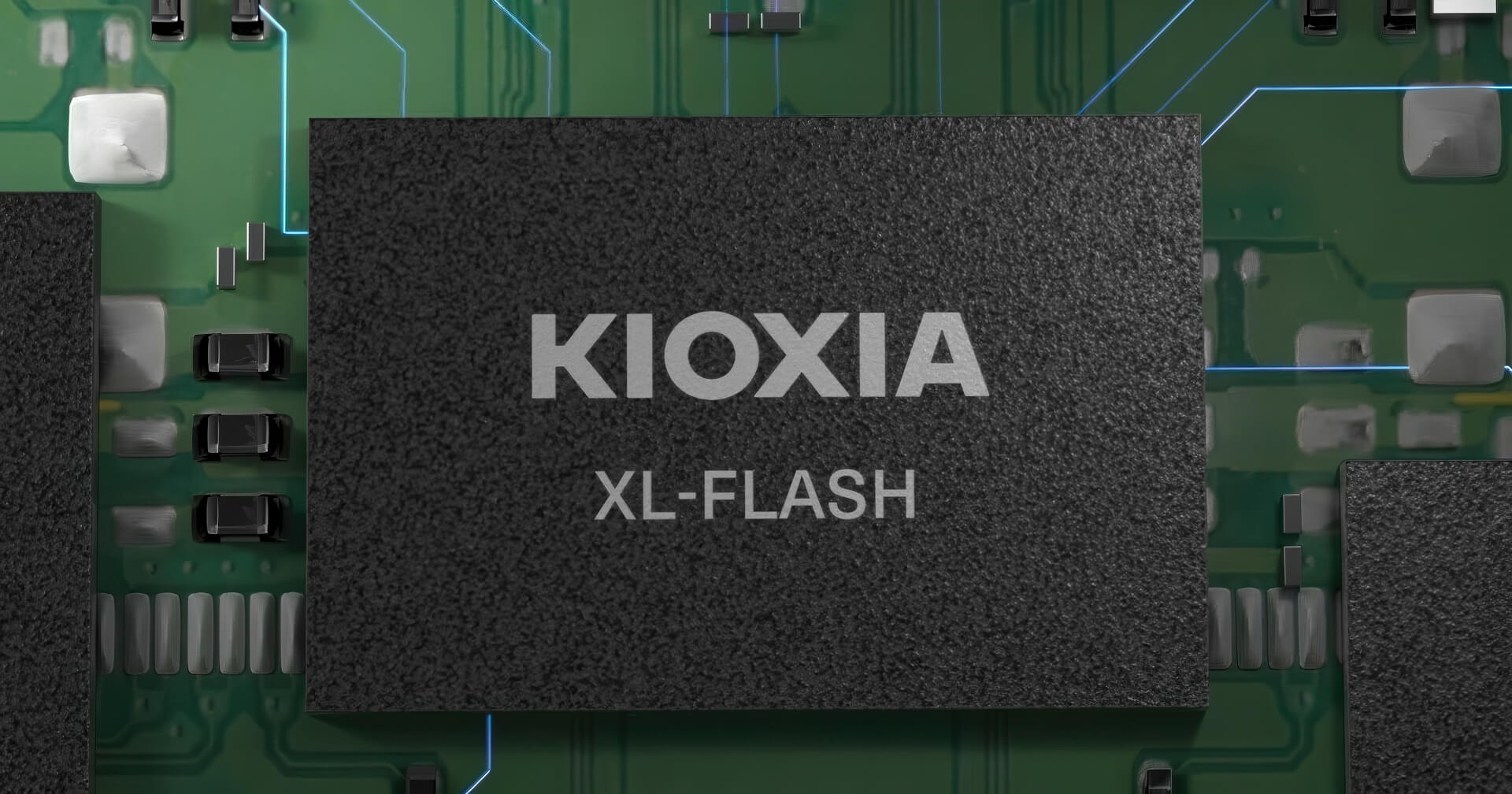
One of the technologies expected to serve as the foundation for Kioxia's SSDs is XL-Flash-a proprietary SLC NAND memory type, notable for its high endurance, low latency, and superior processing capabilities. XL-Flash allows up to 16 planes within a single NAND die, whereas conventional 3D NAND typically has only 3 to 6 planes.
Although Kioxia has not yet released detailed specifications, test data shows that the challenges are significant. An XL-Flash SSD with 400GB capacity, featuring 32 NAND dies and a PCIe 5.0 interface, once reached approximately 3.5 million random read IOPS. If perfectly scalable, a drive with 915 dies could hit the 100 million IOPS mark. However, in reality, factors such as controller bandwidth, firmware latency, or architectural limits make it difficult to reach ideal performance levels. This may force manufacturers to adopt multi-controller designs or modular SSD formats.
Alongside XL-Flash, Kioxia is also researching High-Bandwidth Flash (HBF)-a new memory technology that combines the speed and scalability of HBM with much larger storage capacities. HBF can integrate up to 16 NAND chips with a single logic die in a stacked structure, using advanced packaging techniques to maximize bandwidth and parallel processing capabilities. While it remains unclear whether HBF will appear in final commercial products, it is a sign that Kioxia is expanding its strategy toward ultra-high-performance storage solutions for the AI era.