
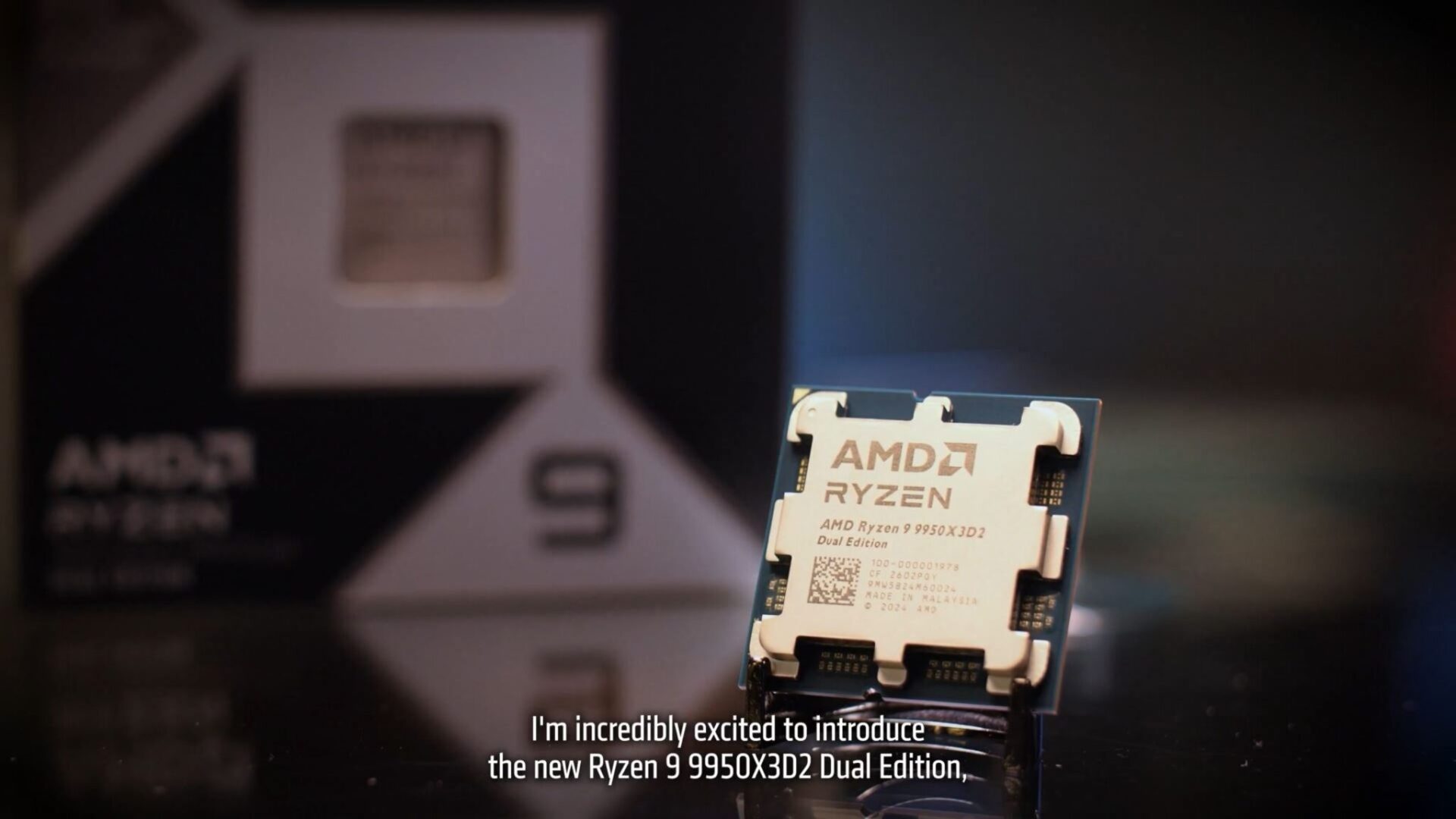
AMD has officially launched the Ryzen 9 9950X3D2 Dual Edition, the latest flagship desktop processor featuring a total cache of 208 MB-the highest ever seen on a mainstream chip. This 16-core Zen 5 chip aims to blur the lines between gaming CPUs and content creation CPUs, a feat previous X3D generations could not achieve. The biggest difference compared to the previous generation Ryzen 9 9950X3D is the use of both CCDs for 3D V-Cache attachment, instead of just one CCD as before. AMD has confirmed the official launch date as 22/4/2026, while the retail price has yet to be revealed.
208 MB cache - A completely new architecture compared to the previous generation
The Ryzen 9 9950X3D2 Dual Edition features 192 MB of L3 cache plus 16 MB of L2 cache, totaling 208 MB of cache. To achieve this figure, AMD has added a second 3D V-Cache chiplet compared to the Ryzen 9 9950X3D, increasing the total L3 cache by an additional 64 MB. This is a fundamental design change rather than just a spec bump-with both CCDs equipped with 3D V-Cache, memory access latency is reduced and the amount of data pre-stored before accessing RAM is significantly increased. Jack Huynh from AMD confirmed that this chip outperforms the Ryzen 9 9950X3D by approximately 5-10% in both gaming and content creation tasks.
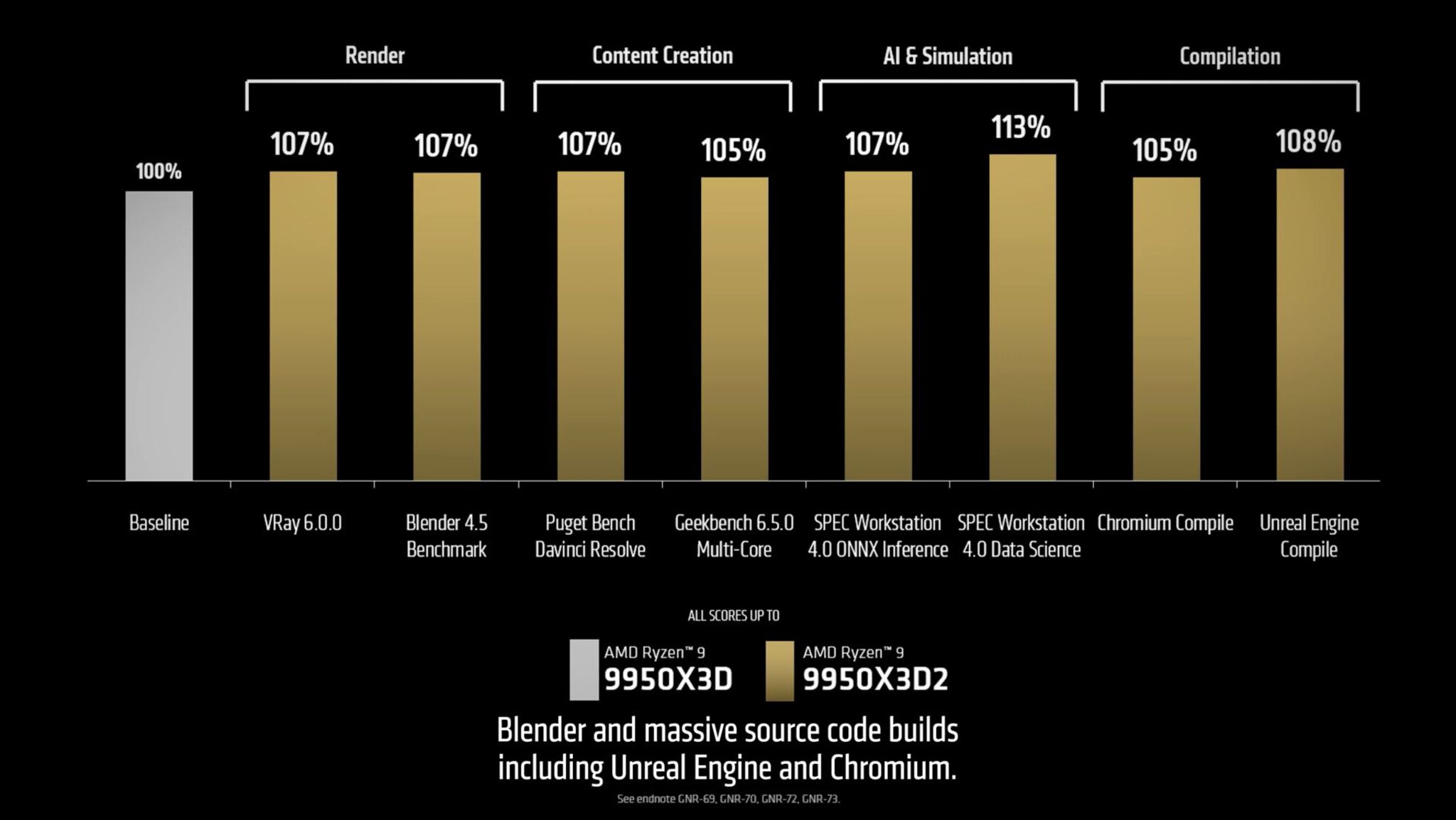
Full technical specifications of the Ryzen 9 9950X3D2 Dual Edition: Zen 5 architecture, 16 cores, 32 threads, base clock 4.3 GHz and boost 5.6 GHz, 192 MB L3 cache, 16 MB L2 cache, TDP 200W. Direct comparison: the Ryzen 9 9950X3D features only 128 MB L3, a 5.7 GHz boost clock, and 170W TDP. The TDP increase from 170W to 200W reflects the additional power AMD needs to supply to run both CCDs simultaneously under heavy load-this is the necessary trade-off for the Ryzen 9 9950X3D2 to achieve its record 208 MB cache. Users will need a motherboard with good VRMs and a sufficiently powerful cooling system to keep the chip stable at this TDP level.
Which workloads is this chip suitable for and is it worth upgrading from the previous generation?
AMD positions the Ryzen 9 9950X3D2 Dual Edition for users requiring high, consistent performance in two areas: large-scale software compilation, 3D rendering, local AI processing, complex content creation pipelines, and heavy gaming. The 208 MB cache of the Ryzen 9 9950X3D2 allows the chip to store more data in high-speed memory, reducing the number of times it must access RAM-which is particularly beneficial for complex game engines, large compilers, and medium-sized local AI models. This chip is also AMD's answer to users who previously had to choose between a chip optimized for gaming (X3D with massive cache) and a chip optimized for content creation (high core count, high clock speeds): the Ryzen 9 9950X3D2 aims to excel at both roles in a single socket.
For users considering an upgrade from the AMD Ryzen 9 9950X3D series, the decision depends on whether your actual workload can leverage the increased cache. Those building large software, rendering 3D, and running local AI will see more obvious benefits, while pure gamers might find a 5-10% difference insufficient to justify a higher price when the retail price is announced at the end of April.
Those planning to build high-end desktop systems like the Alienware Area-51 with Ryzen 9850X3D chip should also consider the Ryzen 9 9950X3D2 Dual Edition as a more powerful CPU alternative on the AM5 platform. The chip launches on 22/4/2026, and AMD will announce the price closer to that date.
Full technical specifications for the Ryzen 9 9950X3D2 Dual Edition can be viewed at the official AMD product page.