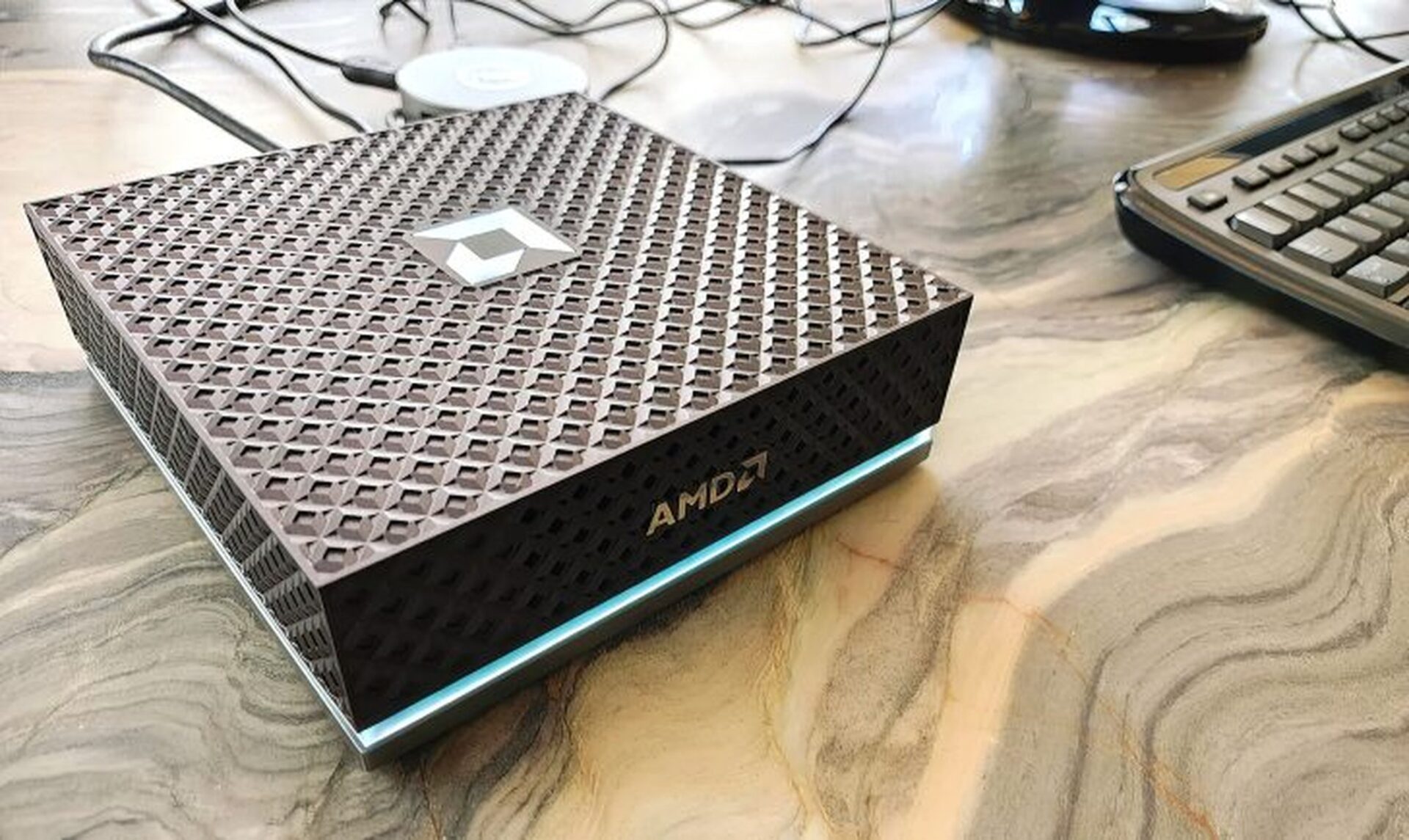
AMD is preparing to launch a Ryzen AI MAX 395 mini PC in June, aimed at users who want to run AI locally on a small system instead of a bulky workstation. What stands out is how AMD packs a high-end Strix Halo chip, a large pool of unified memory and an AI toolset into a single small desktop. It is the kind of product that sits between a premium laptop and a dedicated AI workstation. For people who build models, create content or need a compact desktop with enough power for heavy tasks, it is a direction worth watching.
The Ryzen AI MAX 395 Mini PC Shows Compact AI PCs Are No Longer Just an Experiment
According to the original report from WCCFTech, AMD's new machine is planned for a June 2026 launch and uses the Ryzen AI MAX+ 395, the flagship chip of the Strix Halo family. This is not a mini PC that only handles basic office work. The Ryzen AI MAX+ 395 offers up to 16 Zen 5 CPU cores, an RDNA 3.5 integrated GPU with up to 40 compute units, an XDNA 2 NPU and LPDDR5X-8533 memory that can reach 128GB. By putting this configuration in a small chassis, AMD is targeting people who want to run models right at their desk and try out workflows with LM Studio, ComfyUI or VS Code while still saving space.

Looking back at the trend in new AI mini PCs on the market, most products today still lean toward office use or ultra-compact desktops for light workloads. The Ryzen AI MAX 395 mini PC takes a different approach: it prioritizes compute performance, large memory and software for AI developers rather than simply emphasizing small size.
AMD also stresses that the machine will support ROCm 7.2.2, come with dev-ready apps and be optimized for many models from the first day of sale. That matters because buyers of compact AI PCs usually have no shortage of hardware choices, but they care a great deal about whether the software runs right away and whether it takes a lot of time to tune.
Why AMD Wants the Ryzen AI MAX 395 Mini PC Next to NVIDIA's DGX Spark
In terms of positioning, AMD clearly wants the Ryzen AI MAX 395 mini PC to fill the gap between mainstream desktops and the DGX Spark, the line NVIDIA pitches to developers, researchers and teams that need to test AI models right on the desktop.
The practical difference lies in the approach. The DGX Spark is appealing thanks to NVIDIA's familiar ecosystem of CUDA and prebuilt AI software, but its price of 4.699 USD for the 128GB version is a considerable barrier. AMD has not announced an official price, though sources cited by WCCFTech suggest the machine will likely land between 2.000 and 3.000 USD, which is notably lower if the goal is to bring local AI performance closer to individual users and small studios.
| Category | Key details |
| Processor | Ryzen AI MAX+ 395, high-end Strix Halo family |
| Maximum configuration | 16 Zen 5 cores, 40 RDNA 3.5 CUs, XDNA 2 NPU |
| Memory | Up to 128GB LPDDR5X-8533 |
| Software | ROCm 7.2.2, optimized for LM Studio, ComfyUI, VS Code |
| Reference price | Not finalized by AMD; sources expect around 2.000-3.000 USD, lower than the DGX Spark at 4.699 USD |
| Target users | AI developers, small studios, people who need a compact desktop that handles heavy workloads |
For buyers, the significance is that they can have a machine small enough to sit on a desk without fully giving up the ability to run models locally, create content or experiment with everyday AI. For those who have followed the real-world benefits of the AI PC wave, this move shows that PCs built for AI are no longer limited to thin-and-light laptops or extremely expensive workstations.
Of course, the Ryzen AI MAX 395 mini PC will not necessarily replace a large workstation or a rig with discrete GPUs for heavy training workloads. But if the need is local inference, trying out models and having an x86 system that is more flexible than a laptop, this is a very practical product direction. June 2026 will therefore be a milestone worth noting for both AMD and the compact AI PC segment.