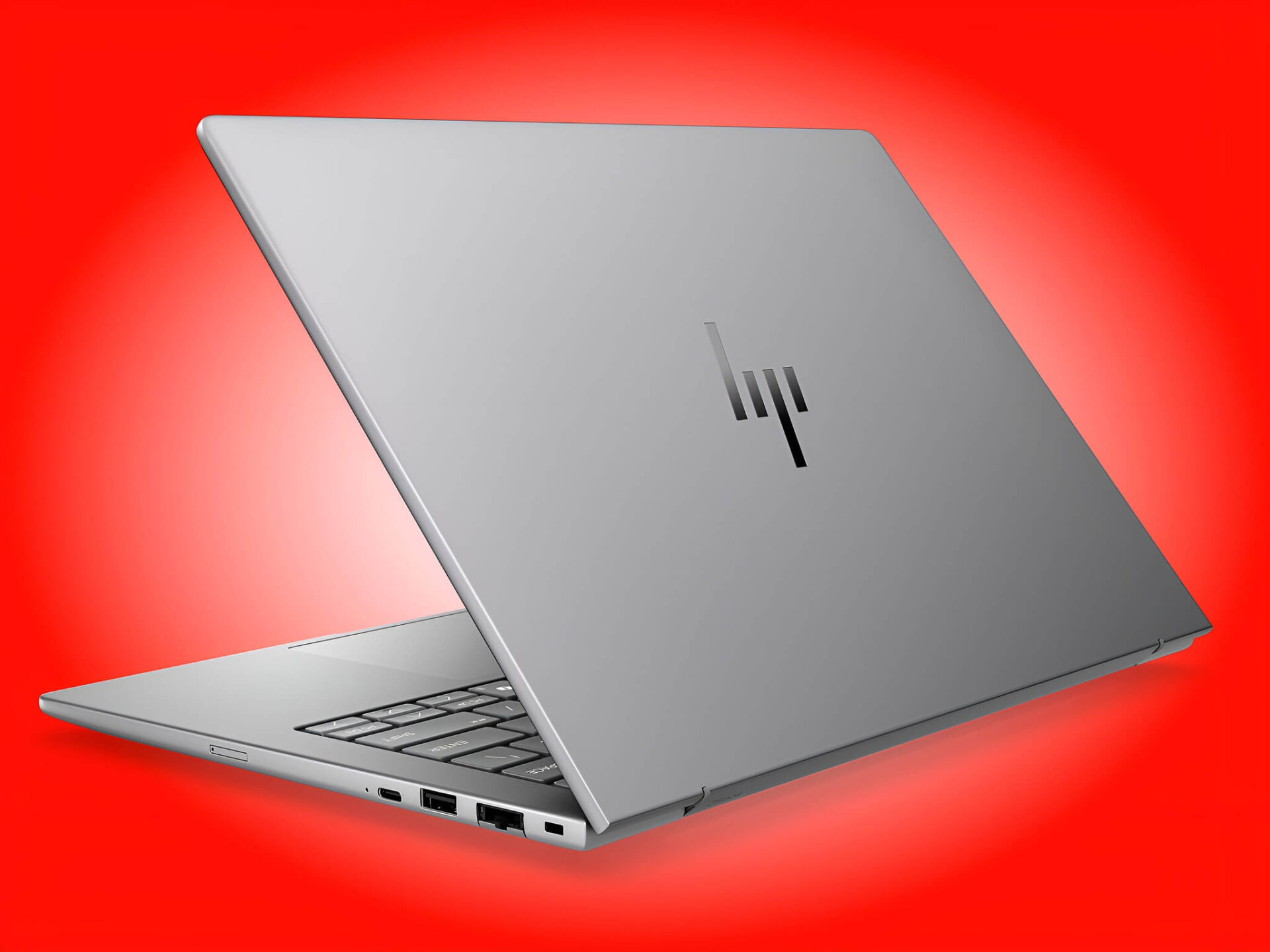
HP has officially put the HP ZBook 8 G2a 14-inch on sale worldwide, nearly three months behind its original schedule. The mobile workstation is built on the Zen 5-based AMD Ryzen AI Pro platform and can be configured with up to 64GB of DDR5-5600 RAM and a 2TB PCIe 5.0 SSD. HP offers three display options: a standard 1200p 60Hz panel, a 1600p 120Hz VRR panel for creative professionals, and an 800-nit anti-glare panel for engineers working outdoors. The US starting price is $2,796 (about 71 million VND), but high-end configurations can top $8,000 (about 203 million VND). The first batch is expected to reach customers in June.
Detailed Specs and Real-World Pricing
HP positions the ZBook 8 G2a 14-inch in the upper tier of its mobile workstation range, above the ProBook line, with the Dell Pro Max 16 MC16250 from Dell as its direct rival. Buyers can choose anything from the Ryzen AI 5 Pro 435 in the base model to the Ryzen AI 9 HX Pro 470 in the top model. All belong to the new Ryzen AI generation, whose NPU speeds up local AI workloads. Also read Dell Pro Max 16 MC16250 after nearly a year of use: is this mobile workstation worth the money?

In the US, the entry configuration, with a Ryzen AI 5 Pro 435, 16GB of RAM, a 512GB SSD and a 1200p 60Hz display, costs $2,796 (about 71 million VND). Step up to 64GB of DDR5 RAM and a 2TB PCIe 5.0 SSD and the price jumps past $7,800 (about 198 million VND). Adding the 1600p 120Hz VRR display costs another $233 (about 6 million VND), and the 800-nit 1200p anti-glare version costs even more. The 5,600 MT/s RAM transfer speed falls short of the newest consumer laptops, but in exchange the workstation offers optional ECC memory for error protection, a standard that matters to designers and engineering simulation work. The PCIe 5.0 SSD also delivers read speeds above 12GB/s, double that of the common PCIe 4.0 standard.
Outside the US, the SKU lineup is less varied. Buyers in the UK get just one configuration, priced at £2,342.40 (about 75 million VND), with no customization. The two SKUs in Germany are listed at €2,847 (about 77 million VND) and €4,077 (about 110 million VND), though both are currently out of stock. HP says the official global rollout will begin in June.
Who Is the ZBook 8 G2a 14-inch For?
Compared with its predecessor, the ZBook 8 G1, which sold for around $2,449 (62 million VND) on Amazon, HP has raised the G2a's starting price by nearly $350. In return, buyers get the new AMD Ryzen AI Pro platform and an NPU, a dedicated AI processor that lets machine learning tasks run on the device itself without sending data to the cloud. This is an important upgrade for people who run AI locally, do heavy 3D work or handle multithreaded CAD engineering design, since those tasks depend heavily on RAM capacity and multi-core processing. With 64GB of RAM, the machine can load a language model of around 32 billion parameters in compressed 4-bit form for hands-on testing, something the standard 16GB model cannot do. 64GB of RAM also helps BIM (digital building design) software, CFD fluid flow simulation and Blender rendering keep a project open without spilling data into swap memory.
The machine also gives designers and mechanical engineers a clear choice: the 1600p 120Hz display suits UI designers and people editing high-frame-rate video, while the 800-nit panel suits field engineers who need high brightness for surveying and measuring outdoors. Buyers can look at the budgets for comparable setups in our detailed analyses of the Ryzen AI MAX 495 chip and other mobile workstations in the same price range. Also read Ryzen AI MAX 495 leak shows 192GB of RAM and Radeon 8065S.
With a starting price of 71 million VND and a ceiling of more than 200 million VND, the ZBook 8 G2a 14-inch is not meant for everyday users. It is a fit for companies equipping design teams with mobile workstations, teams developing AI that runs on the device, or field engineers who need a specialized bright display. HP has not announced Vietnam pricing, but given the global June delivery schedule, official distribution channels in the country will likely receive stock in late June or early July.