


The PC gaming market in 2025 is witnessing a paradoxical irony on the world's largest digital distribution platform. The massive influx of new titles flooding onto Steam is both a testament to a thriving ecosystem and a threat that risks drowning content creators in a vast ocean. According to the latest statistics, although the number of game releases has reached record levels, an alarming percentage of these products fade into oblivion immediately upon launch, raising significant questions about the survival of small developers in this increasingly fierce race.
Explosion in Quantity and the Harsh Reality of Games on Steam
The numbers do not lie, and data aggregated by SteamDB paints a picture that is both impressive and grim regarding the current PC gaming market. Specifically, Valve's digital storefront recorded a massive figure of 19,112 titles released over the past year. This is a record number, demonstrating the relentless creativity of the global game development community. However, behind the glamour of that total figure lies a harsh reality: nearly half of them, exactly 9,327 titles, received fewer than 10 user reviews.
In the world of Steam, the number of reviews is often considered the most important metric for evaluating popularity and sales. Having fewer than 10 reviews means these games have almost never reached a meaningful audience. Even more tragic is that there are up to 2,229 games whose review count has never surpassed zero. This shows that thousands of passionate projects have been born and "died young" in absolute silence, without anyone ever noticing.
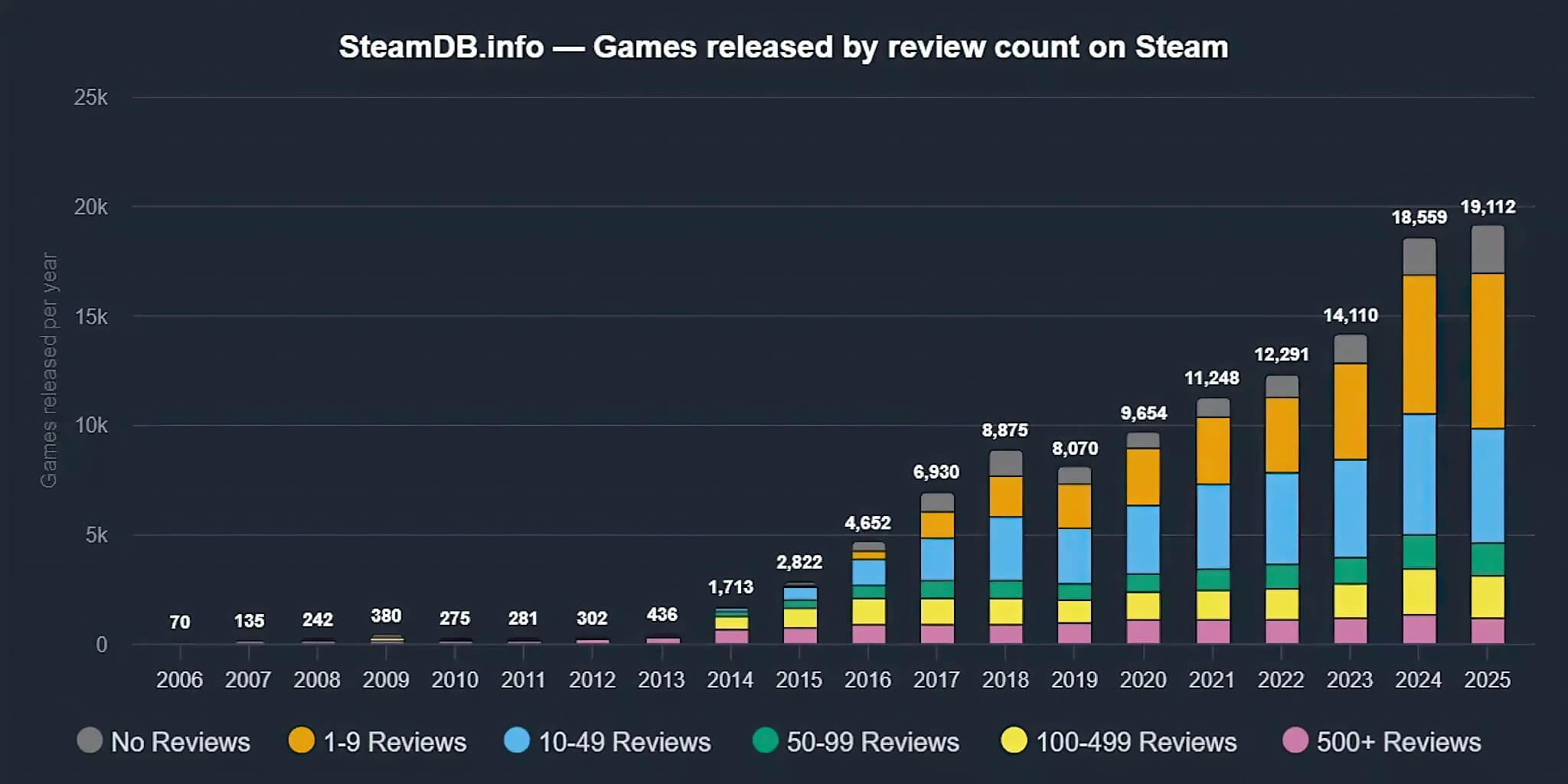
These statistics indicate a widening gap between output volume and actual engagement in the world's largest PC gaming market. Steam's open publishing model has been brilliantly successful in lowering the barriers to entry, allowing anyone to release a game. However, the downside is that "visibility" has become a scarce and expensive resource. For small studios and independent developers without massive marketing budgets, figuring out how to stand out on Steam is now just as difficult and arduous as programming the game itself.
This model is not actually new. In the previous year, nearly 19,000 titles were also released on Steam, but only about one-fifth of them attracted enough players for Valve to activate engaging community features like trading cards, badges, and emoticons. This shows that the market's harsh filtering process has been ongoing for many years.
Mysterious Algorithms and the Fate of Creative Titles
Looking at SteamDB's metrics, it is clear that the issue is not merely about product quality. It would be a mistake to assume that all failed games are low-quality products. Among the hundreds of small releases that fail to attract attention are projects that are highly creative and technically ambitious. Typical examples include a high-speed parkour game featuring an amputee priest navigating skillfully through an underworld setting, or a highly unique physics-based skateboarding game where fish replace skateboards.
To address this issue, Valve has introduced numerous systems to support users and developers, including wishlists, algorithmic discovery queues, curator networks, and user tagging systems. These features, along with personalized recommendations, are designed with the good intention of guiding players toward suitable titles and supporting a natural discovery process.
However, the core problem lies in the fact that the algorithms determining store visibility remain a murky "black box" to both developers and players. This lack of transparency leaves many developers feeling helpless, not knowing how to get their products favored by the algorithm and placed in front of potential users.
The Survival Struggle of Developers Amidst a Sea of Games
This lack of transparency and fierce competition has led many developers to look beyond the scope of the Steam platform itself to find visibility opportunities. Some have chosen to collaborate with third-party retailers or participate in community-organized genre tagging campaigns. These campaigns strive to bring a more recognizable identity to underrepresented categories within Steam's structure, such as "survivors-like" or "bullet heaven" games.
Despite many efforts from both sides, discoverability remains one of the most persistent and difficult hurdles in the current PC game publishing landscape. For many developers, Steam has truly democratized game distribution on an unprecedented scale in history, opening opportunities for millions. But at the same time, that very success has created an immense amount of "noise" that very few new releases can break through to shine. As the number of game launches climbs to new record heights, the number of games actually played-or even just noticed-is telling a much quieter and more somber story.