
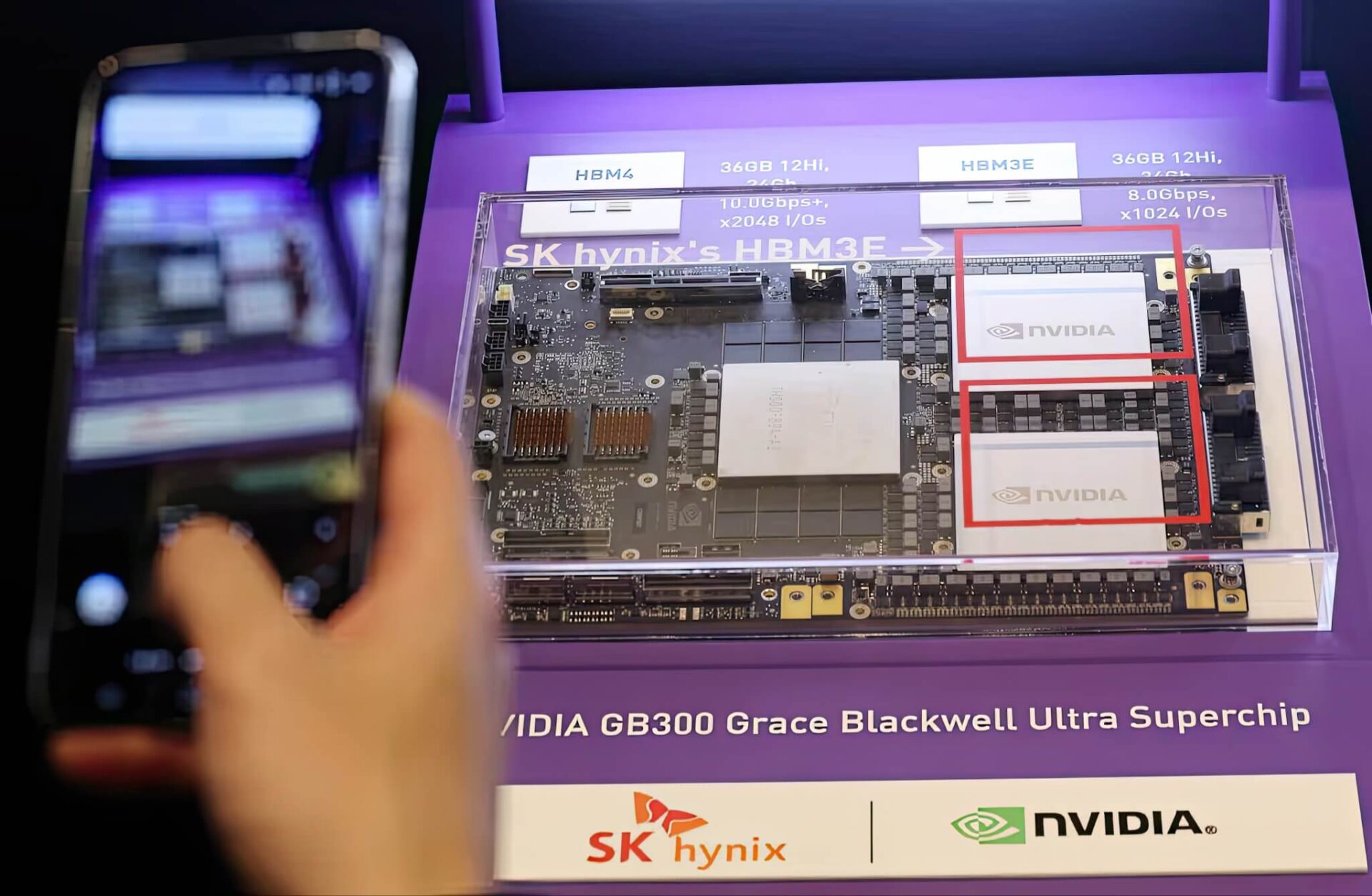
SK Hynix, the leading South Korean memory manufacturer, is further tightening its strategic relationship with graphics giant Nvidia by developing a high-performance solid-state drive (SSD) line specifically optimized for AI (Artificial Intelligence) inference tasks. This collaboration marks a significant expansion in the partnership between the two companies, which previously focused solely on supplying high bandwidth memory (HBM) for Nvidia's AI GPUs; this time, they are aggressively attacking the NAND flash storage innovation sector with the goal of creating an AI SSD that is 10 times faster than current ones.
Ambitions for AI SSD processing performance and the 100 million IOPS milestone
At a recent technology conference, SK Hynix Vice President Mr. Kim Cheon-seong made a bombshell announcement to the tech world. Accordingly, the South Korean memory manufacturer is actively working with Nvidia to create a tenfold leap in SSD performance. Citing the South Korean newspaper Chosun, Mr. Kim affirmed that his company is developing a new type of SSD with 10 times the superior performance in tandem with Nvidia.
The two companies are referring to this new concept under two different internal codenames: "Storage Next" at Nvidia and "AI-NP" - short for AI NAND Performance - at SK Hynix. Currently, the development process is still in the proof-of-concept stage, with a prototype expected to be completed before the end of 2026. This is an ambitious roadmap that also demonstrates the seriousness of both parties in redefining storage capabilities.
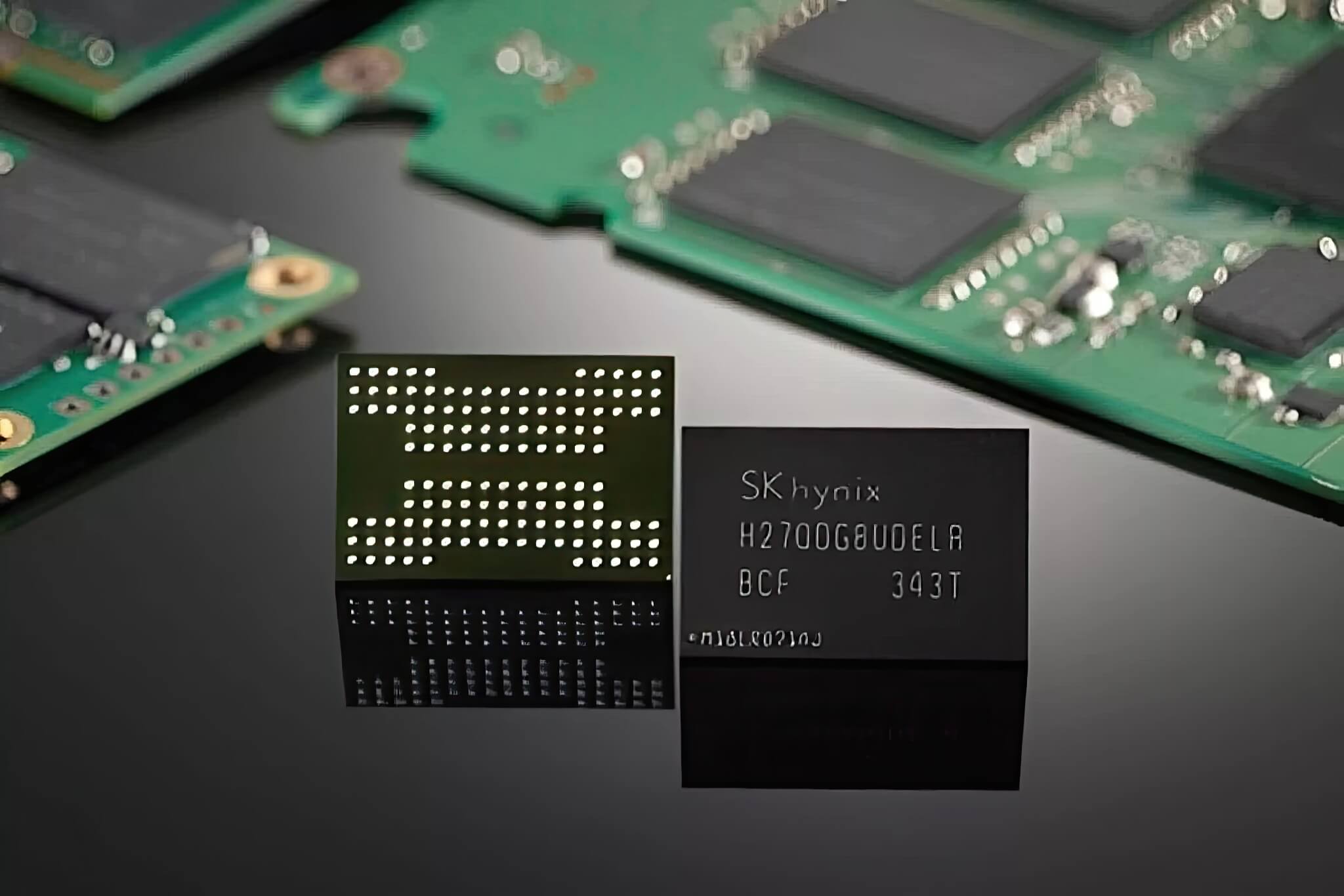
The technical goal set by SK Hynix for this next-generation AI SSD line is to achieve 100 million input/output operations per second (IOPS). To help readers visualize, this figure is significantly higher than the throughput of current standard enterprise-grade SSDs. Achieving that scale of performance would represent a massive leap in hardware architecture, effectively narrowing the gap between memory (RAM) and storage in AI infrastructure.
Addressing bottlenecks and supply chain pressures
The driving force behind this collaborative effort stems from the data access bottlenecks that current AI tasks are facing. Today's large-scale inference models rely on the continuous retrieval of massive amounts of model parameters. This is a task that traditional memory technologies like HBM (High Bandwidth Memory) or DRAM cannot support efficiently in terms of scale and cost. The vision for the "Storage Next" project is to activate a "pseudo-memory layer" using NAND flash memory chips and advanced controller technologies specifically designed for AI computing rather than just conventional data storage.
This joint project also suggests potential ripple effects in the component market. The NAND supply chain is already under significant pressure from the increasing demand for cloud services and AI. The emergence of a specialized AI SSD could further intensify that tension. Industry observers have raised the possibility of a supply crisis similar to what occurred with DRAM if such high-performance NAND solutions become widespread in mainstream AI applications.
Both SK Hynix and Nvidia seem to be intensely focused on overcoming challenges in throughput and energy efficiency, factors that are becoming the defining limits of current-generation AI infrastructure. By integrating more advanced controller and NAND architectures, the two companies are effectively positioning flash storage to play a more active computational role in machine learning workloads-something traditional memory cannot achieve economically.