


The cryptocurrency (Crypto) market has just recorded an unenviable record in the latest report from Chainalysis. In 2025, the total value of transactions related to money laundering reached $82 billion, a massive surge from the modest $10 billion recorded in 2020. Behind these alarming figures lies a highly sophisticated shift in the structure of financial crime. Chinese-language money laundering networks are rising strongly, turning messaging apps and decentralized wallets into cross-border "underground banks," challenging all control efforts by global authorities.
Crypto: The evolution of "guarantee platforms" and the "Black U" tactic
Contrary to the common belief that criminals often use centralized exchanges (CEX) to launder assets, current reality shows a completely different trend. As major exchanges tighten Know Your Customer (KYC) processes and comply with sanctions, criminals have shifted to a more discreet ecosystem: "guarantee platforms" such as Huione or Xinbi. These are essentially financial black markets operating openly on Telegram, where brokers and remittance services advertise their services without regulatory oversight.
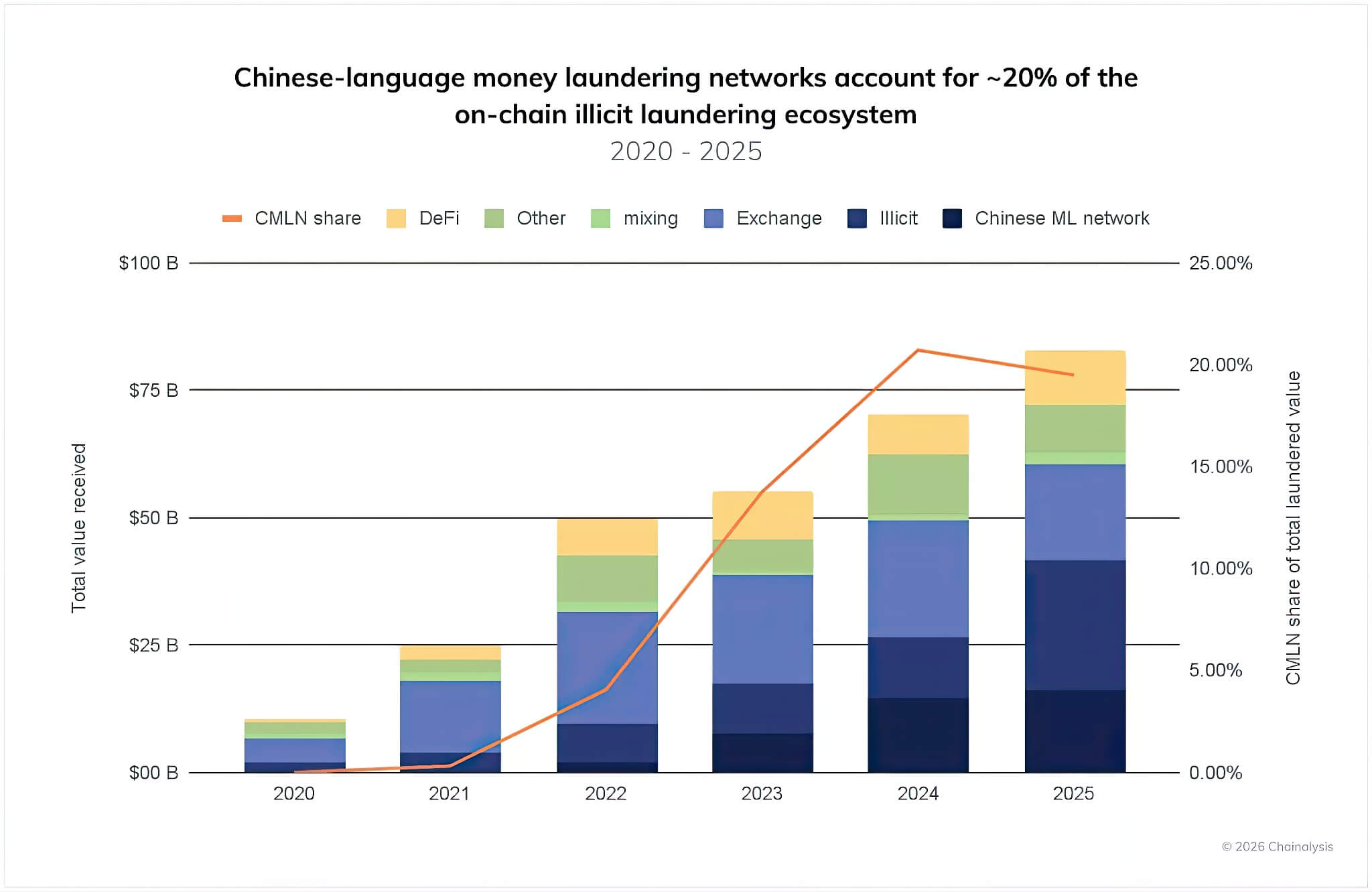
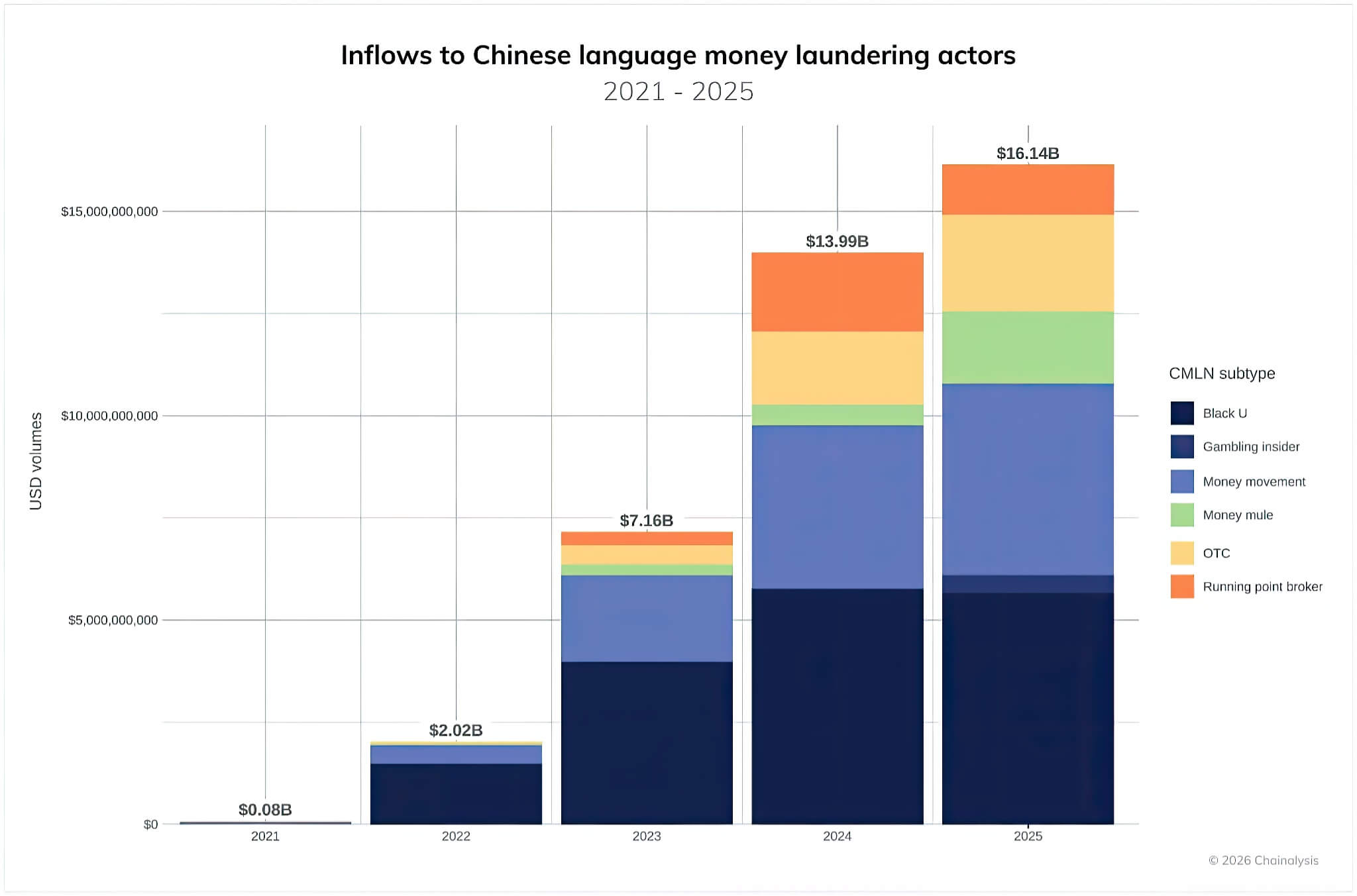
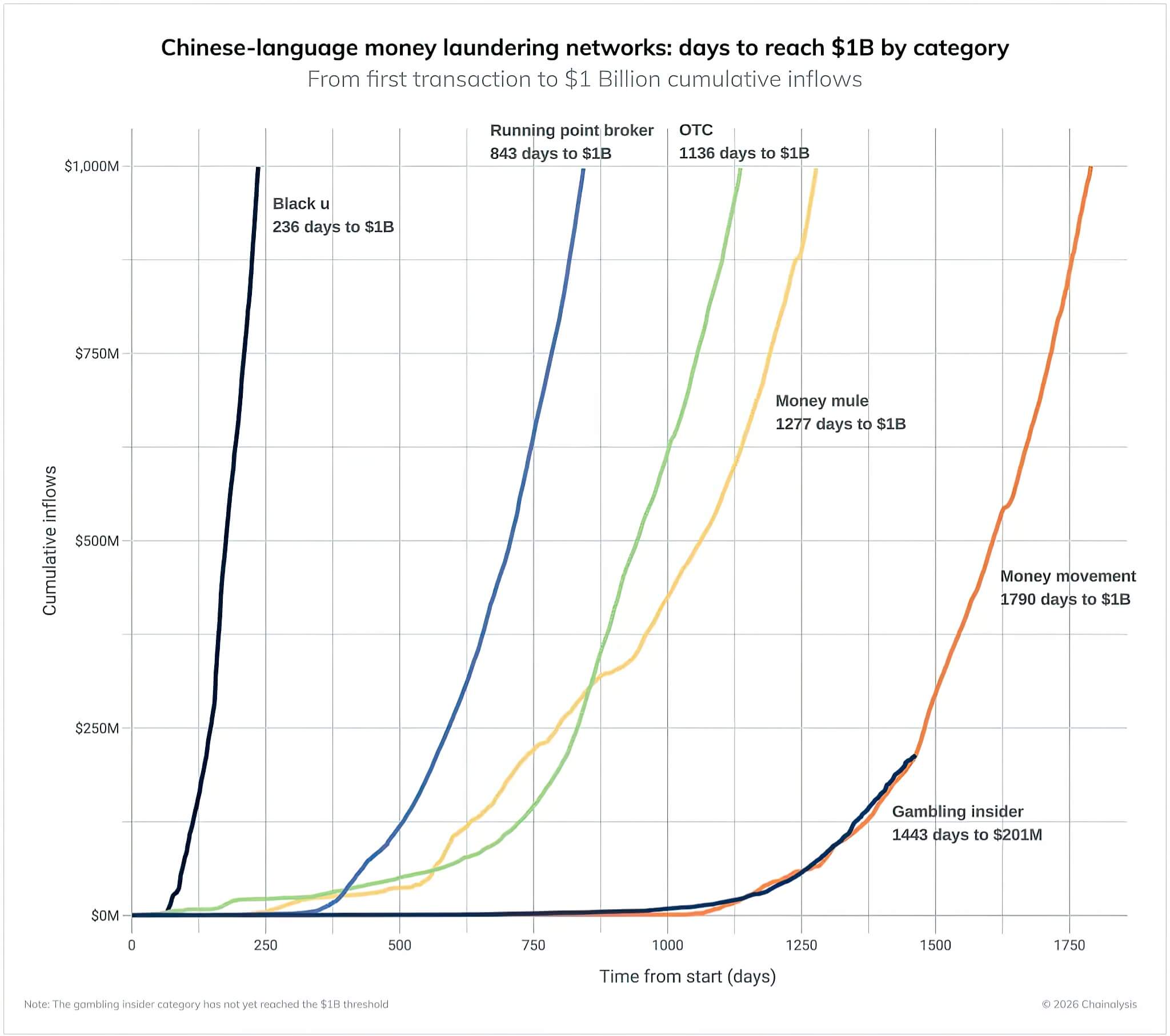
The operational methods of these networks are extremely complex, most notably the concept of "Black U" (dirty USDT). Instead of transferring a large sum of money that easily attracts attention, this system uses a "smurfing" technique to break down cash flows into millions of micro-transactions. Imagine a massive amount of dirty money being split up, scattered across thousands of digital wallets, and then collected by OTC (Over-the-Counter) services and integrated into the legitimate financial system. Data shows that a single "Black U" service processed up to $1 billion in just 236 days-a speed and scale that traditional money laundering methods would take years to achieve.
Underground capital flows and challenges for regulators
The explosion of these networks, especially the Chinese-speaking groups, is closely linked to the macroeconomic context. Experts suggest that strict capital control policies in certain countries have inadvertently created a massive demand for moving assets abroad. Money launderers have exploited this "liquidity pool" to mix dirty money into legitimate remittance transactions, creating a financial matrix that is difficult to untangle.
Previously, underground banking systems like "Fei Qian" or the Peso black market dominated this sector. However, the emergence of stablecoins and high-speed blockchain has completely changed the game. Technology allows for the instantaneous cross-border movement of value, compressing processes from several weeks down to just a few minutes without the need for paperwork. Although the US Department of the Treasury and international agencies have continuously issued sanctions throughout 2024-2025, dismantling these networks remains like "whack-a-mole." As soon as one platform is shut down, operators quickly restructure under a new name on a different platform.
In summary, the $82 billion figure is an indicator that high-tech crime is one step ahead of regulators. For individual investors, this means increasing legal risks. Trading through OTC channels of unknown origin could cause your wallet to inadvertently receive dirty money, leading to the risk of account freezes or serious legal complications.