
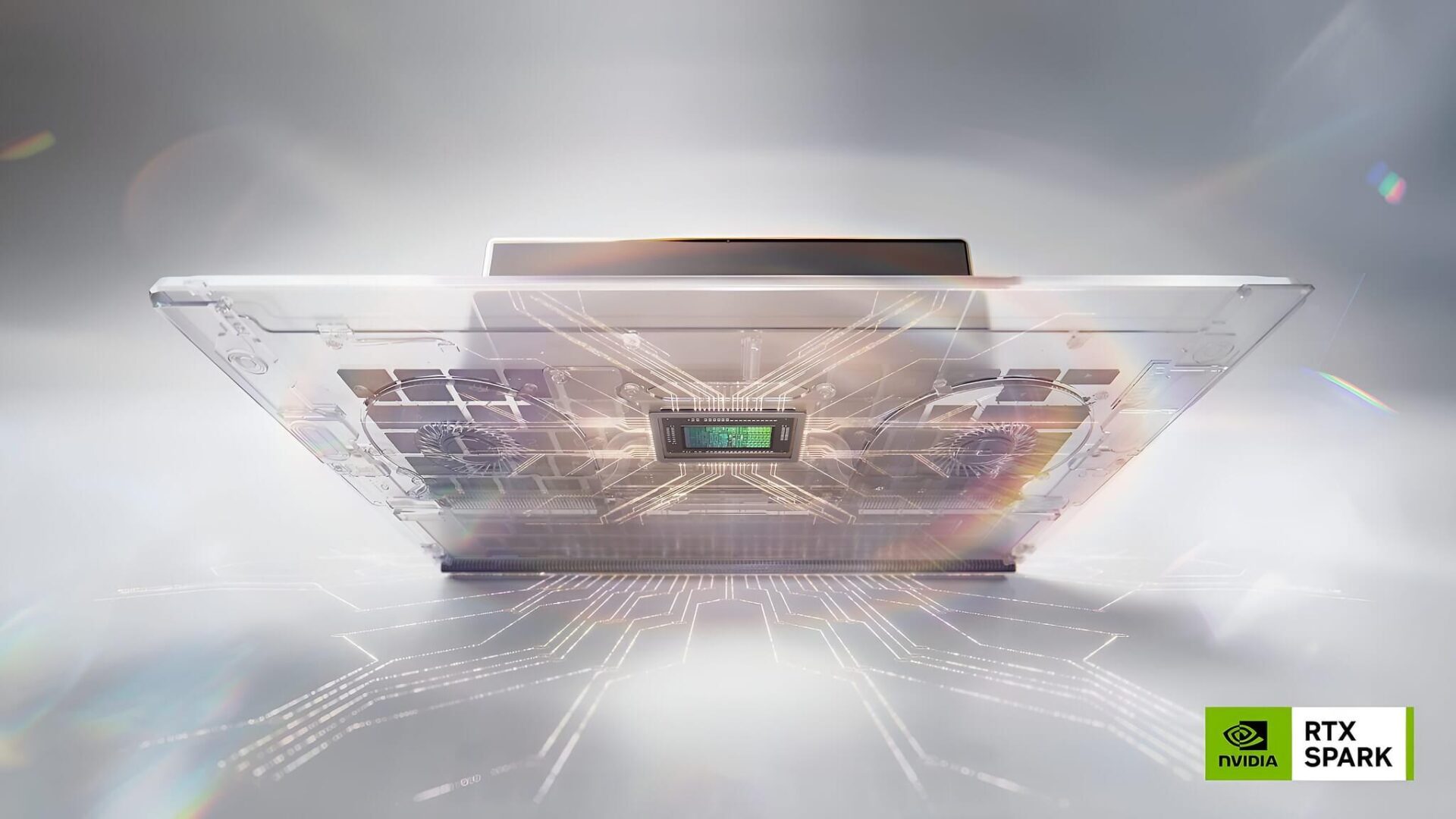
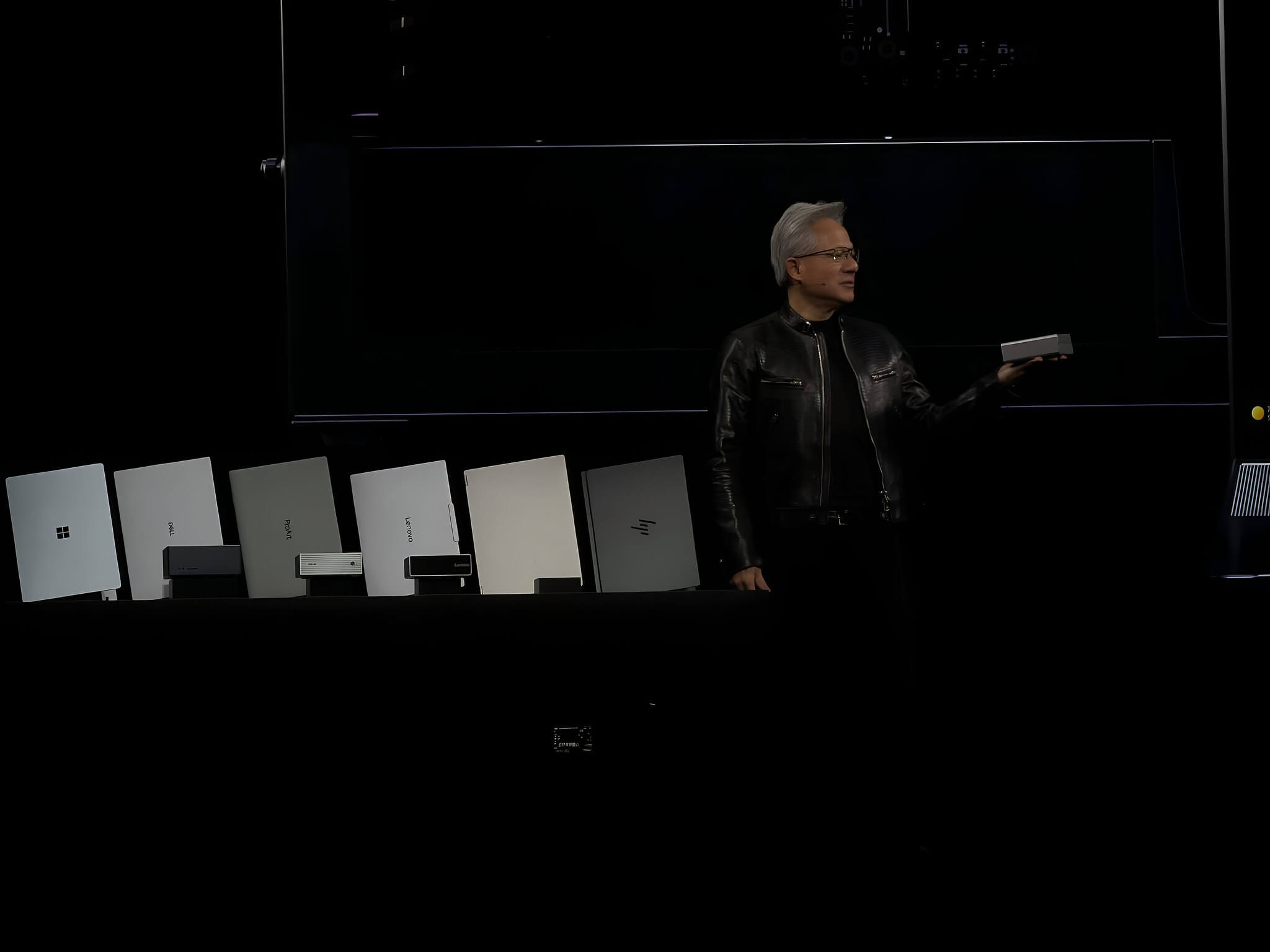
At the recent GTC Taipei 2026 event, NVIDIA officially introduced NVIDIA RTX Spark, an entirely new personal computing platform based on ARM architecture. This is the result of a strategic collaboration between NVIDIA, Microsoft, and MediaTek for the AI era. Featuring the advanced GB10 chip, NVIDIA RTX Spark promises unprecedented graphics performance and AI processing for mainstream users. This is considered NVIDIA's most aggressive move to penetrate deep into the traditional PC market, which is currently dominated by Intel and AMD. Users can expect the first laptops and desktops running this platform to launch by the end of 2026.
NVIDIA RTX Spark changes the way we use personal computers
NVIDIA RTX Spark is the first PC platform to focus maximally on on-device AI processing. Unlike previous Qualcomm Snapdragon chips that focused solely on battery efficiency, NVIDIA RTX Spark is designed to run LLMs and heavy graphics tasks. The integration of an ARM CPU and Blackwell GPU on the same chip helps eliminate data bottlenecks. The machine responds significantly faster than traditional configurations, eliminating wait times when launching complex applications or processing heavy multimedia content. Unlike previous Windows on Arm versions that faced application compatibility challenges, NVIDIA RTX Spark leverages the advantages of modern ARM architecture along with an AI-optimized software ecosystem. Microsoft has committed to deeply integrating development tools into Windows, making it easier for manufacturers to create compatible devices.
The most distinctive feature of NVIDIA RTX Spark is its Unified Memory architecture. The CPU and GPU access a shared memory pool, allowing for the processing of LLMs with up to 200 billion parameters directly on the machine without needing the cloud. This enables a seamless creative workflow, completely different from conventional computers where the CPU and GPU must exchange data back and forth between separate memory pools.
Performance and technical specifications of NVIDIA RTX Spark with the GB10 chip
The heart of NVIDIA RTX Spark is the GB10 chip manufactured on TSMC's 3nm process, combining 20 ARM v9.2 CPU cores with an integrated Blackwell GPU. It achieves 31 TFLOPs FP32 and 1000 TOPS AI within a power consumption of only 140W. This means you can own a machine with workstation-level power in a compact, cool device. The GB10 chip provides better data security because information does not need to be sent far away for processing. Alongside computing power, NVIDIA RTX Spark supports high-speed LPDDR5x memory up to 128 GB. Even when opening dozens of browser tabs, running heavy applications, and using AI tools, the computer remains smooth. The system supports impressive multi-monitor connectivity, outputting up to four 4K displays at 120Hz or 8K. This is a major advantage for multimedia content creators or those needing expansive workspace when running AI.
| Specifications | Technical Details |
| Processor | GB10 (ARM CPU + Blackwell GPU) |
| Manufactured by | TSMC 3nm process |
| System Memory | Up to 128 GB LPDDR5x |
| AI Performance | 1000 TOPS (NVFP4) |
| Display Resolution | 4K @120Hz or 8K @120Hz |
These figures have been verified through real-world testing. NVIDIA RTX Spark accelerates AI 10 times faster than previous solutions. AAA games like Alan Wake II or Fortnite run smoothly thanks to advanced DLSS 4.5. Once this technology becomes widely available, mainstream users will experience realistic graphics and intelligent AI features that were previously only available on expensive servers. The arrival of NVIDIA RTX Spark marks a new chapter where the boundary between personal computers and AI supercomputers is gradually blurred.