
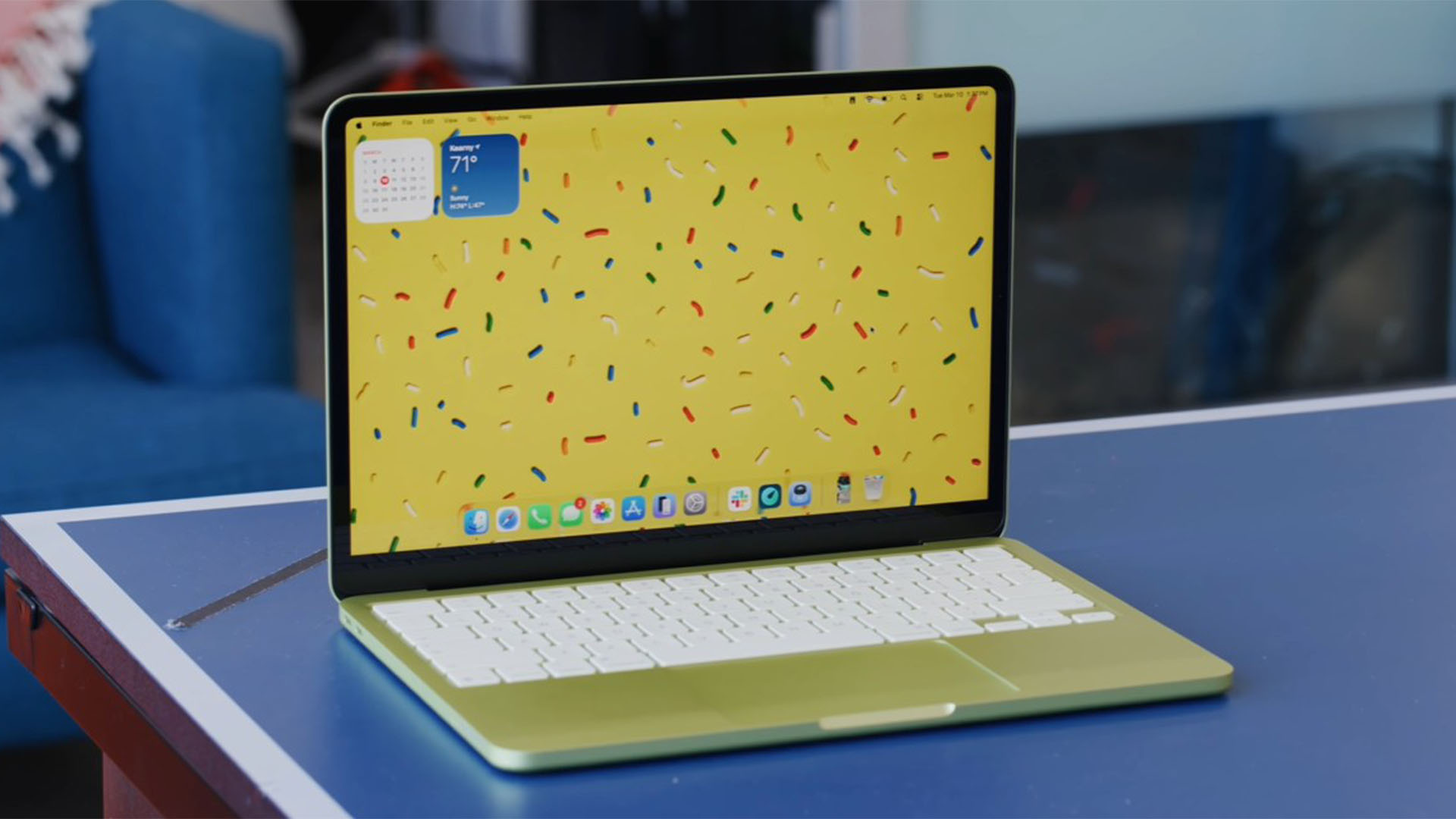
MacBook Neo is putting Windows laptops in a much tougher position than many realize. The issue lies not just in the $599 price tag, but in how Apple bundles hardware, software, and experience into a package that is extremely difficult to replicate in the same price range. As mainstream buyers begin to see premium build quality and sufficient performance in an affordable Mac model, Windows manufacturers are forced to respond on multiple fronts simultaneously. This is why the race is no longer a simple comparison of specifications, but a complex coordination problem between Microsoft, OEMs, and chip suppliers.
MacBook Neo forces Windows laptops to win on multiple fronts at once
From MKBHD's perspective, Apple holds an advantage that is very difficult for the Windows side to copy because they control almost the entire stack. A $599 MacBook Neo can still offer a premium feel, running macOS optimized for the hardware and maintaining low power consumption thanks to the A18 Pro chip. Meanwhile, Windows laptop manufacturers must divide this problem among many parties: Microsoft handles the operating system, OEMs handle the hardware design, and Intel, AMD, or Qualcomm must provide a sufficiently powerful platform. If even one link in the chain falters, the overall experience will be compromised. This perspective differs from the article MacBook Neo giá rẻ làm rung chuyển giới laptop that Hung Phat previously mentioned, because this time the story is about industry structure rather than just the retail price.
The example provided in the video is quite clear. The Dell XPS 14 is a premium model with a tandem OLED display, unibody aluminum chassis, and an Intel Panther Lake chip, but its price is pushed up to $2,199. If we drop down to the MacBook Neo threshold, the Lenovo IdeaPad Slim 3x with Snapdragon X, 16GB RAM, and 512GB SSD might look very impressive on a spec sheet, but it comes at the cost of a plastic chassis and a less attractive display. This means that to compete directly, Windows laptops struggle to simultaneously balance price, design, battery life, display, and performance. A comparison with the Dell XPS 14 thế hệ mới also shows that the Windows ultrabook segment still has to accept higher price points to approach the Apple experience.
MacBook Neo's price advantage forces Microsoft and OEMs to change faster
The most concerning point for the Windows camp is that MacBook Neo might not stop here. The original report states that Apple is rumored to have a successor in 2027 with the A19 Pro chip, while in the current generation, the 256GB version is set at $599 and the 512GB version with Touch ID is at $689.99. If Apple continues to maintain the formula of premium build, long battery life, and sufficient performance for the masses, the pressure will fall on the entire Windows ecosystem, not just a single manufacturer. In this context, Apple is essentially forcing the entire industry to answer how much further models like the MacBook Air and MacBook Neo will push the standard of user experience.
| Model | Price mentioned in article | Specs / Highlights | Notes |
|---|---|---|---|
| MacBook Neo 256GB | 599 USD | A18 Pro, 256GB SSD | The price point creating the most pressure for Windows laptops |
| MacBook Neo 512GB | 689.99 USD | 512GB SSD, Touch ID | The upgraded version still maintains a relatively low price |
| Dell XPS 14 | 2,199 USD | Intel Panther Lake, OLED tandem | Great specs but far exceeds the mainstream price range |
| Lenovo IdeaPad Slim 3x | 562.99 USD | Snapdragon X, 16GB RAM, 512GB SSD | Similar specs, but must sacrifice build quality and display |
In summary, MacBook Neo is exposing a long-standing weakness of Windows laptops: the difficulty of creating a product that is simultaneously affordable, beautiful, and optimized when each component is handled by a different party. If Microsoft does not rapidly improve the operating system experience, and manufacturers continue to compromise between cost and build quality, Apple will exploit that gap even more aggressively in the coming years. This is not a declaration that Windows laptops are finished, but it is clear that MacBook Neo has forced the entire market into a much more intense race. Source: Wccftech