
Alongside the launch of the new GeForce RTX 50 GPU series, CES 2025 also witnessed the debut of the NVIDIA RTX Kit, a new neural rendering technology suite that promises to help game developers achieve the next leap in graphics.
The NVIDIA RTX Kit has many applications, from AI-accelerated ray tracing to more realistic digital human simulation and rendering scenes with massive amounts of geometry.
Let's start with the most notable innovation. With the Blackwell architecture, NVIDIA introduced RTX Neural Shaders. These are small neural networks designed to be integrated into programmable shaders to provide many useful effects. With the upcoming RTX Neural Shaders SDK, game developers can train game data and shader code on an AI RTX PC accelerated by NVIDIA Tensor Cores. During the training phase, neural game data is compared with traditional data output and refined through multiple iterations.
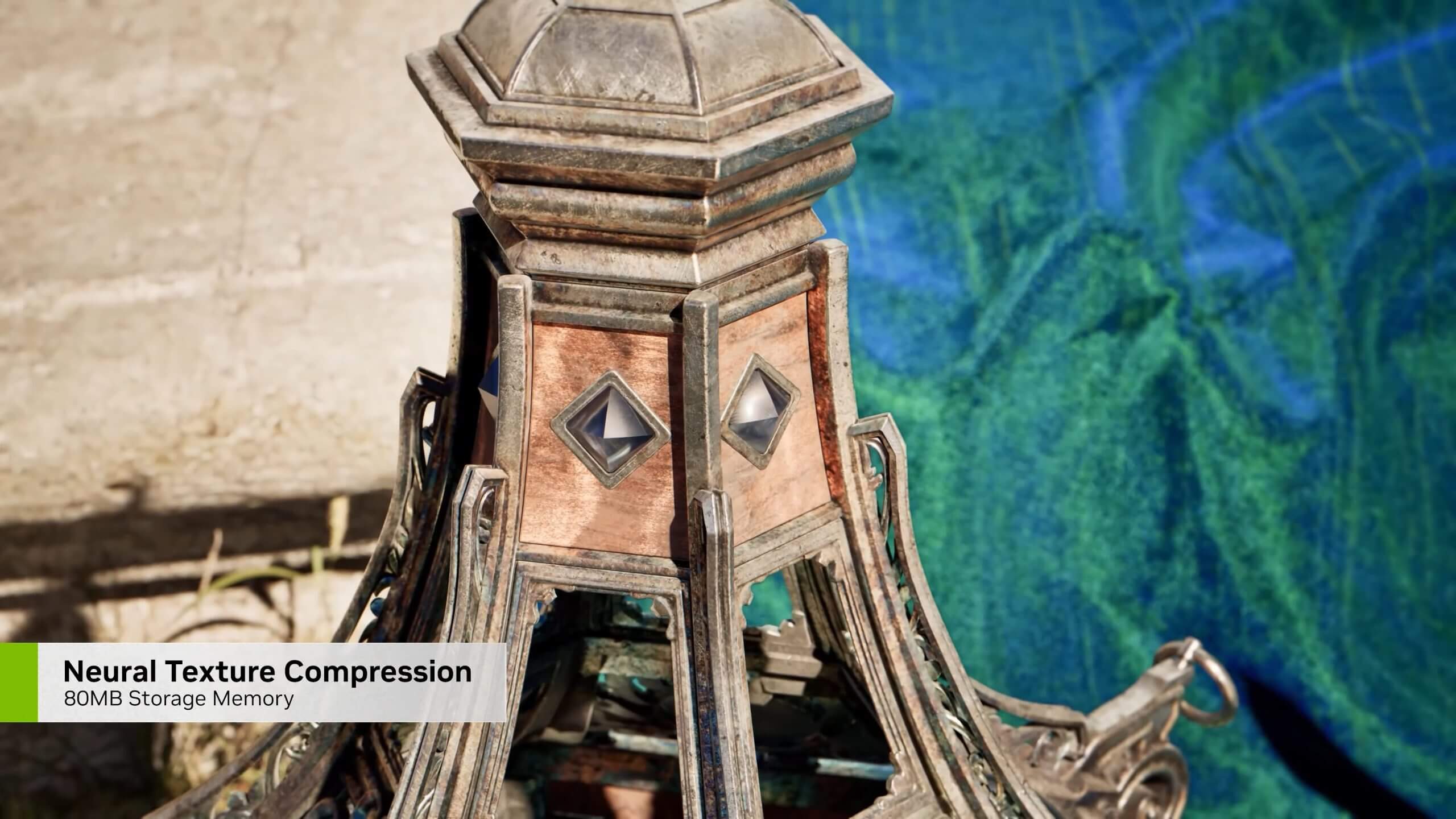
Currently, there are three main applications for RTX Neural Shaders, all of which we have mentioned in NVIDIA's research documents: RTX Neural Texture Compression, RTX Neural Materials and RTX Neural Radiance Cache. RTX Neural Texture Compression is invaluable because it allows for the compression of thousands of textures in less than a minute, while saving up to 7x VRAM compared to traditional block-compressed textures, without any negative impact on quality. In a new technology demo, RTX NTC textures occupied only 80MB, while conventional block-compressed textures required up to 520MB of VRAM.
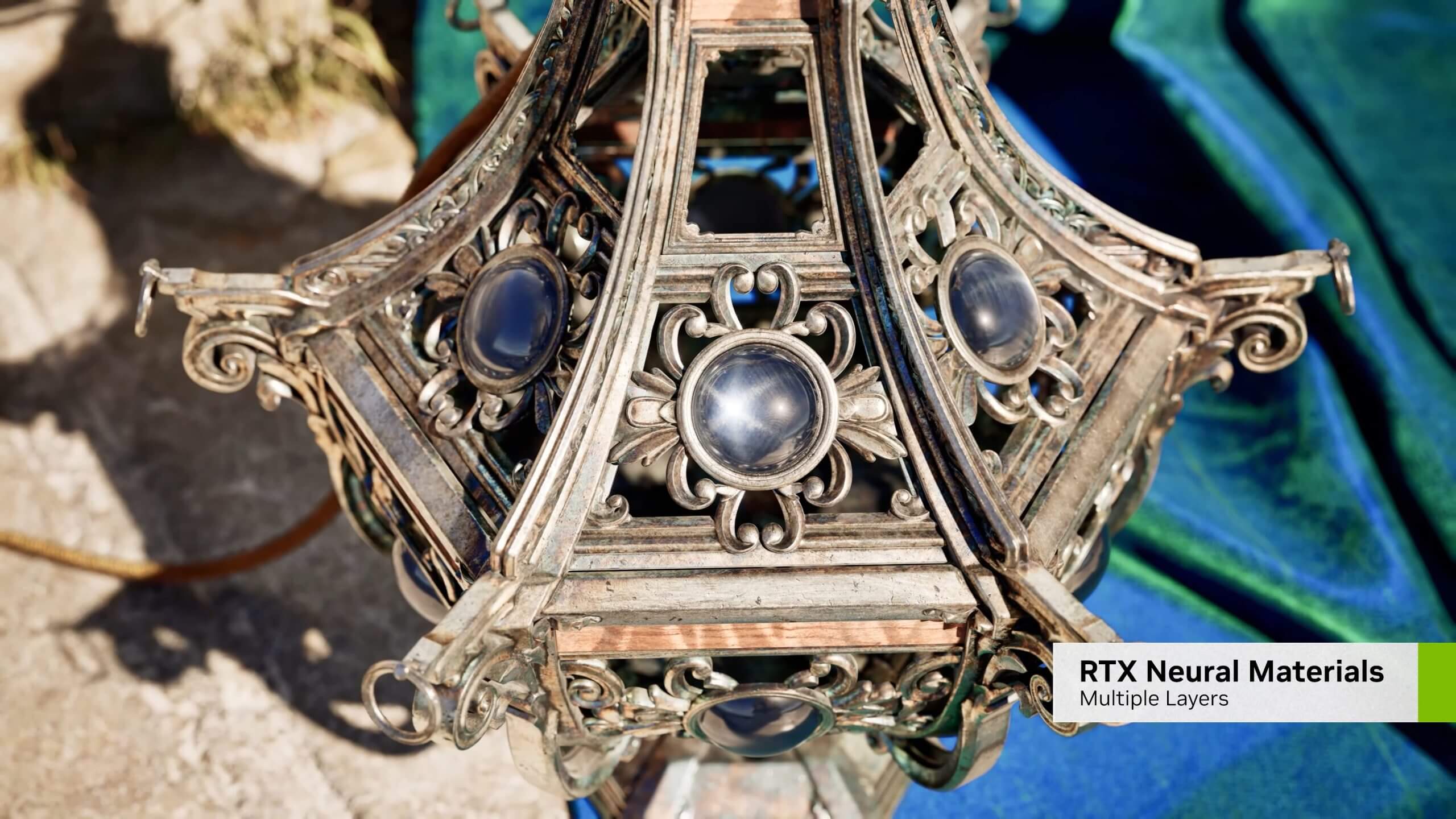
RTX Neural Materials applies artificial intelligence to compress complex shader code typically used for offline materials, helping the material processing speed increase fivefold and allowing higher-quality assets to be available in games.
Finally, artificial intelligence is applied in RTX Neural Radiance Cache to infer countless reflections after one or two initial bounces, thereby significantly enhancing indirect lighting and performance. NRC has been present for some time as part of the RTX GI SDK and will soon be introduced in RTX Remix and Portal with RTX.
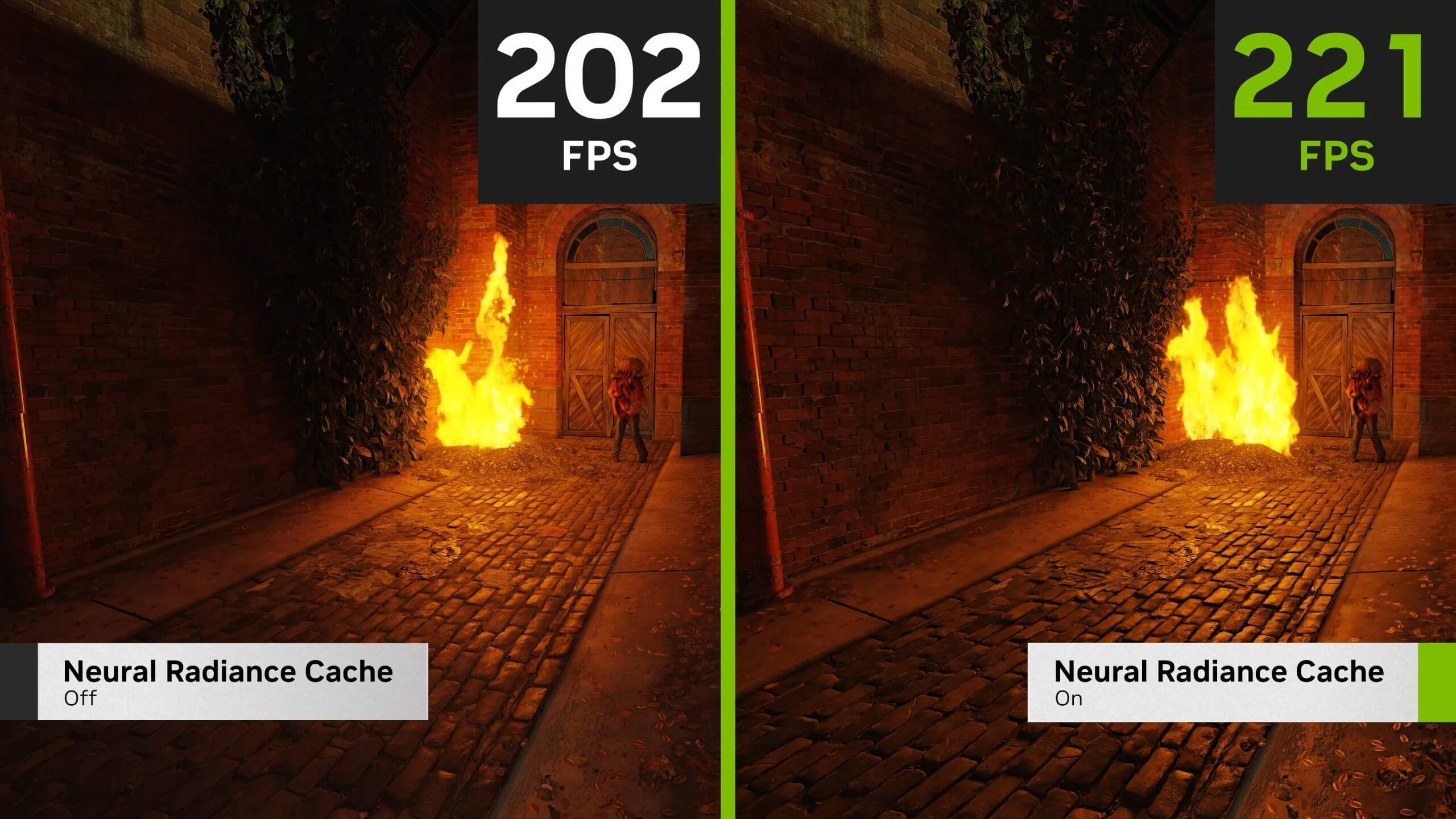
The RTX Neural Shaders and RTX Neural Texture Compression SDKs will be added to the NVIDIA RTX toolkit at the end of this month. Today, Microsoft also announced that DirectX will soon have support for Cooperative Vectors, bringing higher performance to GeForce RTX GPUs when using RTX Neural Shaders. Bryan Langley, program director for the partner group at Microsoft, stated:
"Microsoft is excited to partner with NVIDIA to drive the next generation of graphics programming by bringing neural shading technology support across the industry. DirectX will soon support Cooperative Vectors, unlocking the power of Tensor Cores on NVIDIA GeForce RTX hardware and helping game developers fully accelerate neural shaders on Windows."
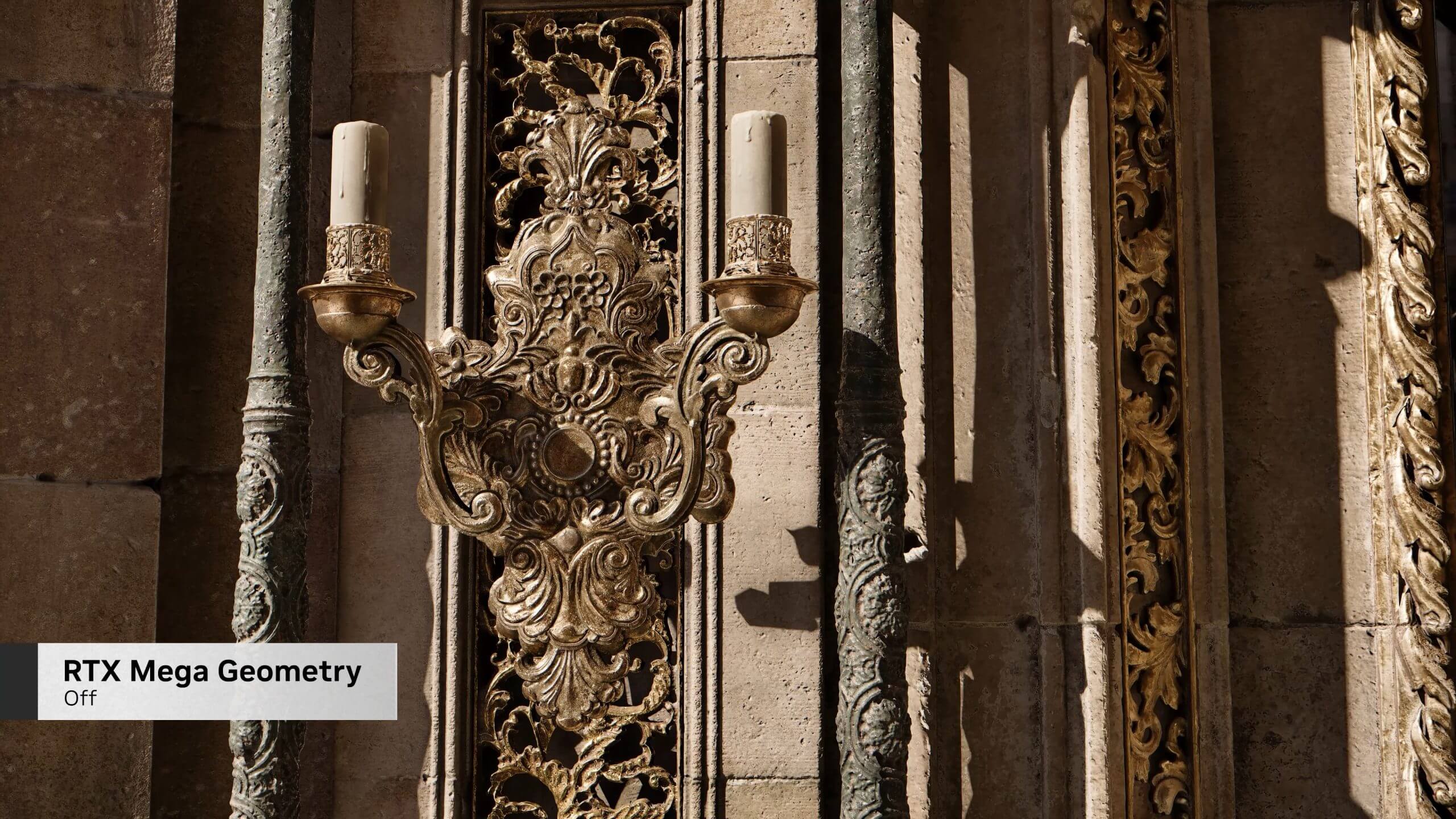
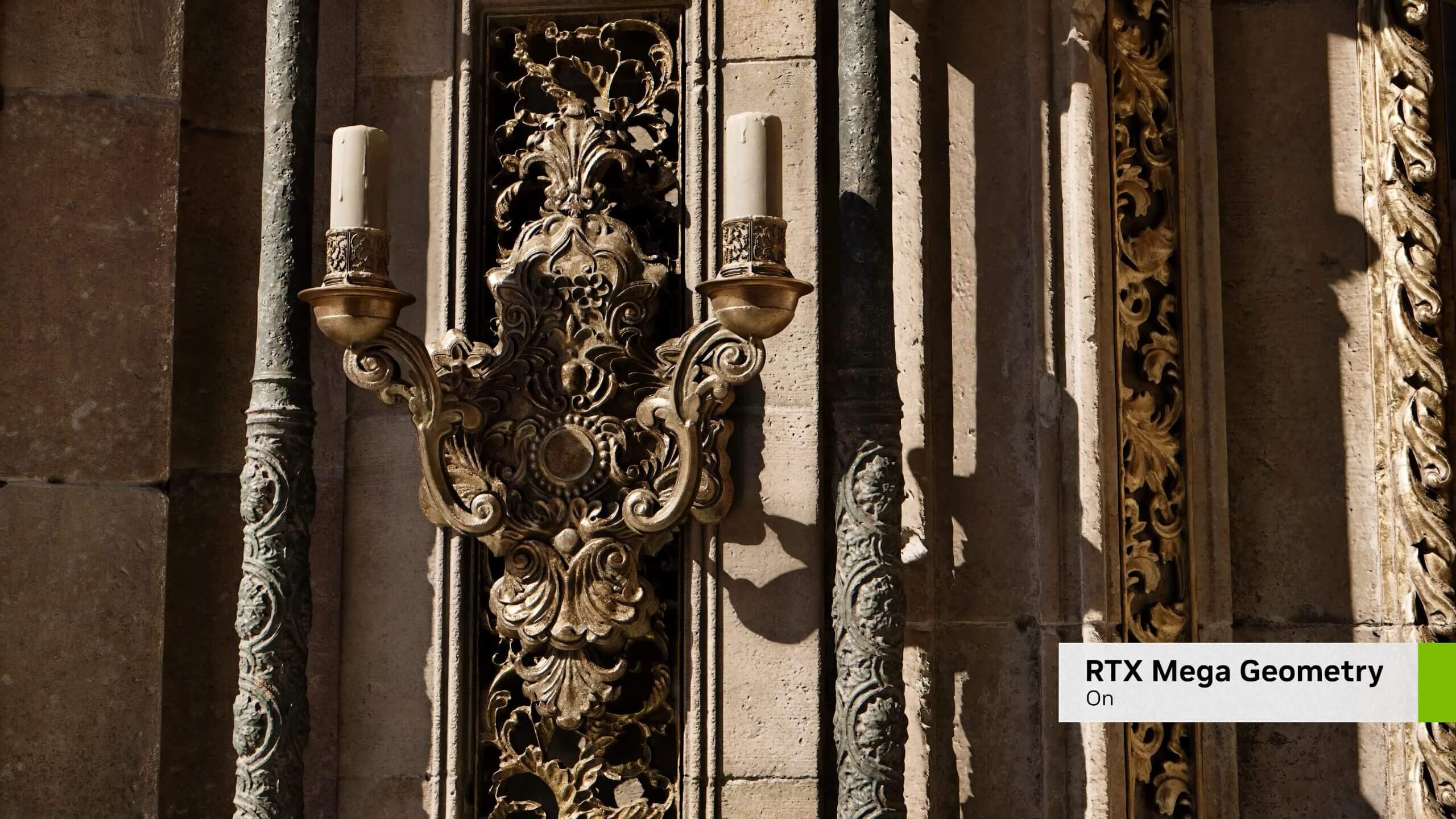
NVIDIA's RTX suite also comes with RTX Mega Geometry technology, which will debut in Remedy's Alan Wake 2 with a free update later this year. The demonstration video at CES 2025 introduced this technology, which aims to improve ray tracing capabilities in scenes with many complex shapes, similar to games using Unreal Engine 5's Nanite. According to NVIDIA, RTX Mega Geometry accelerates BVH construction, allowing ray tracing of up to a hundred times the number of triangles compared to current standards. This technology will be released at the end of this month in the RTX suite and will soon be available through NVIDIA RTX's Unreal Engine branch.
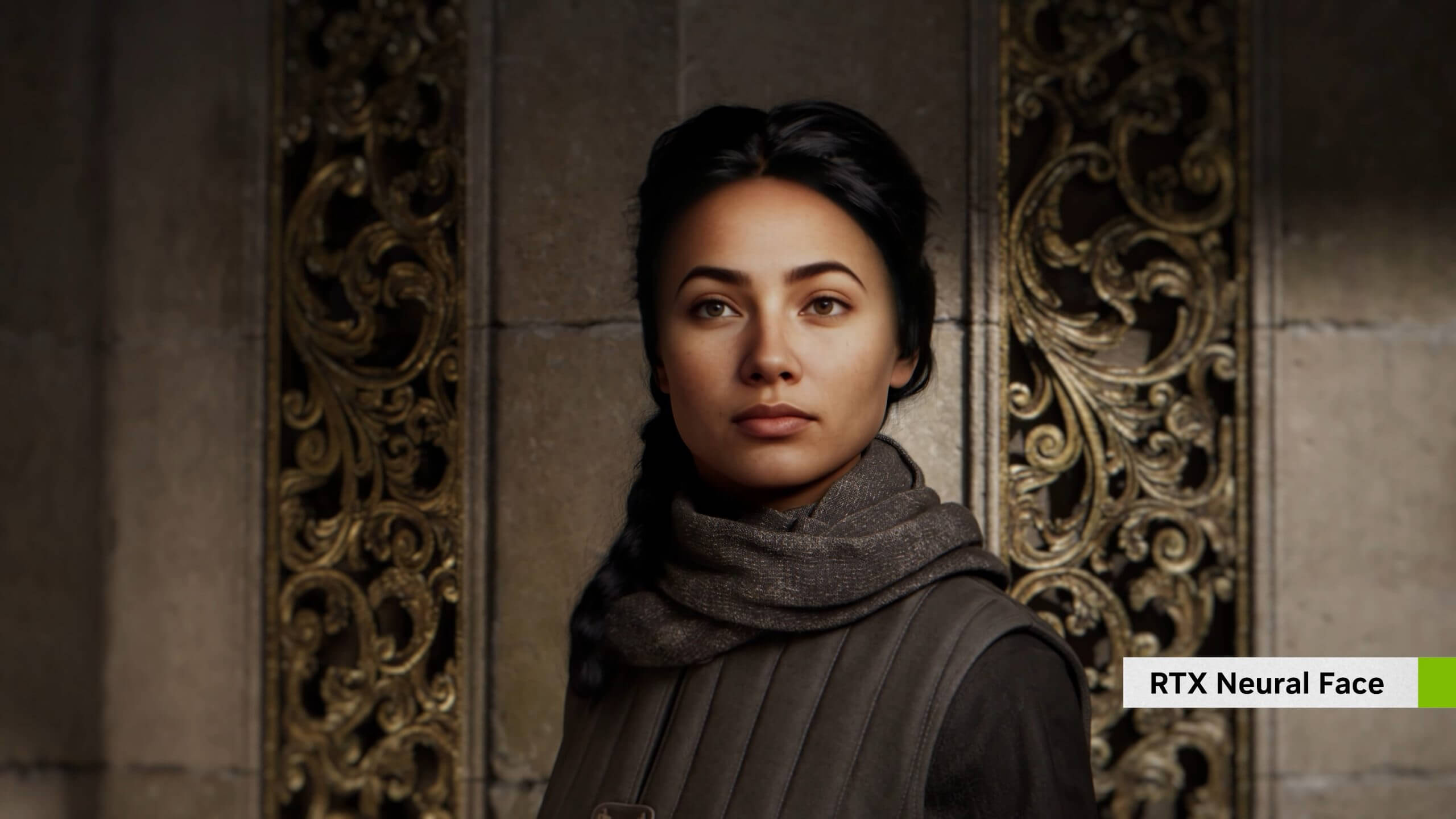
RTX Neural Faces is a tool in the NVIDIA RTX Kit that allows for the input of rasterized face images along with 3D positional data to create a more natural face through a real-time generative AI model. The generated face is trained from thousands of offline-generated images from every angle, under various lighting conditions, emotions, and occlusions. The training process can use real images or AI-generated images. The model is then optimized using NVIDIA TensorRT for real-time face inference.
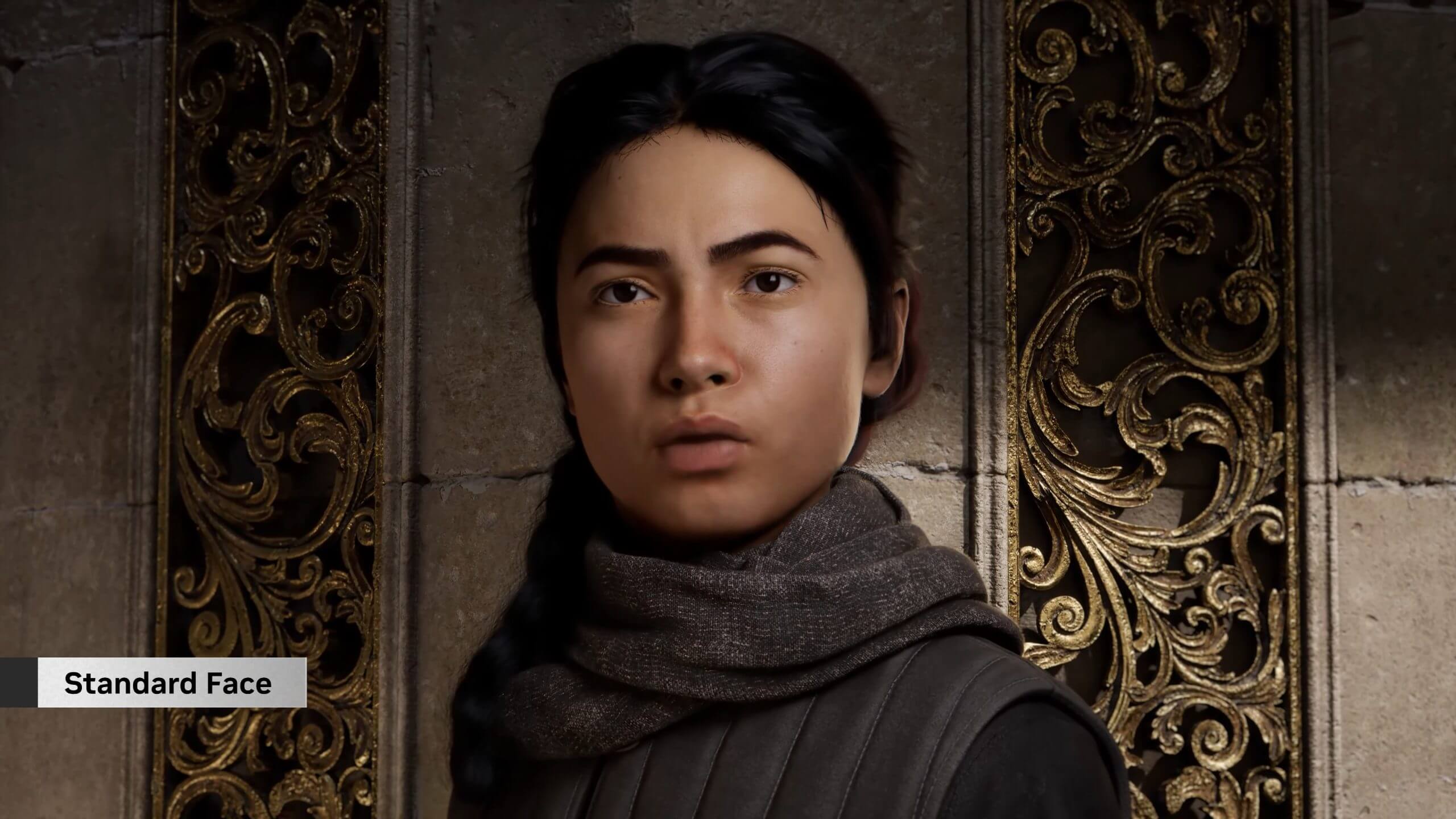
This is combined with the RTX Character Render SDK to create hair and skin. With the new GeForce RTX 50 Series processors, NVIDIA has added Linear Sphere Scanning (LSS), a GPU acceleration method that reduces the amount of geometry required to render hair strands. LSS uses spheres instead of triangles to more accurately match the shape of the hair. LSS allows for better-performing ray-traced hair that occupies less memory. The Skin and Hair algorithms using the RTX Character Render SDK will be released at the end of this month, similar to the NVIDIA RTX toolkit. The hair algorithm will appear in the game Indiana Jones and the Great Circle with an upcoming free update. The skin algorithm will also be available via RTX Remix.
Last but not least, NVIDIA has promised a major update to their Audio2Face technology. In fact, we were not particularly impressed with its implementation in GSC Game World's STALKER 2; the artificial intelligence did not meet requirements in creating good facial movements based on audio input. However, the new short demo video looks much more expressive. According to NVIDIA, a new real-time distributed architecture for Audio2Face has been implemented to provide more accurate and detailed lip synchronization, vivid emotions, and natural non-verbal reactions.
https://www.youtube.com/watch?v=dm8-gNin76c
According to WCCFTECH