
Apple is reportedly preparing to make major changes to the next-generation Apple M5 chip series. According to recent sources, the M5 chips will move away from the Unified Memory Architecture (UMA) that has been a hallmark of Apple Silicon, replacing it with a separate memory design for the CPU and GPU. This is considered an ambitious breakthrough by Apple in the field of high-performance computing.
Apple M5 Silicon: Separate Memory, Cutting-Edge 3nm Process
Information was revealed by analyst Ming-Chi Kuo, who frequently provides accurate predictions regarding Apple products. He stated that the entire M5 product line, including the base M5, M5 Pro, M5 Max, and M5 Ultra, will be manufactured on TSMC's advanced 3nm N3P process. This process promises superior performance compared to the N3E process currently used by the M4 and A18 Bionic chips.
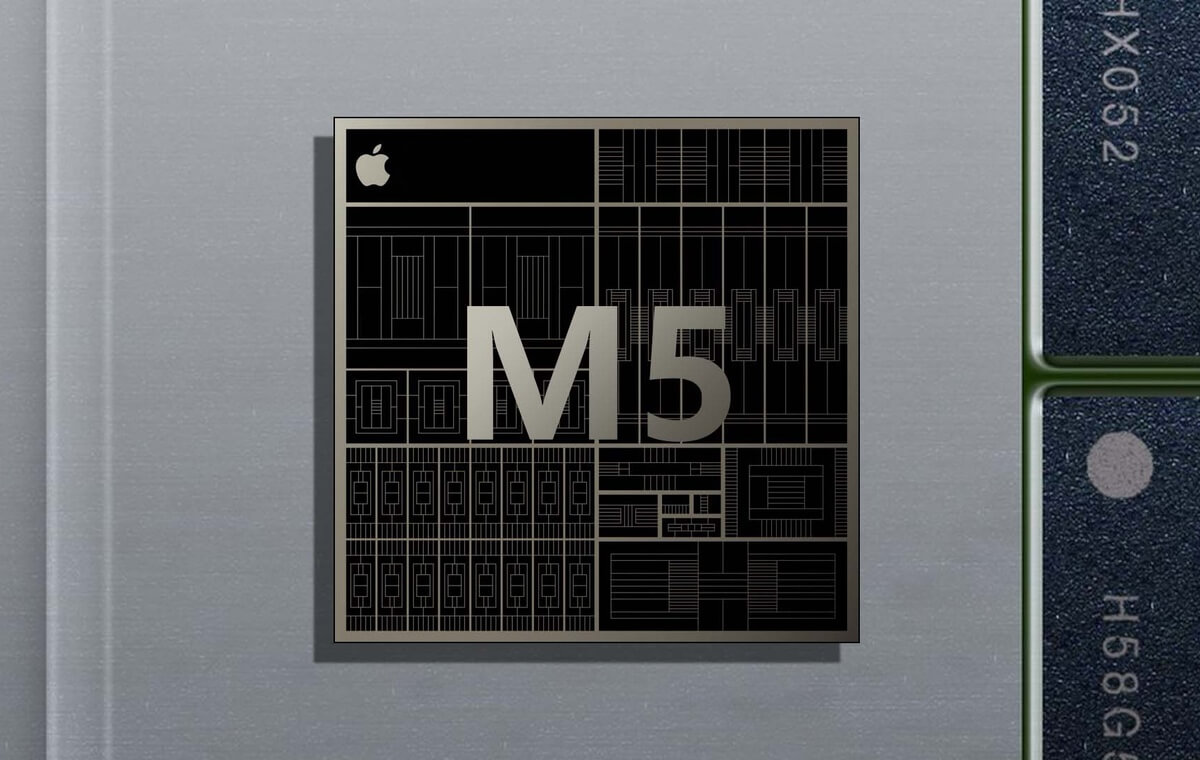
The most notable change in the M5 design is that the CPU and GPU will use separate memory. This is a significant departure from the UMA architecture that Apple has utilized since the M1 chip era, where CPU and GPU cores shared the same memory pool. The UMA design is considered a core factor in providing Apple Silicon's superior performance-per-watt, especially on MacBook lineups. However, with the new architecture, Apple expects to increase processing performance in specialized tasks, even though the complexity of the chip design will also increase.
Apple M5 series chip
1. The M5 series chips will adopt TSMC’s advanced N3P node, which entered the prototype phase a few months ago. M5, M5 Pro/Max, and M5 Ultra mass production is expected in 1H25, 2H25, and 2026, respectively.
2. The M5 Pro, Max, and Ultra will utilize… https://t.co/XIWHx5B2Cy- 郭明錤 (Ming-Chi Kuo) (@mingchikuo) December 23, 2024
TSMC's Advanced Packaging Technology
To realize the separate memory design, Apple will use TSMC's advanced SoIC-mH (System-on-Integrated-Chips - Module Horizontal) packaging technology. This is a server-grade 2.5D packaging method, allowing separate dies to be mounted horizontally on the same package, rather than being stacked vertically as is common.
The SoIC-mH method offers several advantages, including:
- Enhanced chip-to-chip connectivity thanks to hybrid bonding.
- Better performance in complex tasks.
- Superior thermal dissipation, helping components operate more stably under high loads.
Kuo stated that this technology will be an important stepping stone for Apple to achieve greater ambitions, particularly in the field of Private Cloud Computing. This is an Artificial Intelligence (AI) system developed by Apple to handle powerful AI tasks without relying on external cloud services.
Apple M5 Silicon Release Roadmap
According to Ming-Chi Kuo, the M5 Silicon product line will be mass-produced according to the following roadmap:
- Base M5: Production begins in the first half of 2025, with potential launches on new Mac models in late 2025.
- M5 Pro and M5 Max: Expected production in the second half of 2025, suitable for high-end MacBook Pro and iMac lines.
- M5 Ultra: Expected to launch in 2026, for workstations and Mac Studio models with optimized performance.
The Future of Apple Silicon: Breakthrough or Challenge?
If these rumors are accurate, the M5 chip series will mark a major turning point in Apple Silicon's development strategy. Separating CPU and GPU memory not only increases specialized processing capabilities but also provides opportunities to optimize performance for specific tasks, such as graphics, AI, or big data processing.
However, the challenges are not insignificant. A separate memory design could increase production costs and require higher software optimization to fully leverage the chip's potential. Nevertheless, with the support of 3nm N3P technology and the SoIC-mH packaging method, Apple has a strong foundation to realize its ambitions.
Author's Perspective
The M5 Silicon chip series promises to be Apple's most powerful generation of microprocessors, taking MacBook, iMac, and other devices to a new level of performance and user experience. With innovations in memory architecture and manufacturing technology, Apple once again asserts its leadership in the semiconductor industry.
Which feature are you looking forward to in the M5 chip series? Leave your comments below to join the discussion!