
NVIDIA has confirmed that its GeForce RTX 5080 GPU will use the latest GDDR7 memory modules from multiple suppliers.
GeForce RTX 50 GPUs, including the RTX 5080, will use GDDR7 memory from multiple vendors.
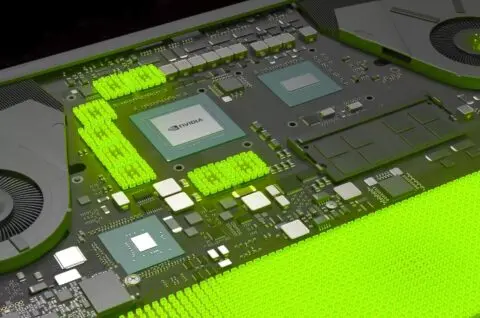
We have confirmed with NVIDIA that the GeForce RTX 5080 will use GDDR7 VRAM chips from more than one manufacturer. The news matters because yesterday, several images of the RTX 5090 PCB surfaced, showing GDDR7 memory from Samsung.
The NVIDIA GeForce RTX 5080 is a special case in the RTX 50 "Blackwell" lineup. It is the only card with a faster memory spec than the rest of the series. While the other cards use GDDR7 running at 28 Gbps, the RTX 5080 gets GDDR7 running at 30 Gbps. To meet demand, NVIDIA is sourcing 30 Gbps GDDR7 chips from several DRAM partners, including Samsung and Micron.

Having multiple sources is genuinely helpful, because GDDR7 is still in its early stages and each memory maker needs time to ramp up output of the higher-spec modules. A few weeks ago, we reported that the NVIDIA GeForce RTX 5080 would ship with 32 Gbps memory modules. That was the original plan, but production yields seem to have pushed NVIDIA toward a slightly lower spec.
We will likely see faster speeds in refreshed versions, and we also expect higher VRAM options down the road with 3 GB modules (anyone want an RTX 5080 with 24 GB?).
The Evolution of GDDR Graphics Memory
| GRAPHICS MEMORY | GDDR7 | GDDR6X | GDDR6 | GDDR5X |
|---|---|---|---|---|
| Workload | Gaming / AI | Gaming / AI | Gaming / AI | Gaming |
| Platform (Example) | GeForce RTX 5090 | GeForce RTX 4090 | GeForce RTX 2080 Ti | GeForce GTX 1080 Ti |
| Die Capacity (Gb) | 16-64 | 8-32 | 8-32 | 8-16 |
| Number of Placements | 12? | 12 | 12 | 12 |
| Gb/s/pin | 28-42.5 | 19-24 | 14-16 | 11.4 |
| GB/s/placement | 128-144 | 76-96 | 56-64 | 45 |
| GB/s/system | 1536-1728 | 912-1152 | 672-768 | 547 |
| Configuration (Example) | 384 IO (12pcs x 32 IO package)? | 384 IO (12pcs x 32 IO package) | 384 IO (12pcs x 32 IO package) | 384 IO (12pcs x 32 IO package) |
| Frame Buffer of Typical System | 24 GB (16 Gb) 36 GB (24 Gb) | 24 GB | 12GB | 12GB |
| Module Package | 266 (BGA) | 180 (BGA) | 180 (BGA) | 190 (BGA) |
| Average Device Power (pJ/bit) | TBD | 7.25 | 7.5 | 8.0 |
| Typical IO Channel | PCB (P2P SM) | PCB (P2P SM) | PCB (P2P SM) | PCB (P2P SM) |
Source: WCCFTECH