
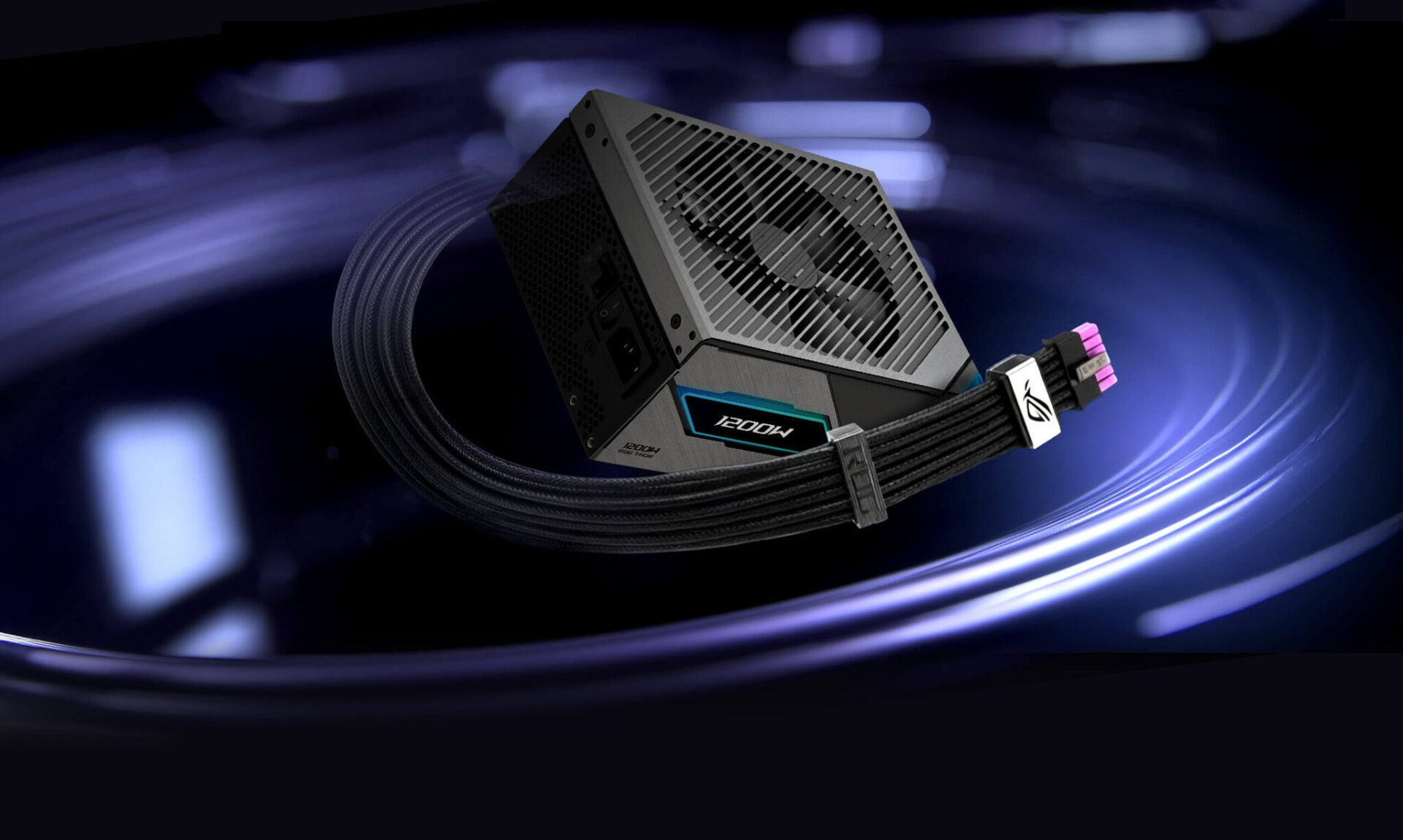
ASUS has just released the ROG Equalizer 12V-2x6 to address a major concern for many high-end PC builds: GPU power connector overheating and melting after prolonged heavy loads. Notably, the company is not fixing this at the graphics card or the power supply unit (PSU) first, but is intervening directly at the cable connecting the PSU and GPU to distribute current more evenly. For systems using high-power RTX GPUs, this detail directly impacts stability during intense gaming, long rendering sessions, or continuous local AI workloads. If the solution works as ASUS claims, PC builders will gain a practical layer of safety instead of just relying on perfectly seated cables.
How does the ROG Equalizer 12V-2x6 handle the risk of GPU connector melting?
The biggest issue with the 12V-2x6 standard is that power load can become unbalanced if some pins do not make perfect contact. In such cases, the remaining current is forced into the pins that still conduct well, causing temperatures to rise rapidly and leading to the risk of melting the connector. This is why these types of incidents often occur in configurations with high-power-consuming GPUs, where the load fluctuates heavily according to game scenes, render blocks, or AI models.
According to ASUS, the ROG Equalizer 12V-2x6 meets ATX 3.1 and PCIe 5.1 standards and is designed to balance the load more evenly before the electricity enters the GPU. The company stated that the current capacity per wire increases from 9.2A to 17A. If this internal impedance balancing method is truly effective, the most visible benefit will be a reduced risk of localized overheating when the card enters sudden load phases. ASUS also announced that temperatures can be maintained around 73.4 degrees Celsius even in extreme tests, instead of climbing to 146 degrees Celsius as seen in typical scenarios.
Of course, these are still manufacturer figures that require independent testing. However, ASUS's approach is quite logical, as the company is attempting to address the root cause-uneven current distribution-rather than just adding external warnings. This approach also aligns with the high-end hardware segment the company is pursuing, similar to how ASUS invests heavily in high-performance desktop platforms like the ASUS ROG X870E APEX.
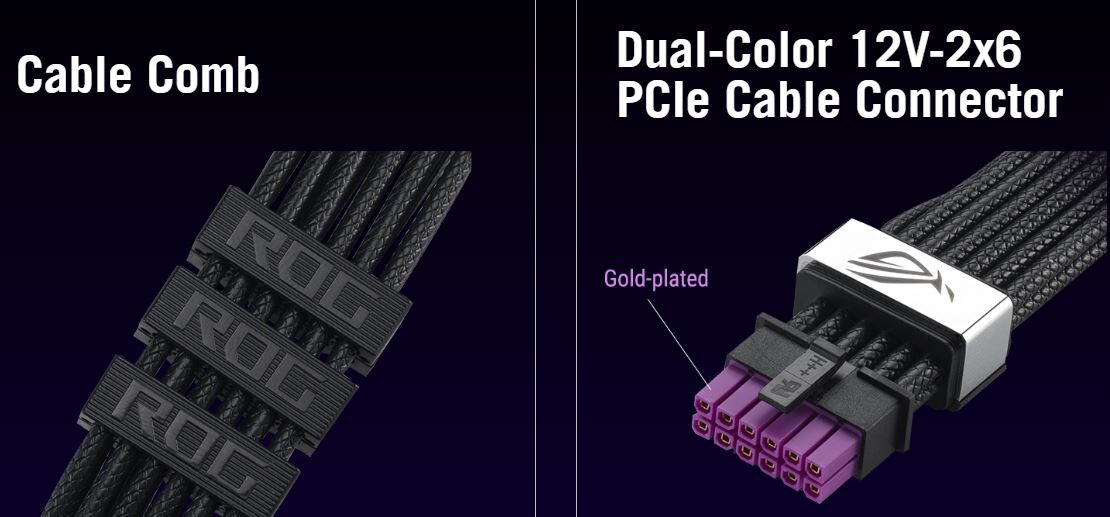
The two-tone design on the connector head is not just for aesthetics. It helps users easily see if the cable is fully seated, reducing the risk of loose connections when cable management is tight against the card. For systems that run heavy loads for hours, a small difference in installation can make a significant difference in long-term safety.
Why is this accessory worth considering for RTX high-end PC builders?
The high-end desktop market in recent years has shown one thing very clearly: high PSU wattage alone is not enough. Users are starting to pay attention to the actual power delivery path, the sturdiness of the connector, and the ability to maintain stable contact after long-term use. For systems centered around GPUs like the RTX 5090, even a small weakness in the power delivery assembly can lead to very costly risks. Therefore, configurations like RTX 5090 gaming desktop PCs always make buyers more concerned about power cables and cable management within the chassis.
Initially, the ROG Equalizer 12V-2x6 will be sold alongside the ROG Thor III and ROG Strix Platinum 2026 power supplies. Notably, ASUS says this cable is still compatible with ATX 3.1 and PCIe 5.1 compliant PSUs from many other brands. This means users do not necessarily have to replace their entire power supply to consider this solution. If the retail price is reasonable, this could be a very practical upgrade for those looking to reduce risks in PC builds using high-power GPUs.
What remains to be seen is third-party test data and the standalone retail price on the market. However, the mere fact that ASUS has released a solution that directly addresses the fear of connector melting is enough to show that the company is looking at the issue most concerning to the PC building community right now.
Source: Wccftech, ASUS.