
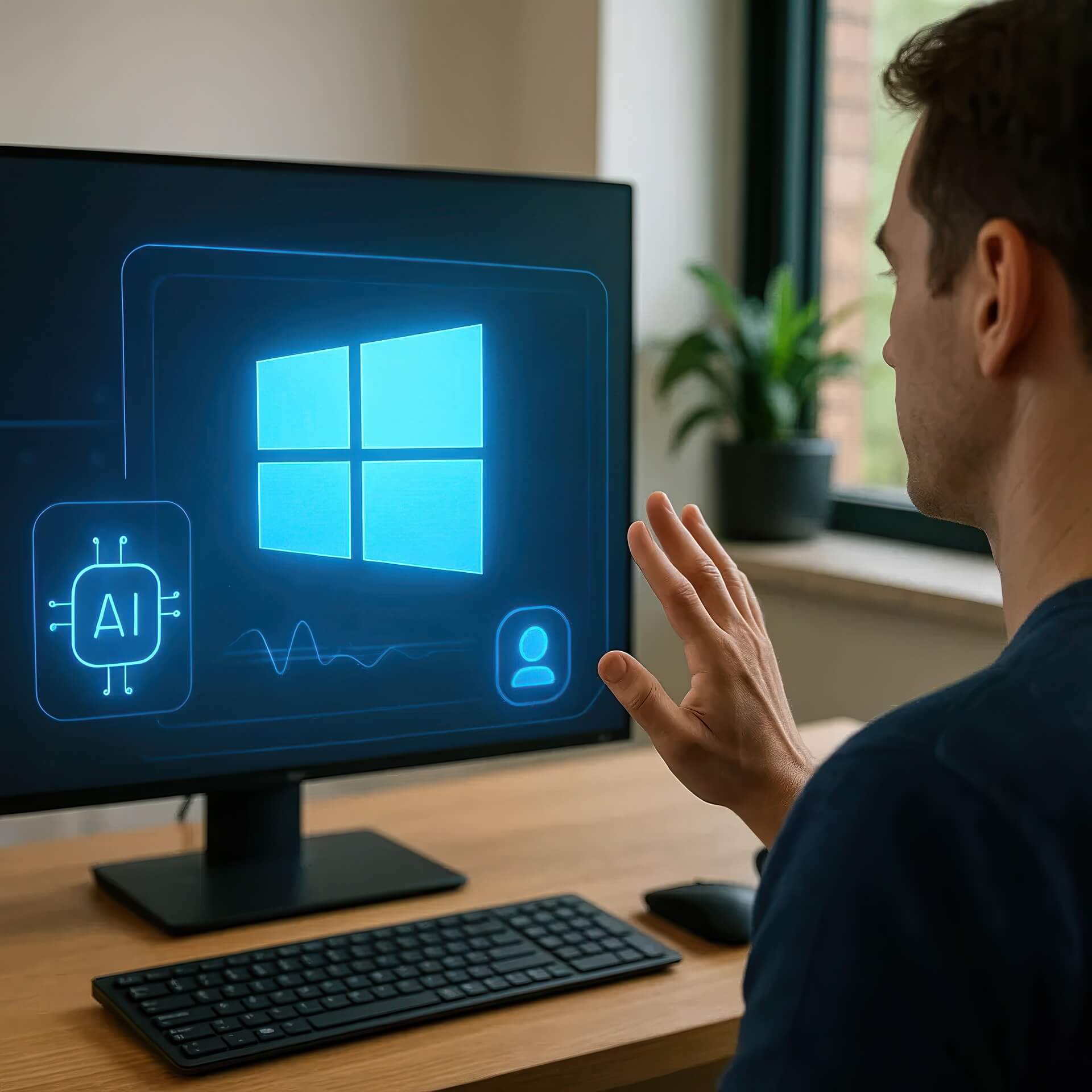
Microsoft has just released the Windows 2030 Vision video, revealing a bold vision for the operating system of the future. According to the company's prediction, by 2030, users will no longer rely primarily on a mouse and keyboard; instead, natural voice interaction and multimodal methods will become the standard. Microsoft believes this experience will make typing on a keyboard or moving a mouse feel foreign, much like how the DOS operating system is viewed as obsolete by Gen Z.
AI agentic: The Future of Windows
In the video, David Weston, Vice President of Business & Security at Microsoft, emphasized that within just 5 years, companies could "hire" AI agentic to act as cybersecurity experts. These AIs will participate in Teams meetings, communicate with colleagues, and handle most repetitive tasks, allowing humans to focus on creative and strategic missions.
https://www.youtube.com/watch?v=ccpXNBsTaGk
Weston stated: "I think we will use our eyes less and talk more to computers." He believes that the Windows of the future will communicate through multimodal methods, allowing the system to "see what we see, hear what we hear," thereby performing complex tasks through voice and visual context. This is described by Microsoft as the most natural and intimate way of communication between humans and computers.
Massive Investment and Microsoft's AI Ambitions
Microsoft is currently one of the most heavily invested companies in AI. From the deal worth over 13 billion USD with OpenAI to the 650 million USD acquisition of Inflection AI, the Redmond giant is integrating AI into almost every product, whether users truly desire it or not. Consequently, the idea of an AI agentic Windows that receives voice commands is both groundbreaking and controversial.
Nevertheless, skepticism remains. The Windows 2030 Vision video currently has more "dislikes" than "likes," reflecting cautious user sentiment. Microsoft has repeatedly made grand promises regarding AI, such as with Copilot or the Copilot+ laptop line, but has not yet fully met expectations. The Recall controversy (the automatic screenshot feature) remains a prime example of the intense backlash that forced the company to adjust its strategy.
Mouse and Keyboard: Will They Truly Be Obsolete by 2030?
Microsoft suggests that using a mouse and keyboard will become outdated within the next 5 years, similar to how editing batch files in DOS is considered ancient today. However, many experts argue that the 2030 milestone is overly ambitious. Mice and keyboards still provide precision, speed, and a sense of familiarity that AI may not be able to fully replace.
Even so, if this vision becomes a reality, Windows 2030 could usher in a new era where users interact with computers through natural conversation and multimodal experiences, rather than traditional typing or mouse movements.