

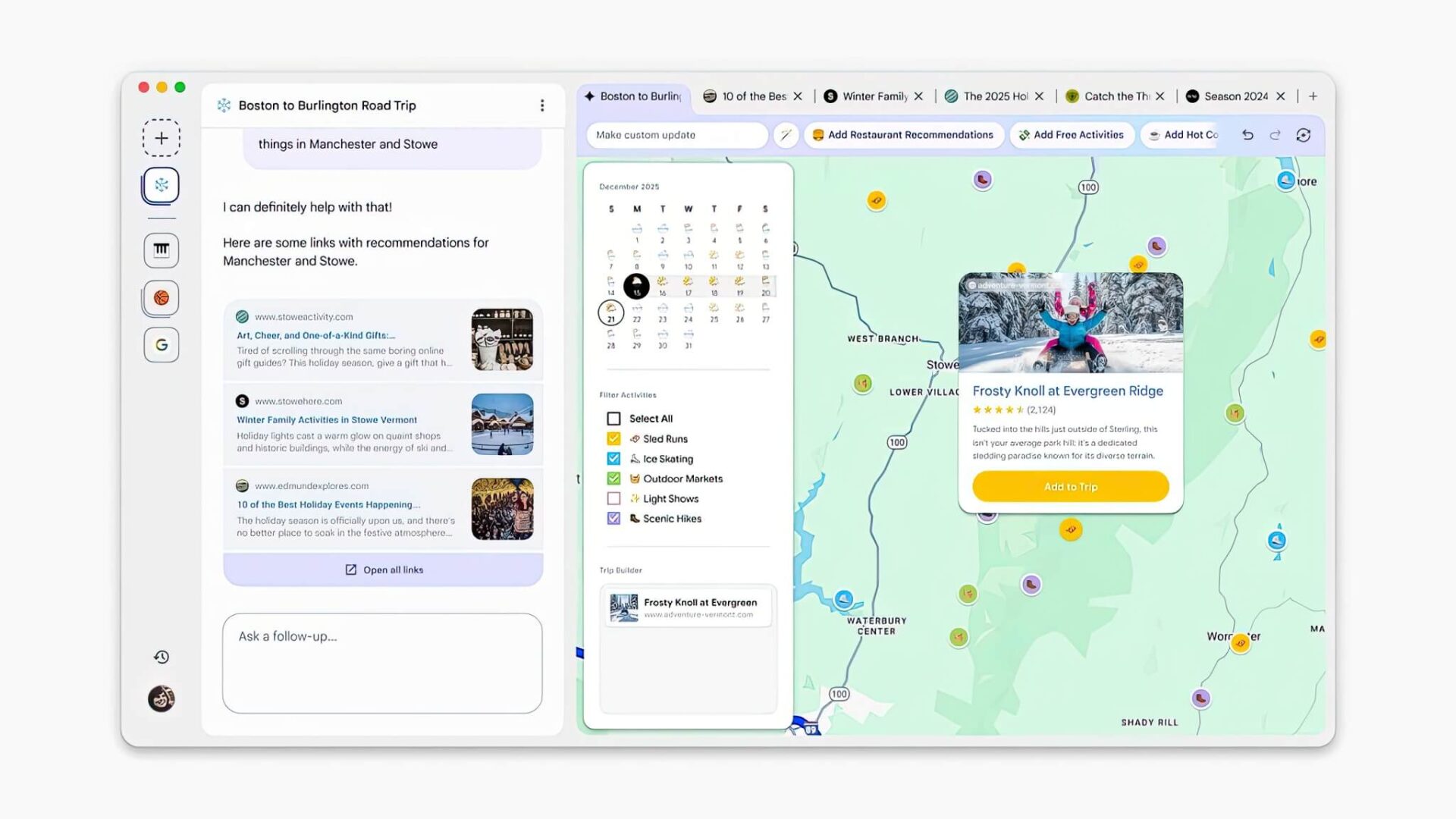
Chrome's division at Google is currently testing a completely new web browser with the ambition of redefining how people interact with the internet. This promising project is named Disco, with the idea of expanding the traditional browser tab concept into a flexible framework for building instant, personalized mini-apps based on user requirements. Developed as an experimental project within Google Labs, the Disco browser is a unique combination of the familiar web browsing experience and the power of generative artificial intelligence through a feature the company calls GenTabs.
GenTabs and how Disco changes the web browsing experience
The origins of the Disco browser began as a project in a Google hackathon and has since evolved into a complete prototype. Its goal is to explore what browsing would look like if every search query functioned as an interactive workspace instead of merely returning a list of hyperlinks. Ms. Parisa Tabriz, head of the Chrome development team, told The Verge that this project is by no means intended to replace or compete with the current Chrome browser. Instead, it serves as an experiment to see how people might interact with a browser that is more adaptive and focused on task resolution.
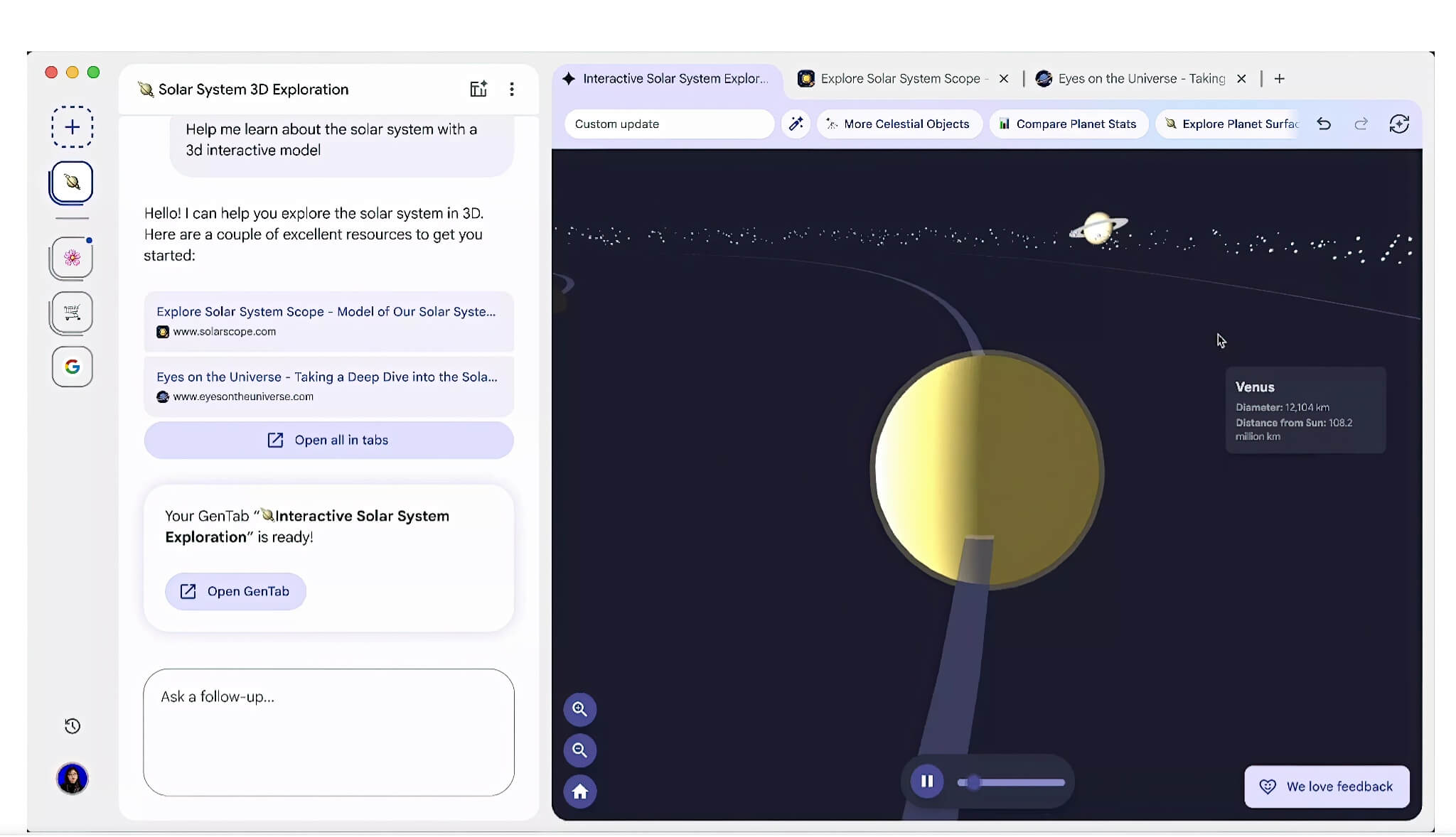
Ms. Tabriz clearly explained her perspective that she does not view Disco as a general-purpose browser for all needs. Its primary purpose goes far beyond just opening online tabs; it aims to create a personalized and carefully curated application for the user. At the core of the Disco browser is the GenTabs feature, short for "generated tabs." Completely different from traditional tabs that only display static web content, GenTabs are interfaces built by Google's Gemini AI models.
Specifically, the Gemini 3 model has introduced the ability to create interactive components such as buttons, maps, and sliders in real-time. The Disco browser fully leverages this capability as the foundation for the browsing experience: when a user enters a prompt, the browser does not just open relevant websites but also automatically constructs a mini web app designed around that specific task.
Real-world experience with instant app generation capabilities
In a live demonstration observed by The Verge, Ms. Manini Roy, who runs an innovation lab within the Chrome organization, demonstrated how this interface works. In the Disco sidebar, she launched what Google calls a "project"-essentially a self-contained workspace that combines a chat interface with a set of traditional web tabs.
When she entered a request to plan a trip to Japan, the system opened a series of tabs containing relevant travel information sources. Interestingly, it then suggested creating a custom planning tool. Within just one minute, Gemini AI assembled a browser-based application, displaying a fully annotated map of Japan with attractions, a simple itinerary builder, and links to all the data sources referenced in the open tabs. As Ms. Roy added new locations during her research, GenTabs would automatically update to reflect the latest information.
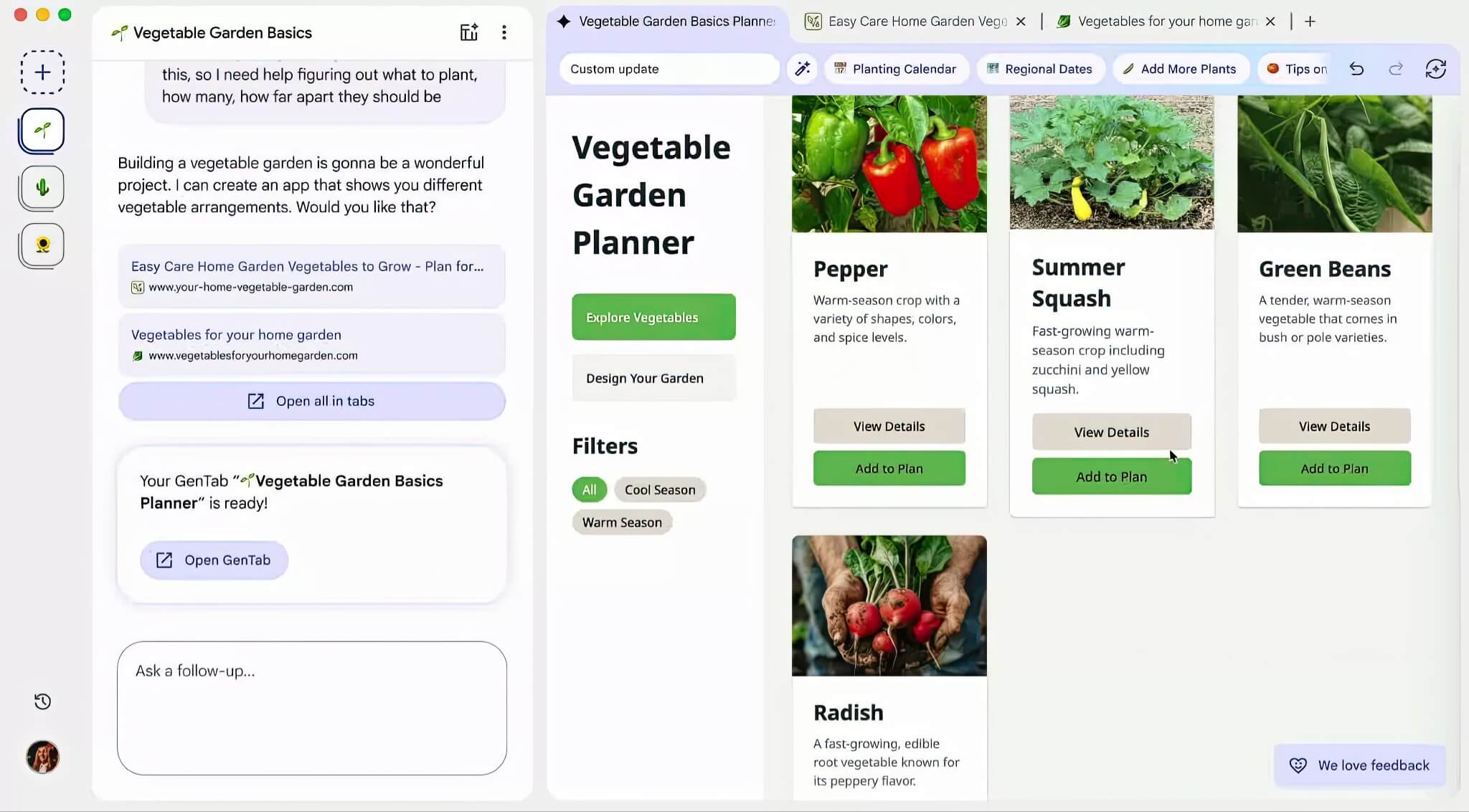
According to Ms. Roy, the goal of this approach is to encourage users not just to passively consume AI-generated results but to actively collaborate in shaping them through their own discovery process. Initial feedback suggests that this approach leads users to spend more time interacting with actual websites rather than being confined to a chatbot interface-a limitation that has reduced the usefulness of many recent AI-integrated browsers.
In another impressive illustration, Ms. Roy asked how an ankle works. Instead of just returning a dry text answer, Disco opened several reputable medical sources while simultaneously creating a preliminary interactive 3D model of a human foot for illustration. For a scenario involving moving across states, the AI created a workspace including packing tips, a weight calculator, and a cost comparison table of moving companies. Each GenTab also supports iterative refinement through additional prompts or manual edits.
The future of Disco and Google's experimental direction
However, this experiment also raises questions about the true nature of GenTabs. The development team has not yet decided whether these generated tabs should exist as full web applications with shareable URLs or if they will disappear when a project is closed. Users have requested both permanent and temporary options, as well as the ability to export data from GenTabs to existing productivity platforms, including Google Workspace tools like Docs and Sheets.
https://www.youtube.com/watch?v=I-rAE40ggbc
Both Ms. Tabriz and Ms. Roy admit that the future of Disco remains uncertain. Currently, it remains an experiment within the scope of Google Labs rather than a product with a scheduled official release. Nevertheless, the Chrome team views this as an important test of how browsers and AI systems can merge while keeping users closely connected to the open web. Ultimately, the Disco browser could be a signal of a subtle but significant shift from static content consumption to interactive creation. For now, it serves as an experimental "springboard" for what may come next in Chrome and AI-based web interactions.