


In the context of the global AI fever, analysts and tech leaders are questioning whether we are living in an "AI bubble." While there are no clear signs of a collapse, Microsoft-the giant leading this revolution-seems to be the first name feeling the actual heat. Latest reports show that the corporation is facing a harsh reality as its flagship tools like Copilot and Foundry fail to meet expected growth targets, forcing the company to quietly adjust expectations as enterprise customers remain hesitant about actual effectiveness.
Sales Slump and Enterprise Customer Hesitation
It is difficult to deny that we are in the midst of an artificial intelligence fever, a view shared by most market analysts and AI executives. Although the market has not shown signs of an immediate crash or crisis, Microsoft may be the first major company to reveal signs that they have overestimated the level of interest from both the enterprise sector and general consumers in this technology.
Microsoft's aggressive efforts to make artificial intelligence the core of its product strategy are meeting resistance from the very customers they expected to embrace it most enthusiastically. Specifically, many sales units within the Azure cloud computing division failed to meet the ambitious growth targets associated with Foundry. For those who do not know, Foundry is Microsoft's "app marketplace" for AI models and agentic building tools. In response to this situation, the company has had to take the rare step of lowering growth expectations for the current fiscal year. This is an unusual move for a corporation that traditionally raises sales targets year after year.
This sales shortfall highlights the reality that businesses remain very hesitant to spend more money on AI, even as Microsoft continuously promotes agentic systems as the next major shift in office computing. Foundry plays a central role in Microsoft's vision of autonomous AI agents capable of handling complex multi-step tasks with minimal human supervision. The company has marketed these tools as a solution to help businesses automate everything from data processing to report writing, reinforcing that message with new AI agents in Word, Excel, and PowerPoint at recent developer events.
The Harsh Reality of Usage and Stock Price
However, actual usage does not match the dream. Many companies that invested money in these tools are not actually using them. This reflects persistent customer concerns regarding accuracy, instability, and the risk of serious errors in critical work. Anonymous sources told The Information that one Azure business unit instructed sales staff to increase Foundry spending by up to 50% in the last fiscal year. However, the result was that less than one-fifth of employees met this goal. It appears that in response to this grim reality, Microsoft has had to lower the target to approximately 25% for the current year.
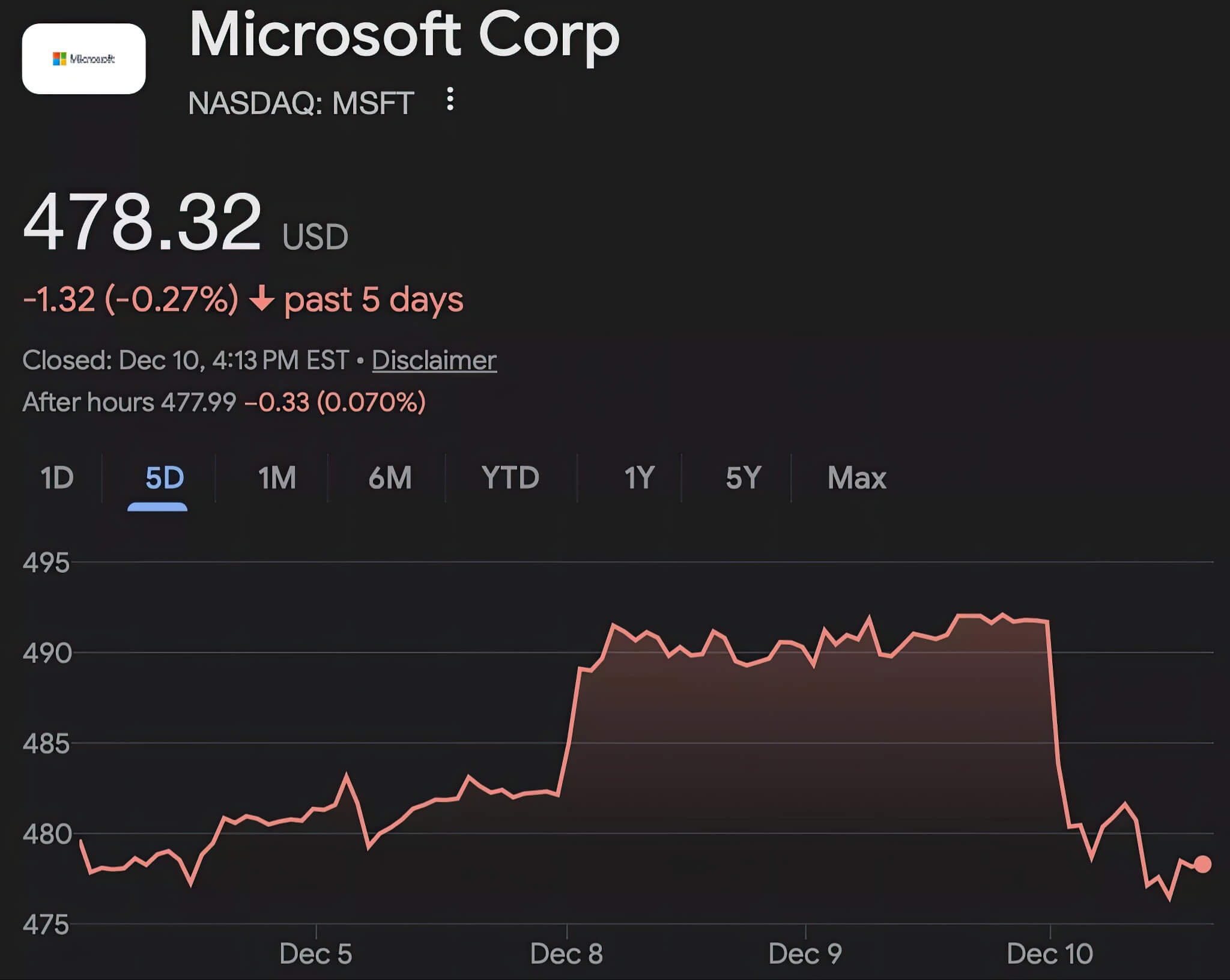
As soon as this news broke in the morning, Microsoft's stock immediately plummeted 3.1% and showed no signs of recovery immediately afterward. The difficulty is not limited to Foundry but also extends to Copilot, Microsoft's leading productivity assistant. Some businesses that have adopted Copilot have found that their employees are turning to competitors' chatbots for general tasks. This leaves Copilot limited and isolated within Microsoft's specific workflows like Outlook and Teams.
For a company that has spent years deeply integrating AI into its operating system, office application suite, and cloud tools, this user behavior pattern indicates a broader disconnect: customers tend to reject new technologies when a company tries to force them to use them as default features in existing products, rather than offering them as optional enhancements.
Response from Microsoft and Lessons from the Tech Bubble
After the stock dropped more than 3% due to the news from The Information, Microsoft quickly shifted to an offensive stance to reassure the public. A Microsoft spokesperson told Bloomberg that The Information's story inaccurately conflated concepts of growth and sales targets. The spokesperson asserted that the total sales target for AI products has not been lowered.
Analysts at brokerage firm Jefferies voiced support for Microsoft's position. However, despite those reassurances, the company's stock still fell sharply as investors began considering the possibility that enterprise demand might be much weaker than expected. Microsoft's current predicament highlights the tension permeating the entire tech industry, which has invested billions of dollars "irrationally" into AI infrastructure with the belief that widespread adoption was imminent.
Yet, the reality is that businesses maintain a cautious attitude, while consumers remain skeptical. Microsoft's aggressive "AI everywhere" strategy is now becoming a prime example of the current disconnect, which has contributed to the largest economic bubble since the dot-com era. Analysts warn that the AI market will eventually have to self-correct, creating a clear divide between winners and losers. If Microsoft does not quickly adopt an approach that is more friendly and aligned with actual user needs, they risk losing the billions of dollars already invested in artificial intelligence.