
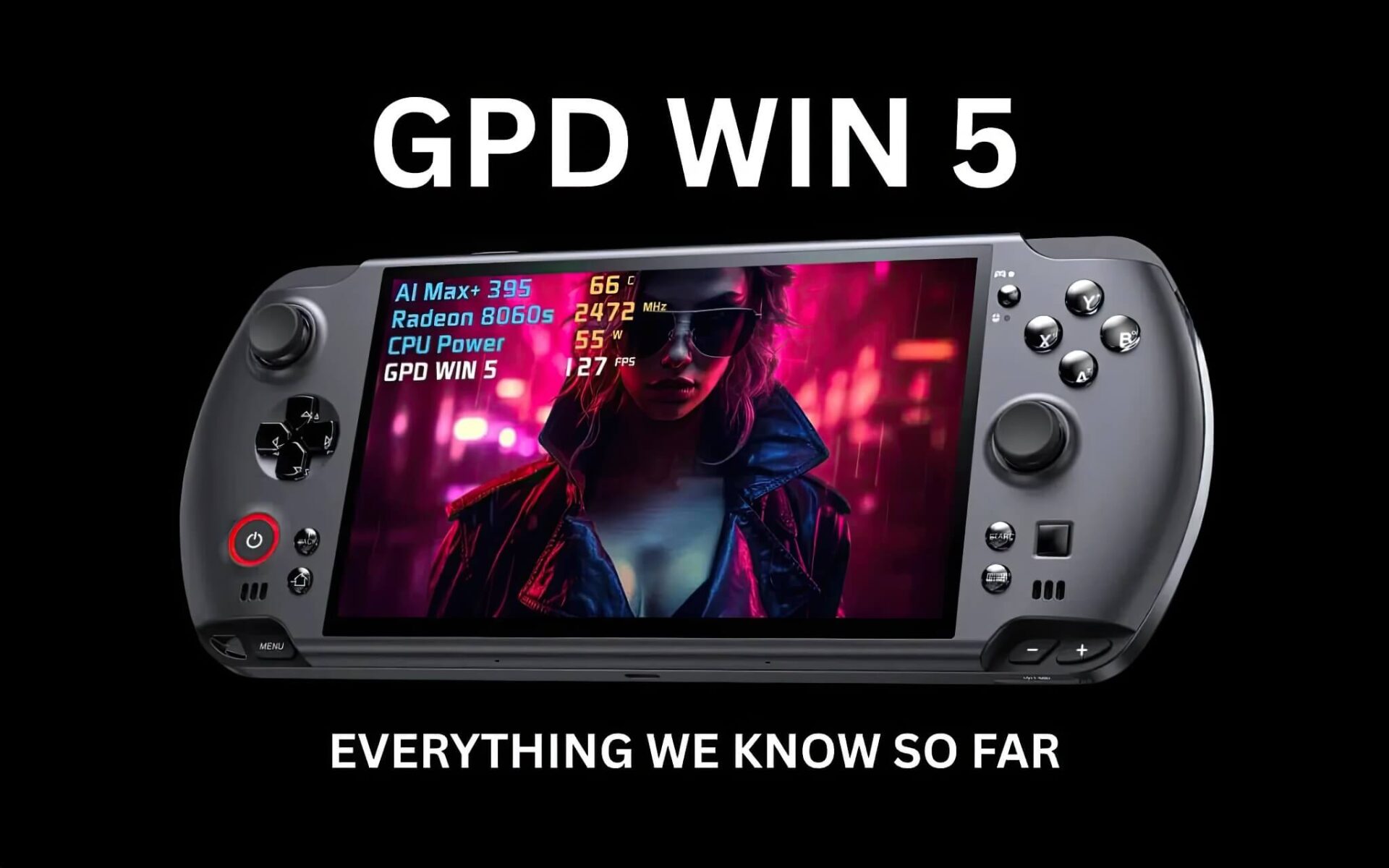
With the official arrival of GPD Win 5 on the market, real-world tests are beginning to confirm highly impressive results regarding the device's performance and unique power profile. Recent benchmarks suggest that 2026 will witness a new wave of handheld PCs with power approaching that of gaming consoles (such as PlayStation or Xbox), to the point where many casual users may not notice the difference. In this landscape, the GPD Win 5 is emerging as a notable phenomenon, narrowing the gap between mobile devices and home consoles.
GPD Win 5 Performance vs. PS5 and Competitors
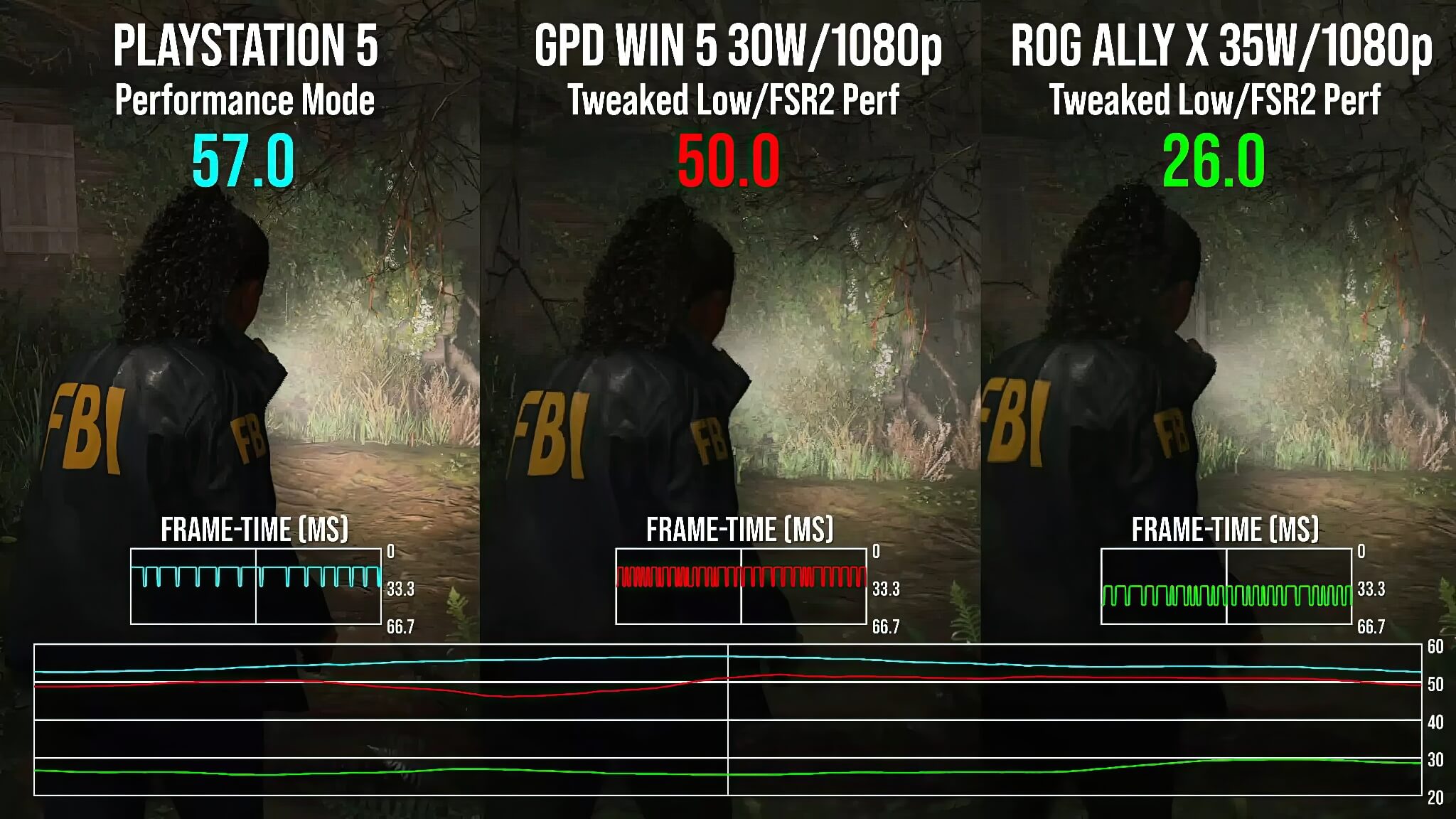
In a comprehensive review of hardware products released in 2025, the rigorous testing process of the prestigious tech outlet Digital Foundry indicated that this newly released Windows-based GPD Win 5 has reached a performance threshold very close to the standard PlayStation 5 (PS5) version. Specifically, when tested with Alan Wake 2, one of the most demanding PC titles currently, the GPD Win 5 demonstrated processing speeds nearly twice as fast as its competitor, the Asus ROG Ally X, and frequently maintained frame rates only about 10 fps (frames per second) below the PS5.
When using graphics settings equivalent to the performance mode of the PS5 version, the GPD Win 5 delivers speeds of approximately 47 fps at 1080p resolution. Notably, the device consumes less than 30W of power, supported by FSR2 technology set to performance mode. For comparison, Sony's console requires significantly more power to achieve frame rates in the 50 fps range at 1440p resolution. This demonstrates that the power efficiency of the GPD Win 5 is extremely optimized.
In particular, when connecting the GPD Win 5 to a power source (docking) and playing Alan Wake 2 at 1440p resolution on a TV or external monitor, the average frame rate is pushed to the lower end of the 50 fps range-meaning it achieves approximately 93% of the PS5's performance. This impressive result shows that this competitor to the Steam Deck is fully capable of smoothly handling titles that Valve's popular handheld device has yet to reach.
Compact Design but Price is a Barrier
One of the most prominent aspects of GPD's design is that the Win 5 is smaller than the ROG Ally X and thinner than even the Nintendo Switch 2, despite containing a chip die that is 57% larger than the die inside the PS5 Pro. However, this compactness and power come with significant drawbacks regarding battery setup and product pricing that users need to consider carefully.
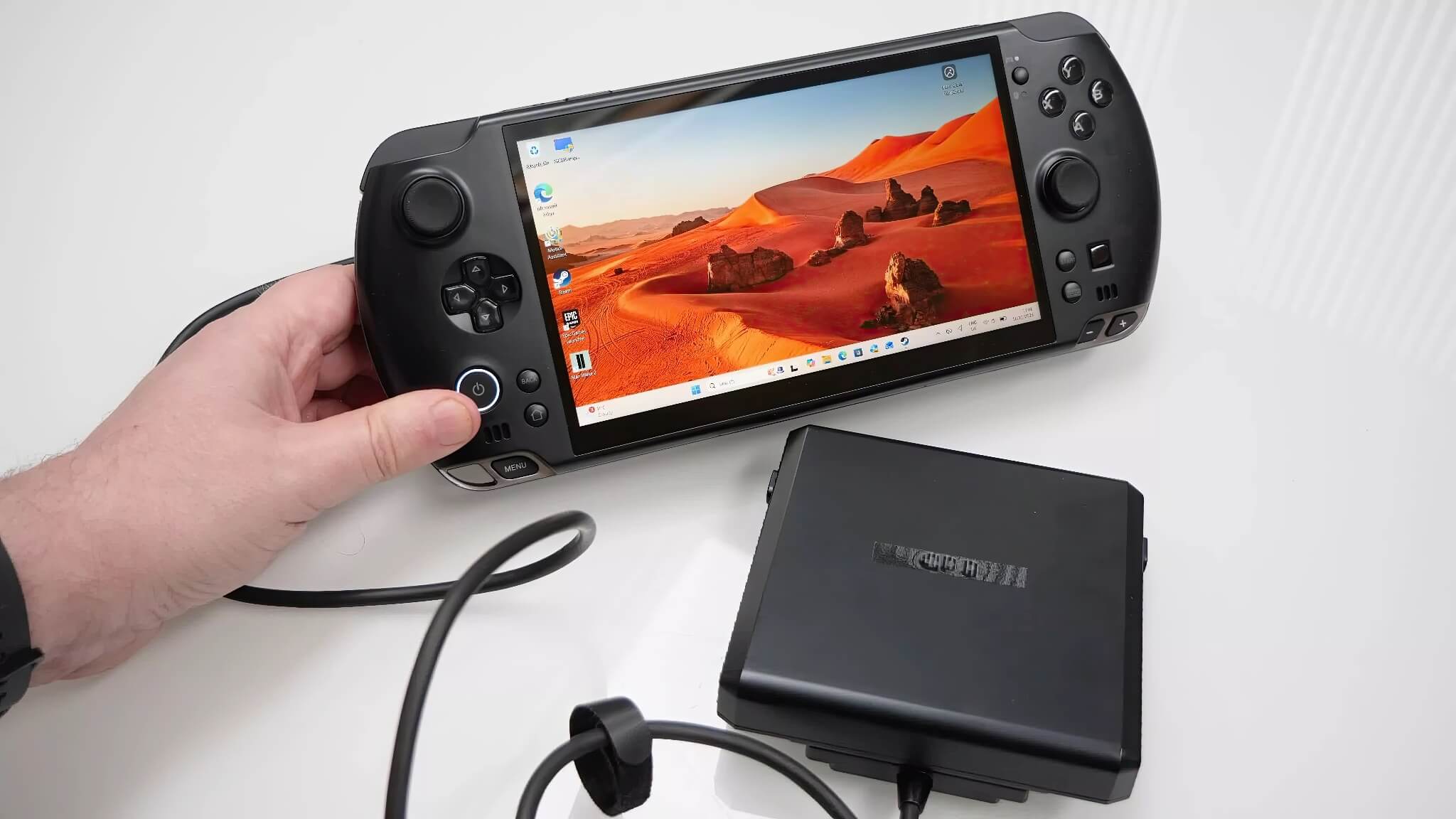
The GPD Win 5 relies on an external 80Wh battery pack, connected via cable or attached to the back of the device. This battery provides approximately two hours of gameplay at a 30W power draw. Additionally, the price point is a major barrier for the majority of users: starting at around 1,800 USD, this machine is many times more expensive than devices like the Steam Deck, PlayStation 5, or Switch 2. This is a price point intended for true tech enthusiasts who want ultimate power in the palm of their hands.
GPD is not the only entity attempting to bring AMD's Strix Halo APU into a handheld form factor-a chip originally designed for high-end laptops. One-Netbook is also planning to launch the OneXFly Apex late this month, offering similar specifications to the GPD Win 5 along with a liquid cooling option. Furthermore, while information on the Ayaneo Next II remains scarce, the device has been confirmed to feature a 9-inch OLED screen with a 165Hz refresh rate, 2,400 × 1,504 resolution, 1,100 nits peak brightness, and 5,280 PWM dimming technology, promising a vibrant competition in the handheld gaming market in the near future.