
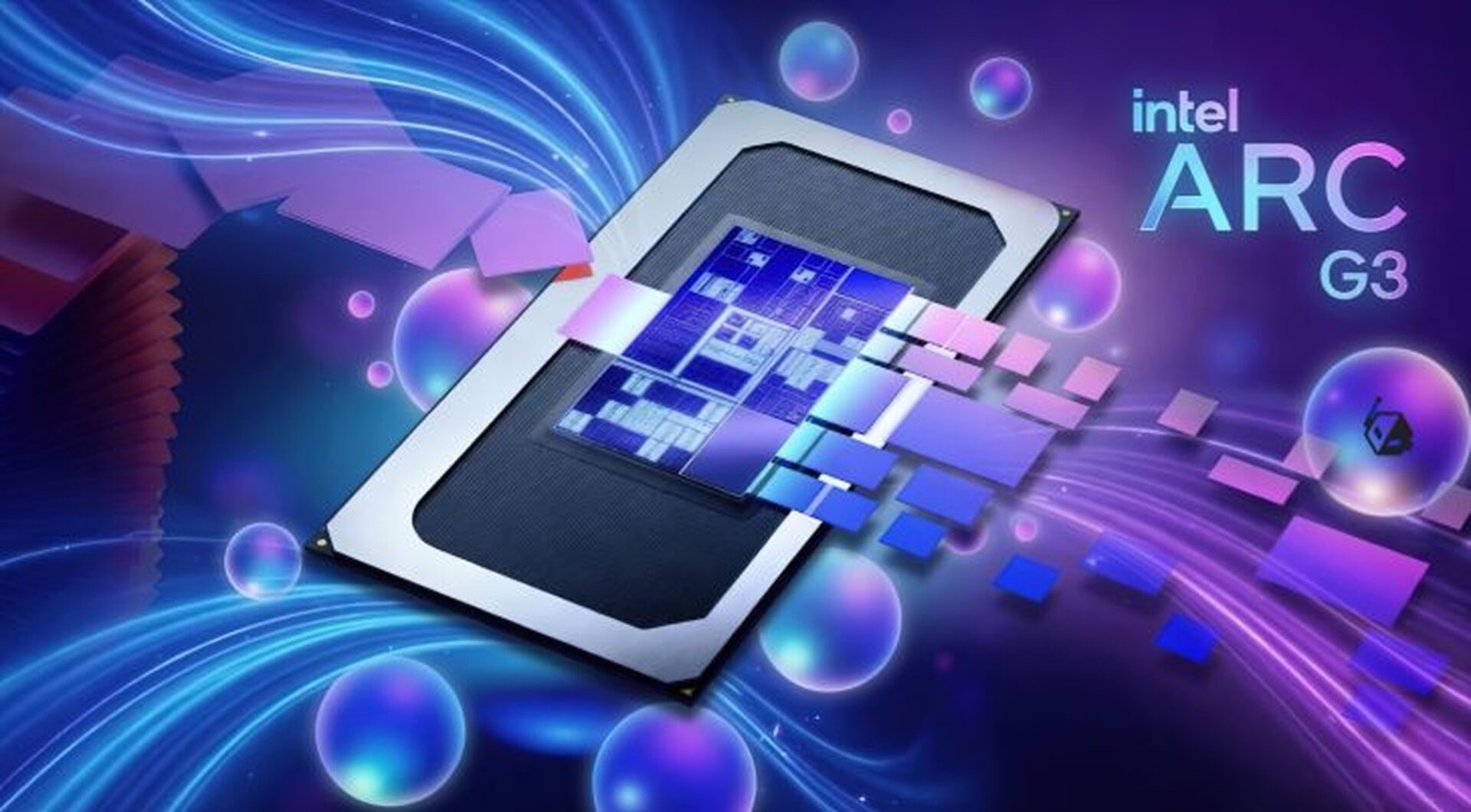
Intel Arc G3 Extreme has just leaked its first benchmarks for handheld gaming devices, and the most notable detail is that this chip is reportedly about 25% faster than the Ryzen Z2 Extreme in multi-core CPU tests. According to a post from Wccftech, the results stem from leaked benchmark databases, while also revealing the CPU and iGPU configurations of the new SoC. For general users, this means Intel may soon have a card capable of creating real competition in the handheld gaming segment, which is currently leaning heavily toward AMD. If these benchmarks accurately reflect technical performance, the Intel Arc G3 Extreme could encourage handheld manufacturers to be bolder with premium designs instead of just following the familiar formula of the Ryzen Z2 Extreme. For hardware enthusiasts, this is a signal that Intel wants to push its new Arc architecture into the high-performance but strictly power and thermal-constrained device group.
Intel Arc G3 Extreme leaks configuration more ambitious than current handheld standards
The most interesting part of the Intel Arc G3 Extreme is how this chip seems to be balanced for handheld needs: prioritizing low power consumption while maintaining a powerful enough GPU. According to leaked information, this SoC features 14 cores and 14 threads with a 2-core high-performance, 8-core efficiency, and 4-core low-power architecture, with a boost clock of up to 4.6 GHz, 12 MB L3 cache, and 18 MB L2 cache.
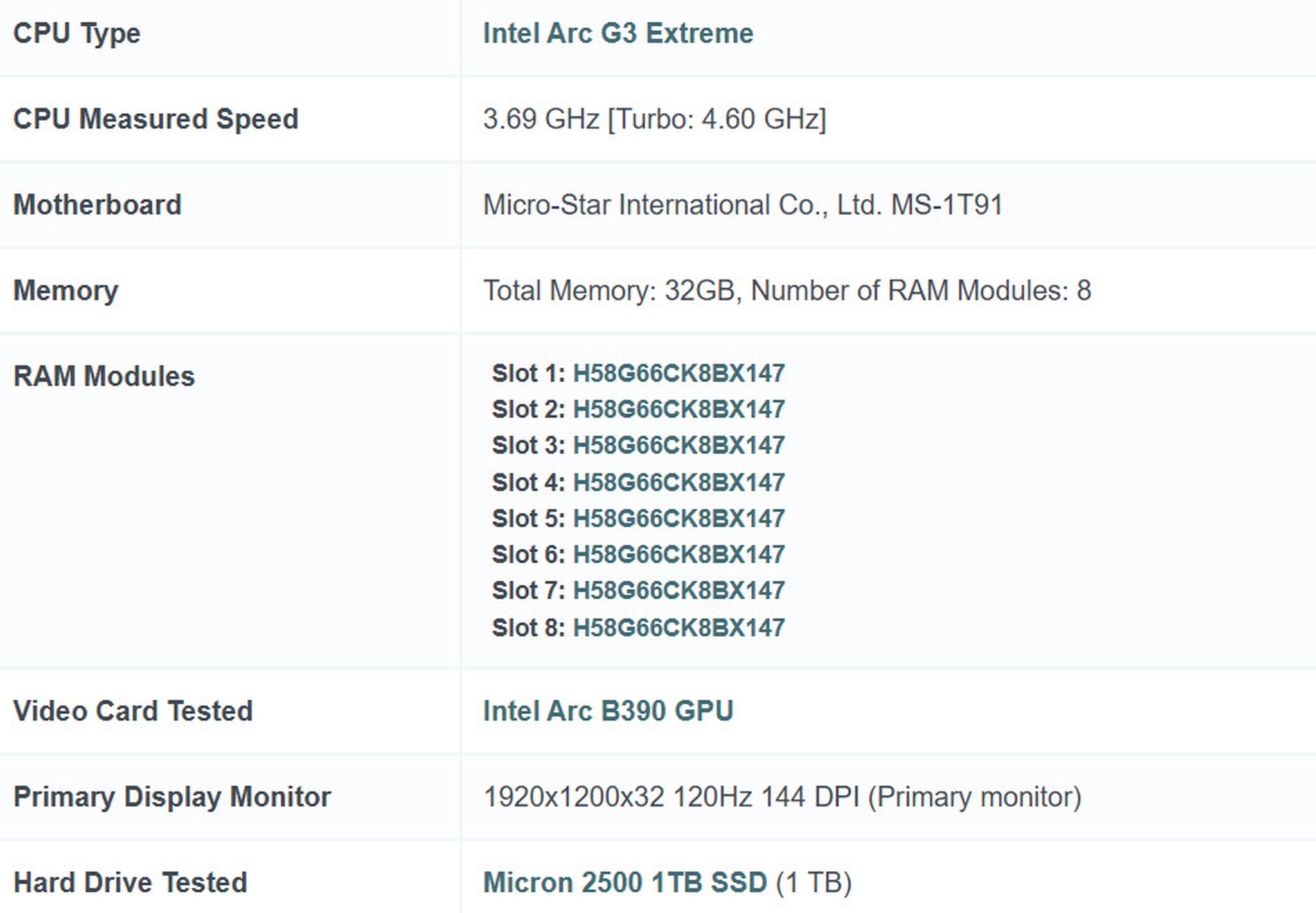
PassMark data shows the Intel Arc G3 Extreme achieving 29,622 multi-core points and 4,288 single-core points. When compared directly to the Ryzen Z2 Extreme in the same reference table, the differences are approximately 25% in multi-core and 8% in single-core. While these are not actual gaming benchmarks, they are sufficient to show that Intel is aiming for more than just a minor upgrade.
Another point attracting the attention of handheld enthusiasts is the integrated graphics. The Intel Arc G3 Extreme is rumored to use the Arc B390 iGPU with 12 Xe3 cores, whereas standard Arc G3 versions might only use lower-tier GPUs. If this information is correct, Intel's advantage will lie not only in the CPU but also in its ability to maintain stable FPS and leverage new upscaling technologies on small screens.
What does the 25% figure mean for the handheld gaming market?
What does the 25% figure mean for the handheld gaming market?
A leaked benchmark result is not enough to confirm that Intel will beat AMD in actual gaming, but it is enough to make the handheld market less monochromatic. The Ryzen Z2 Extreme remains a familiar name in the high-end group, so Intel Arc G3 Extreme outperforming it in CPU tests suggests that handheld manufacturers will have a new option, especially when they want to push modern graphics features like XeSS 3 or flexible VRAM allocation.
| Key Metric | Intel Arc G3 Extreme | Real-world Significance |
|---|---|---|
| CPU Architecture | 14 cores, 14 threads, up to 4.6 GHz | Suitable for handhelds needing performance within tight thermal limits |
| iGPU | Arc B390, 12 Xe3 cores | Higher expectations for heavy games and upscaling technologies |
| Supported Memory | LPDDR5X-9600 | High bandwidth helps reduce iGPU data bottlenecks during gaming |
| Expected Power | Approximately 15W-30W | Crucial for battery life, chassis temperature, and fan noise |
In reality, this segment requires more than just stronger chips on paper. Handheld gaming is also determined by drivers, cooling, battery, and how manufacturers tune power levels for each game. Therefore, these leaked benchmarks should most reasonably be viewed as a precursor to more exciting competition in the second half of 2026, rather than a conclusion that AMD has lost its edge. If you are following new graphics trends on both PC and handheld, the article on Shader Model 6.10 is also worth reading, as it explains why integrated GPUs are playing an increasingly significant role.
In the external hardware branch, the MOREFINE G2 eGPU RTX 5060 Ti also shows that handheld gaming is advancing very rapidly toward greater graphics flexibility.