
The G100 GPU has officially powered on, marking a major milestone in China's push for semiconductor self-reliance. Lisuan Technology, a startup based in Shenzhen, has officially brought up the first 6nm graphics card it developed entirely in-house. Although the full specifications have not been released, the company says the chip is aiming for performance on par with the Nvidia RTX 4060, an ambitious target for a first-generation product from a new developer.
The Technology Behind the G100 GPU
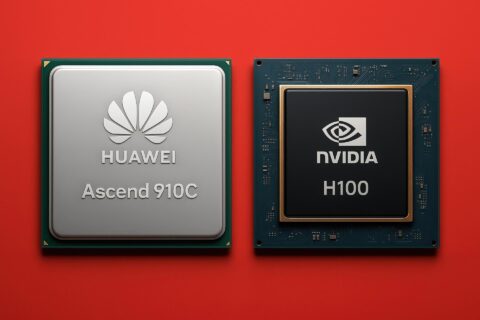
Lisuan Technology says the G100 GPU is built on a 6 nanometer process, though it has not revealed who actually manufactures it. Given US export restrictions, it is almost certainly not Samsung or TSMC. The chip is most likely made at China's SMIC foundry, which has produced 6nm chips for Huawei, notably for its Ascend 920 AI processor.

The standout feature of the G100 GPU is its fully homegrown TrueGPU architecture, which does not rely on IP licensed from companies like Imagination. It is an entirely new design, developed by a team of former GPU experts from Silicon Valley. According to the official WeChat account, the G100 supports modern graphics APIs including DirectX 12, Vulkan 1.3 and OpenGL 4.6, which suggests it is aimed at both gaming and general-purpose GPU workloads.
Although there are no official specifications yet, rumors suggest the G100 GPU may deliver performance on a level with the GeForce RTX 4060. That is a bold ambition, considering that the RTX 4060, while not the highest-end card, is still a strong representative of Nvidia's previous generation. The G100 is expected to come with ample video memory, moderate power consumption, and support for all the important APIs.
A Challenging Journey and the Outlook Ahead
Development of the G100 GPU began in 2021. Lisuan planned to bring the chip to market in 2023, but financial difficulties pushed the company close to bankruptcy. Only an emergency investment of 27.7 million dollars from its parent company Dongxin Semiconductor allowed Lisuan to keep operating.
In early 2024, the foundry began producing the first G100 GPU chips, and they passed the bring-up stage successfully. Lisuan is now focused on hardware and software testing as well as driver optimization. The next phase will be critical, because real-world performance will depend on driver optimization and compatibility with major operating systems and popular game engines.
Although it is a mid-range graphics card from the previous generation, the RTX 4060 is still an impressive card, built on TSMC's 5 nm process. The smaller the process, the higher the transistor density, which leads to better performance and efficiency. For the G100 to target RTX 4060-level performance is an ambitious goal, especially since Nvidia, AMD and Intel have decades of experience and enormous R&D investment behind them.
Summary: The G100 GPU marks an important step in China's effort to achieve semiconductor self-reliance. By aiming for performance on par with the RTX 4060, Lisuan Technology is showing great ambition in closing the gap with Western giants. Many challenges remain, from driver optimization to mass production, but if Lisuan can hit this target with its first GPU, it would be a significant step forward for China's semiconductor ambitions. The global GPU market is waiting for real-world results from this promising product.