
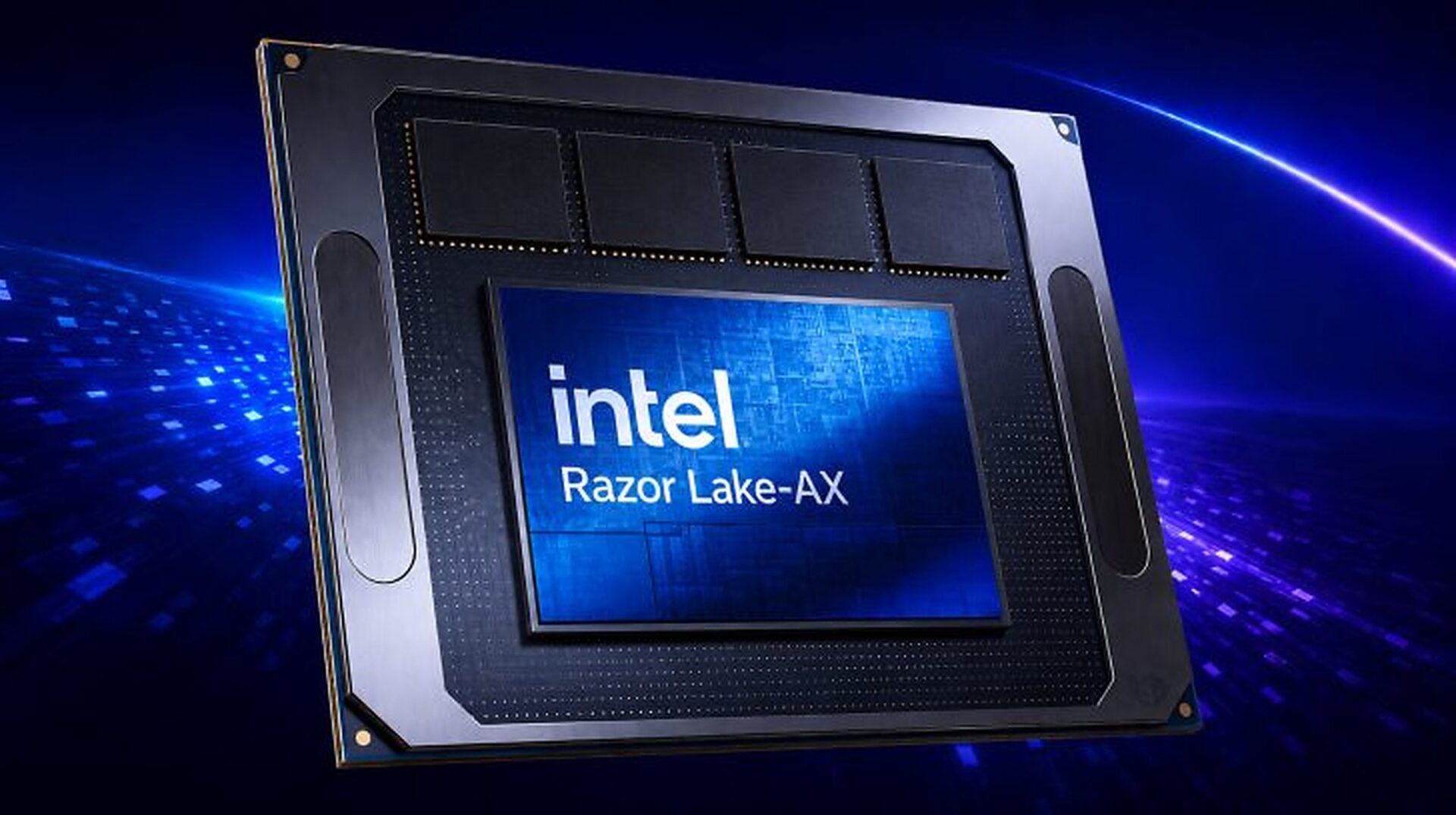
Intel is being mentioned as a name that could bring major changes to the high-end AI laptop segment in the coming years. By moving toward on-package LPDDR6 on Razor Lake-AX, the company could increase memory bandwidth, reduce power consumption, and free up more space for thin and light designs. If implemented as leaked information suggests, this change could also improve integrated graphics performance and local AI processing. This is also a signal that the company is preparing to compete more directly with the hardware direction pursued by Medusa Halo. For users interested in AI laptops that are both compact and powerful, this is a development well worth watching.
How will Intel Razor Lake-AX's new RAM placement benefit AI PCs?
According to a leak from Intel Razor Lake-AX on Wccftech, Intel may bring on-package memory back to the high-performance laptop segment after Lunar Lake, with the timeline mentioned around 2028. Notably, this direction does not target ultra-low-power machines, but rather larger SoCs with more CPU cores, more powerful iGPUs, and higher bandwidth requirements. Paired with LPDDR6, the chip will have more headroom to feed integrated graphics, the NPU, and memory-sharing tasks without significantly increasing the device's size.
The biggest difference between this method and traditional RAM layouts lies in the distance data must travel. In many laptops today, DDR5 or LPDDR5X RAM still sits on the motherboard, meaning signals must travel through longer traces, and the board must allocate space for both the power delivery and the memory chip area. By switching to on-package, Intel Razor Lake-AX could shorten the transmission path, reduce power loss, and pave the way for higher bandwidth at the same power level. LPDDR6, therefore, is not just a newer RAM generation, but a key component that allows thin and compact designs to still run powerful iGPUs and handle local AI tasks more stably.
In what ways could LPDDR6 help Intel Razor Lake-AX compete with Medusa Halo?
The reason this rumor is gaining attention lies in the competitor Intel is targeting. The AX segment is described as aiming for high-end laptop models with powerful integrated GPUs-the exact area where AMD is applying pressure with its Halo APUs. In the context where Panther Lake only reaches LPDDR5X 9600 MT/s, the leap to LPDDR6 could help Intel Razor Lake-AX increase bandwidth significantly enough to feed larger iGPUs, handle heavier textures, and provide better memory sharing for the NPU. For AI PCs, this is a very practical benefit because, with the same amount of RAM, the system can serve the CPU, integrated graphics, and the AI block more efficiently.
The table below shows why this change is more important than simply increasing clock speeds.
| Memory Layout Type | Strengths | User Experience Impact |
|---|---|---|
| RAM on motherboard (as in many current laptops) | Easy to implement, flexible configurations | Stable, but bandwidth and power are limited by longer traces |
| LPDDR6 on-package next to SoC | Higher bandwidth, better power efficiency, more compact motherboard | iGPU and NPU have more headroom for AI, graphics, and heavy multitasking in thin chassis |
| High-bandwidth APU design (like competitor's Halo) | Ideal for powerful integrated GPUs and unified memory | More compact than traditional workstations but still capable of content creation and local AI |
This is also why the race with Ryzen AI MAX 495 is being mentioned frequently. As AMD has demonstrated that high-end APUs can be attractive thanks to powerful integrated GPUs and large shared memory, Intel Razor Lake-AX needs a response that focuses not just on CPU core counts, but on how data is supplied to the entire system. LPDDR6 is valuable because it directly impacts preview rendering speeds, local AI model execution capabilities, smoothness on high-resolution displays, and battery life.
Of course, these are still rumors, and Intel has not yet announced the final specifications for this chip series. On-package design often comes with trade-offs in upgradability and repairability, so not everyone will appreciate RAM being soldered directly to the SoC. However, if Intel truly chooses this new RAM standard, the message is clear: the high-performance laptop race will no longer be just about adding more cores or increasing clock speeds, but about optimizing the entire memory architecture so that thinner AI PCs can remain fast, cool, and power-efficient.