
The race between AMD and Intel in mobile CPUs is heating up as a new product roadmap running through 2027 has leaked. The information, which comes from the Spanish laptop maker Seleno, offers a partial look at the strategic moves both giants are making to shape the future of laptops, from midrange to high-end models and a new generation of gaming devices.
The details were shared by trusted leakers such as @x86deadandback and @momomo_us, and they paint a detailed picture of upcoming processor lines, including Panther Lake, Wildcat Lake, Medusa Point, and the successor to Fire Range. The timelines may still change, but the roadmap remains an important reference point for laptop and game console makers as they set long-term plans.
AMD Prepares to Bring Zen 6 to Laptops in 2027
According to the leaked roadmap, AMD will keep using the 16-core Fire Range processor based on the Zen 5 architecture for high-performance devices (TDP above 45W) through the end of 2026. The Strix Halo APU line will also stay in use throughout 2027. Meanwhile, the mid-to-high segment (15-54W) will move to Kraken Point and Gorgon Point, both built on Zen 5 on a 4nm process with AI performance of 50-55 TOPS.
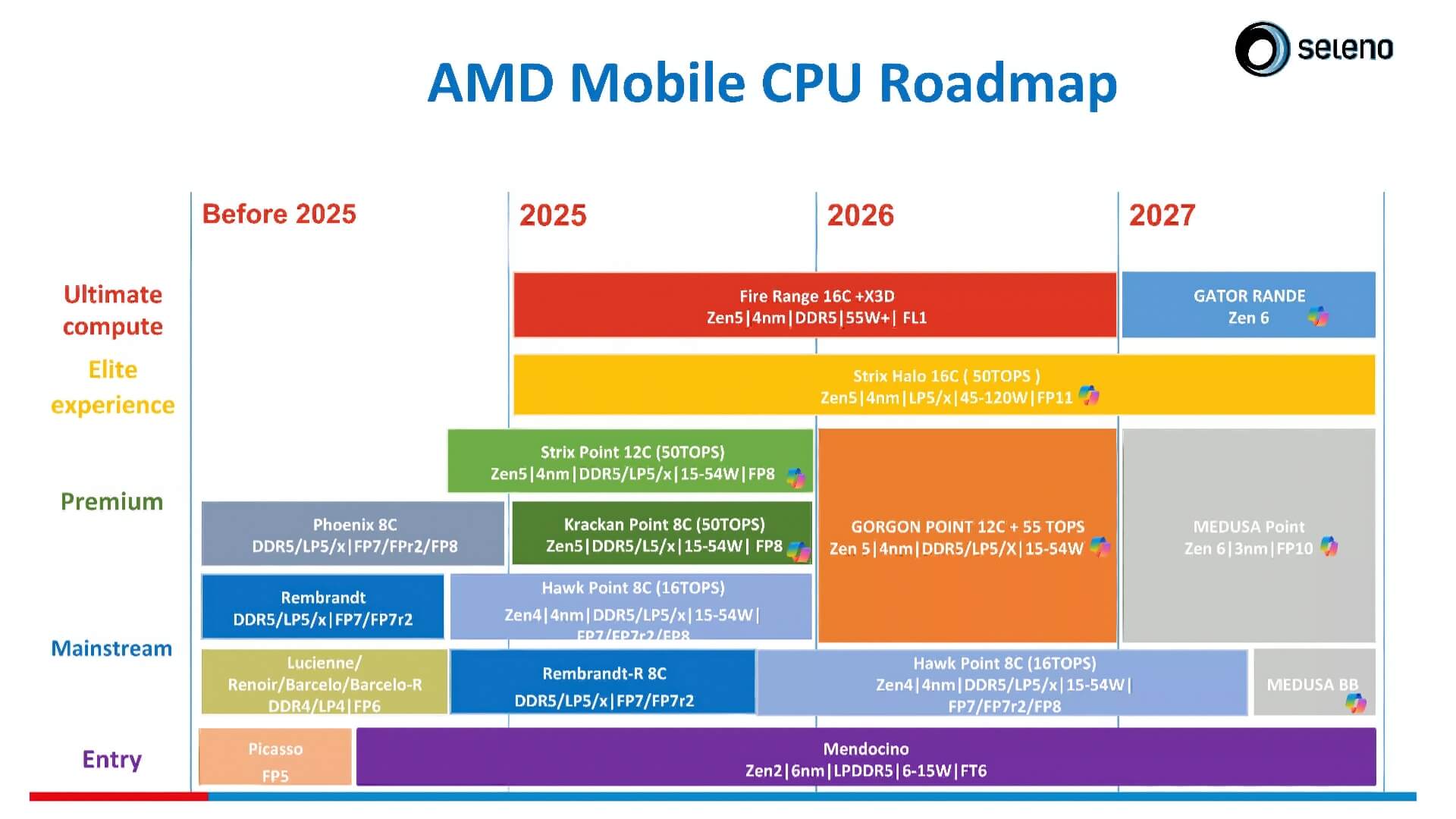
The most notable detail is that AMD will begin rolling out Zen 6 on mobile devices in 2027. Specifically:
- Gator Rande will succeed Fire Range in the high-end segment.
- Medusa Point, which uses a 3nm process and the FP10 socket, will replace Gorgon Point in the midrange.
- Another variant, Medusa BB, is also mentioned, and is expected to replace the Hawk Point line in the mainstream segment in mid-2027.
Although details on Gator Rande remain very limited, the roadmap points to a major shift in performance and semiconductor process technology across AMD's processor lines. In addition, Zen 6 paired with RDNA 5 graphics (also called UDNA) is rumored to be the foundation of next-generation gaming systems such as the PlayStation 6 and the next Xbox. On desktop, Zen 6 chips are said to have more cores and clock speeds that could reach 6.4 to 7 GHz, a very promising step forward.
Intel Pursues the 18A Process With Panther Lake
On Intel's side, the Seleno roadmap runs through the end of 2026. The biggest highlight is that Intel will move to the 18A process with the Panther Lake-H line, starting in late 2025. This may be the company's last push to regain its footing in the semiconductor race, where it has fallen far behind TSMC and Samsung.
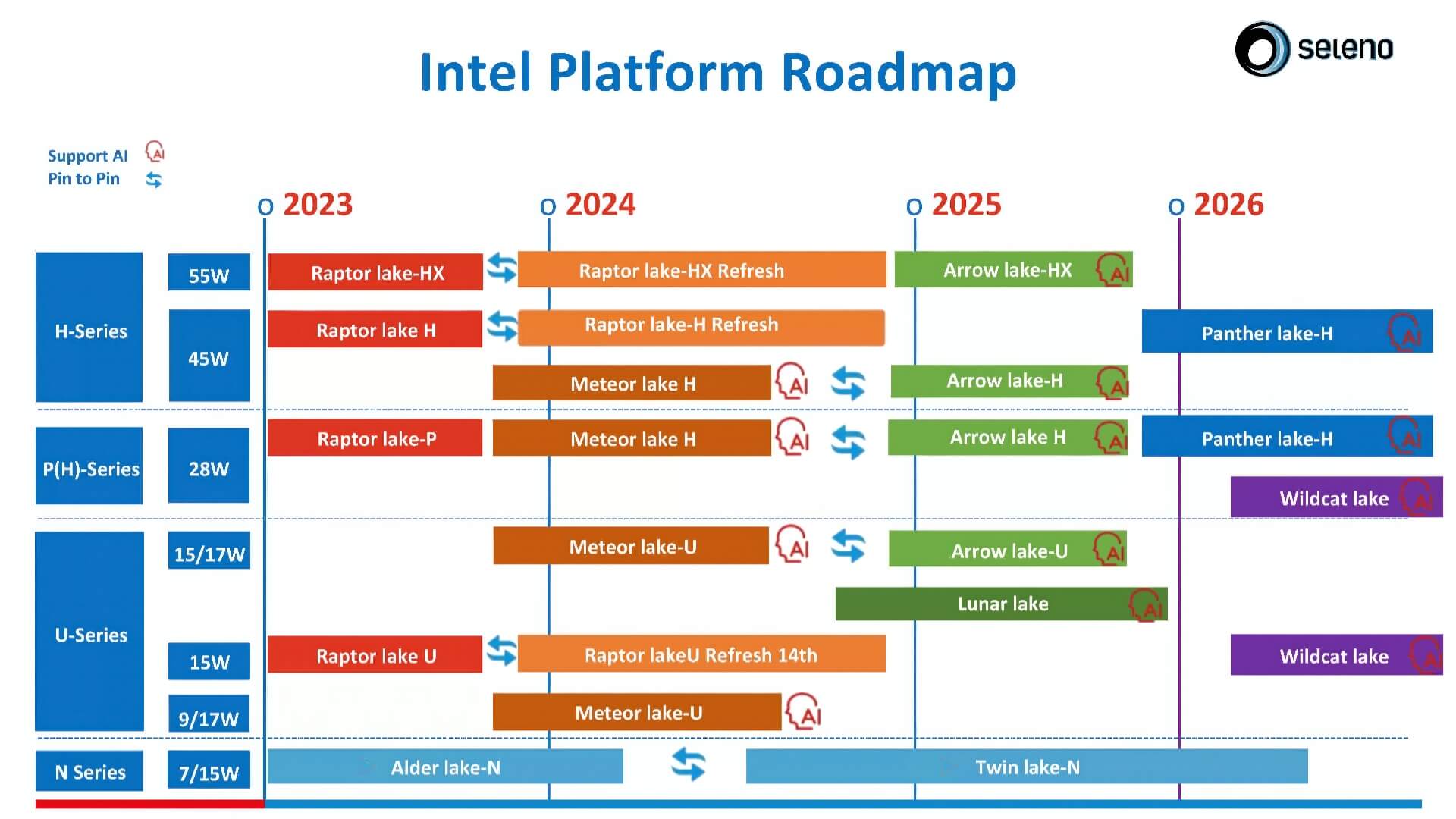
Specifically:
- H-series laptops (45-55W) will move from Raptor Lake Refresh to Arrow Lake-HX/H, and then to Panther Lake-H.
- The 28W midrange and 15W mainstream segments will get the Wildcat Lake line, succeeding Raptor Lake from 2025.
- However, Twin Lake, the processor line for N-series devices (7-15W), will remain available until mid-2026, contrary to some earlier predictions that Wildcat would replace Twin Lake entirely.
One notable point is that Intel's roadmap gives no core counts or detailed process information beyond 18A, and makes no mention of lines such as Nova or Bartlett Lake. This suggests a number of strategic shifts, with the focus placed on architectural and performance competitiveness rather than expanding the lineup too quickly.
Overall, the Seleno roadmap offers an important view of the strategic moves AMD and Intel will make between now and 2027. AMD looks determined with Zen 6 and 3nm processors that integrate powerful AI, while Intel is putting its weight behind the 18A process to hold its position in high-performance laptops. The contest between these two giants will surely have a major impact on the design and performance of millions of devices worldwide over the next two to three years.