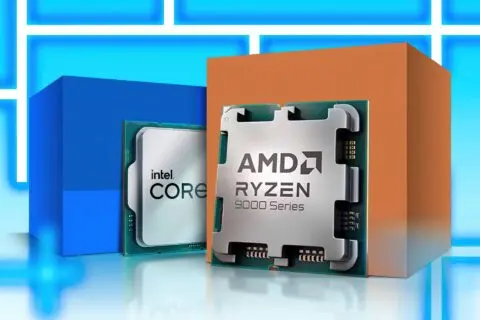
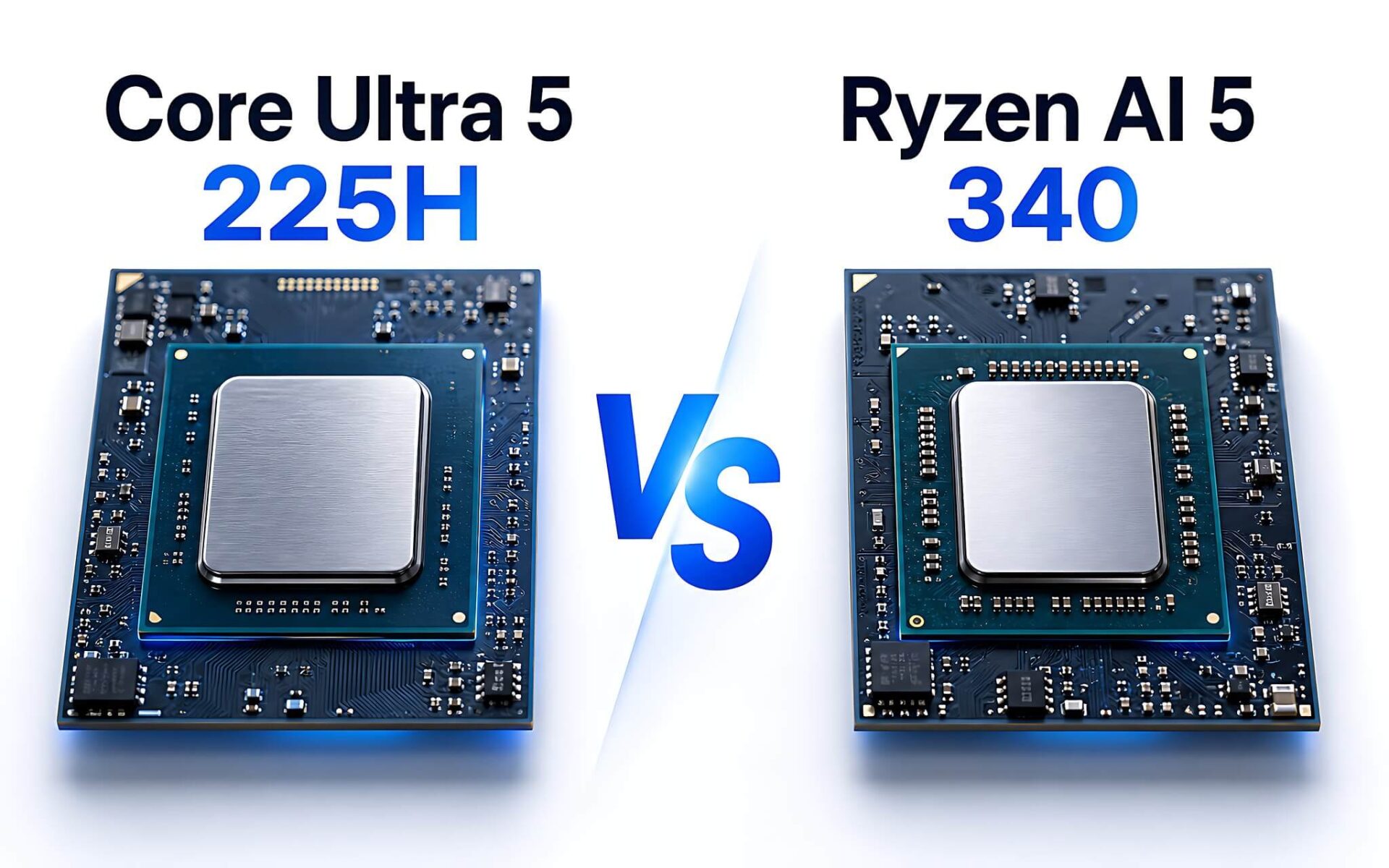
Both chips target the premium office laptop segment, but they follow opposite philosophies. Core Ultra 5 225H vs Ryzen AI 5 340 pits Intel's 14-core, multitasking-oriented design against AMD's 50 TOPS NPU, which clears the Copilot+ threshold. Hung Phat compared Notebookcheck benchmarks with the configurations currently on sale so you can see where the differences lie.
How the Core Ultra 5 225H and Ryzen AI 5 340 Differ
The first difference is core count. The Core Ultra 5 225H uses the Arrow Lake-H architecture with 14 cores and 14 threads, meaning each core runs a single thread. The Ryzen AI 5 340 belongs to the Krackan Point family, with 6 cores and 12 threads, made up of 3 Zen 5 cores and 3 Zen 5c cores. At the same 28W default TDP, the two processors split their power budget in opposite ways.
Peak clock speeds are very close. The Intel chip reaches 4.9 GHz and the AMD chip reaches 4.8 GHz. The real-world gap therefore comes not from frequency but from the number of usable cores and from the NPU. The table below summarizes the specs and Notebookcheck benchmark scores for both processors.
| Spec | Core Ultra 5 225H | Ryzen AI 5 340 |
|---|---|---|
| Architecture | Arrow Lake-H | Krackan Point, Zen 5 |
| Cores and threads | 14 cores, 14 threads | 6 cores, 12 threads |
| Max clock speed | 4.9 GHz | 4.8 GHz |
| Default TDP | 28W | 28W |
| Cinebench R23 single/multi-core | 1,969 / 14,629.5 | 1,915.5 / 12,532 |
| Geekbench 6 single/multi-core | 2,733 / 12,099 | 2,781.5 / 10,765 |
| PassMark | 28,281 | 19,584 |
| NPU | 13 TOPS | 50 TOPS |
| Integrated graphics | Intel Arc Graphics 130T | AMD Radeon 840M |
The table shows the Intel chip leading in every aggregate CPU test. Cinebench R23 multi-core differs by 16.7%, Geekbench 6 multi-core by 12.4%, and PassMark by as much as 44.4%. In single-core the results flip slightly: the AMD chip is 1.8% ahead on Geekbench 6, while Intel is 2.8% ahead on Cinebench R23.
The NPU tells the opposite story. The Core Ultra 5 225H has only 13 TOPS, below the 40 TOPS threshold Microsoft sets for Copilot+. AMD's chip reaches 50 TOPS and clears it. This is the key reason two processors in the same tier end up serving two different groups of workloads.
Core Ultra 5 225H vs Ryzen AI 5 340 Under Heavy Multitasking
For data compression, code compilation, video rendering, or large spreadsheets, the Core Ultra 5 225H's multi-core advantage is clear. A margin of 12.4% to 16.7% is not small when a task runs for tens of minutes. The chart below puts the three multi-core tests for both processors side by side.
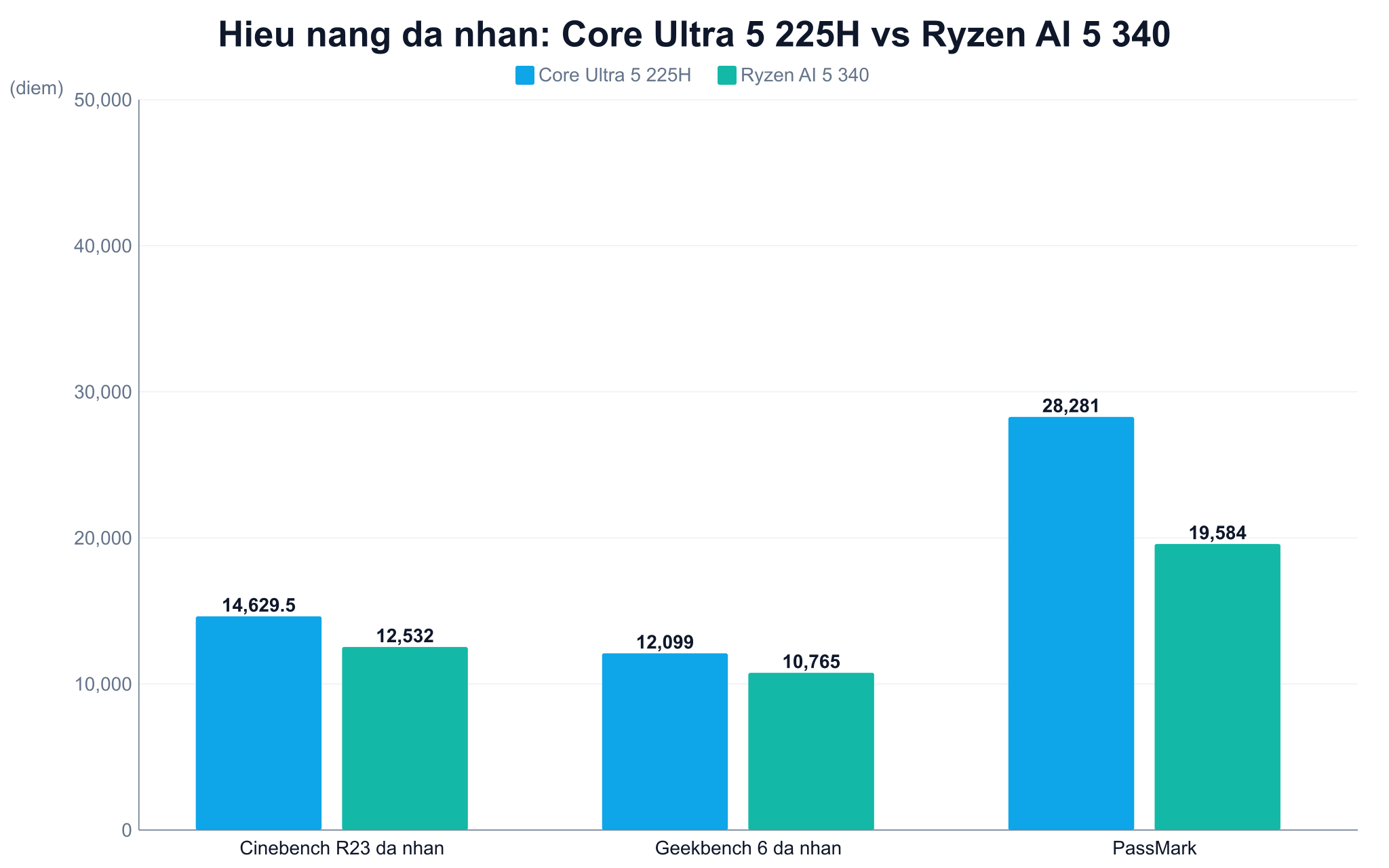
Cinebench R23 multi-core records 14,629.5 points for Intel against 12,532 for AMD. Geekbench 6 multi-core is 12,099 against 10,765. PassMark shows the widest gap, 28,281 against 19,584. All three tests point the same way, so the conclusion about high-intensity multitasking is fairly solid.
Still, this is aggregated data from many different machines. Power limits, the cooling system, and the RAM configuration of each laptop have the final say. With the same Core Ultra 5 225H, a 16-inch machine with a large cooling chamber will sustain its clock speeds longer than a thin-and-light 13-inch model.
How Far Apart Are the Arc 130T and Radeon 840M Integrated Graphics
Integrated graphics is the second battleground. The Core Ultra 5 225H comes with Intel Arc Graphics 130T, scoring 5,299.5 in Fire Strike and 2,378 in Time Spy. The AMD chip's Radeon 840M scores 4,854 and 1,479. The gap is 9.2% in Fire Strike but reaches 60.8% in Time Spy.
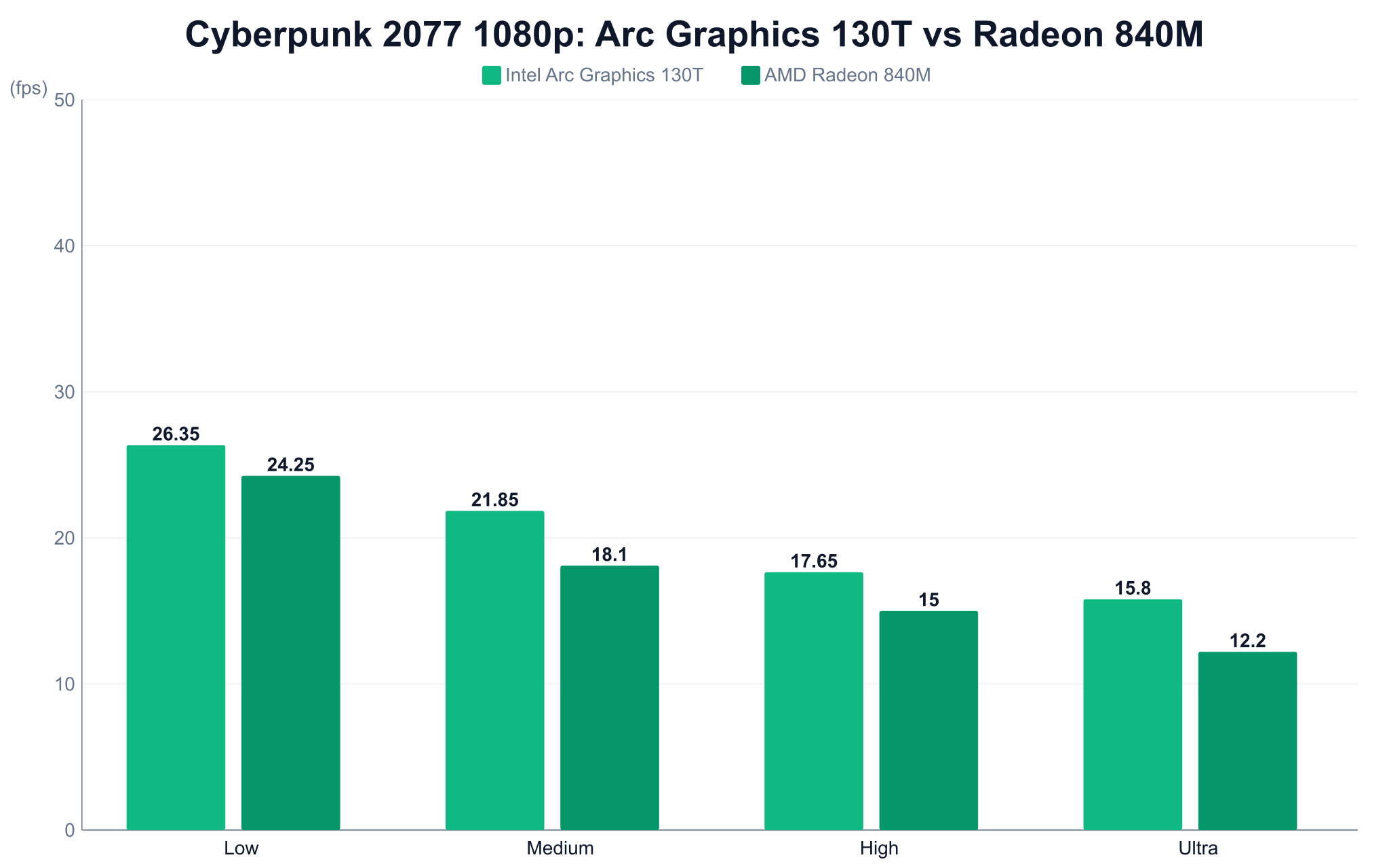
In real games, the gap narrows. Cyberpunk 2077 at 1080p on High delivers 17.65 fps on the Arc 130T and 15 fps on the Radeon 840M. At Ultra it is 15.8 fps against 12.2 fps. Both fall below the threshold for smooth play, so demanding games still call for a laptop with a discrete GPU.
The Notebookcheck data also shows the opposite of what you might assume. In Dota 2 at 1080p High, the Radeon 840M reaches 67.55 fps while the Arc 130T manages only 51.35 fps. GTA V on High is 46.55 fps against 23.3 fps. The Core Ultra 5 225H's graphics advantage is therefore not a rule that holds for every title.
How Many TOPS Does the Core Ultra 5 225H NPU Have Compared With AMD's 50 TOPS
The NPU is the reason the Ryzen AI 5 340 exists in this product range. At 50 TOPS it clears Copilot+'s 40 TOPS threshold, so the machine can enable the set of AI features that run locally on the device. The Intel chip, at 13 TOPS, only supports Windows Studio Effects and software optimized for OpenVINO.
The official specs confirm 6 cores, 12 threads, a 4.8 GHz max clock, Radeon 840M graphics, and a 50 TOPS NPU. You can verify this directly on the AMD Ryzen AI 5 340 page.
If your work involves constant online meetings, background blur, eye-contact correction, or running local AI models, the 50 TOPS threshold delivers real value. If the software you use does not yet take advantage of the NPU, that number does not translate into performance. In that case, the Core Ultra 5 225H's multi-core advantage deserves more weight.
Ryzen AI 5 340 vs Ultra 5 125H When Upgrading From Meteor Lake
Many office laptops today run the Meteor Lake Ultra 5 125H, so the comparison with the newer AMD chip matters when you are upgrading. The Ryzen AI 5 340 is 16.3% ahead in Cinebench R23 single-core and 22.1% ahead in Geekbench 6 single-core. That margin is enough to notice when opening many browser tabs or formula-heavy spreadsheets.
Multi-core leans slightly toward the older Intel chip, with 12,804.5 in Cinebench R23 against 12,532 and 11,268 in Geekbench 6 against 10,765. The most significant difference is the NPU: Meteor Lake reaches only 11 TOPS while the AMD chip reaches 50 TOPS, which is a difference in the availability of local AI features.
Core Ultra 5 225H and Ryzen AI 5 340 Laptops at Hung Phat
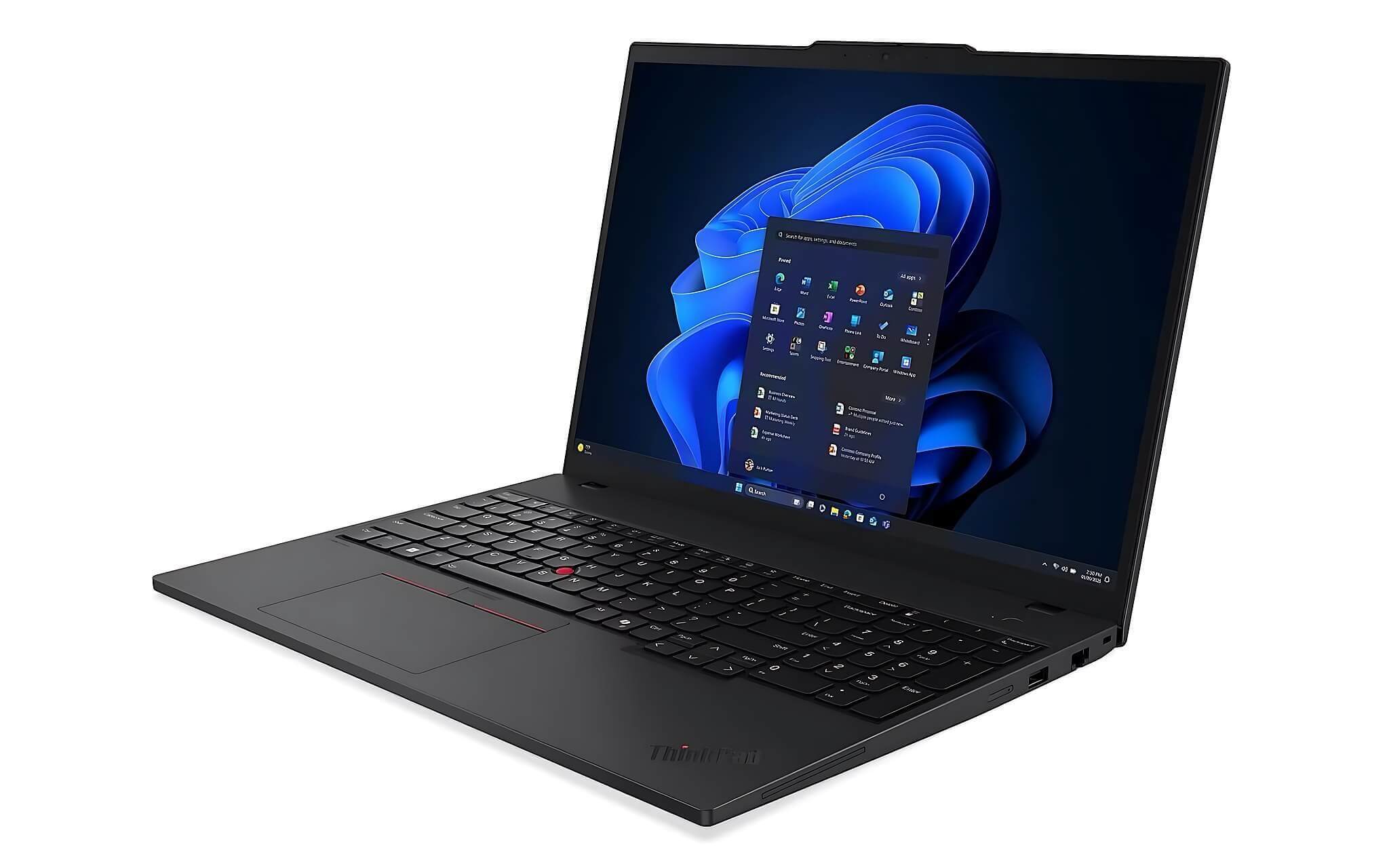
The Core Ultra 5 225H configuration currently on sale is the Lenovo ThinkPad T16 Gen 4 with 24GB DDR5 6400MHz, a 512GB PCIe Gen 5 SSD, a 16-inch WUXGA 400-nit display, and an 86Wh battery, priced at 35.5 million VND. The other two versions in this line use the Core Ultra 7 255H, so they fall outside this comparison.
The machine suits professionals who need a large screen, a business-class keyboard, and plenty of RAM from the start. You can confirm the configuration and stock status on the Lenovo ThinkPad T16 Gen 4 (2025) page.
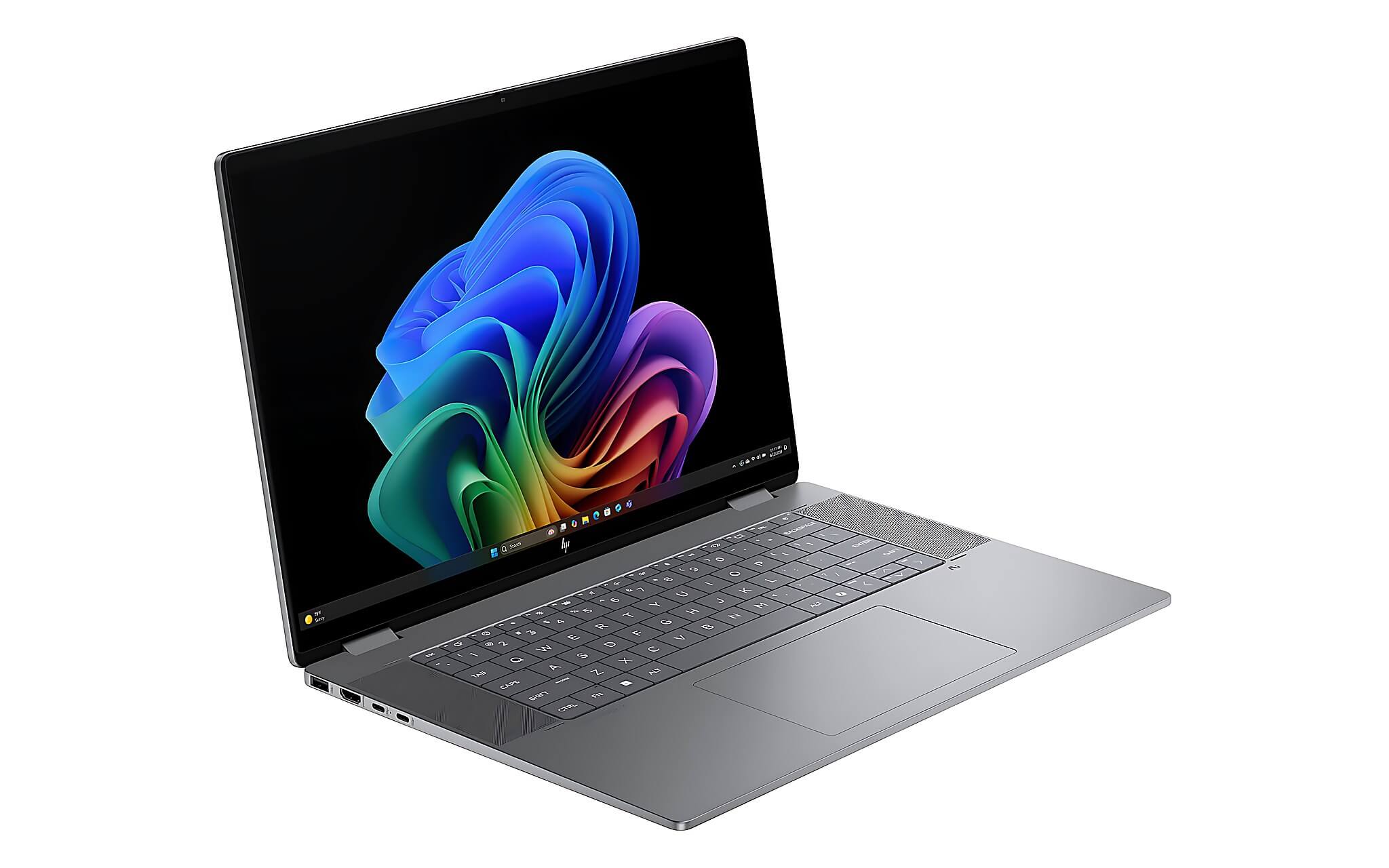
On the AMD side, the 340 version comes with 16GB LPDDR5x 7500MHz, a 512GB PCIe Gen 4 SSD, Radeon 840M graphics, a 14-inch 2K touchscreen that folds 360 degrees, and a 59Wh battery, priced at 22.5 million VND. It is found in the HP OmniBook X Flip Next Gen AI 14 (2025).
The 13 million VND difference between the two machines is not down to the processor alone. The ThinkPad has a 16-inch display, an 86Wh battery, and a business-grade chassis, while the HP is a much lighter 14-inch machine that folds 360 degrees. Hung Phat recommends deciding based on the full configuration rather than the chip name.
Frequently Asked Questions (FAQ)
How big is the gap between the Core Ultra 5 225H and Ryzen AI 5 340?
In multi-core, the Core Ultra 5 225H is 16.7% ahead on Cinebench R23 and 12.4% ahead on Geekbench 6, while PassMark differs by 44.4%. In single-core the two are nearly even, with the Ryzen AI 5 340 1.8% ahead on Geekbench 6. The real-world gap also depends on the power limits of each laptop.
Does the Ryzen AI 5 340 meet the Copilot+ standard while Intel does not?
The Ryzen AI 5 340 has a 50 TOPS NPU, so it clears Copilot+'s 40 TOPS threshold. The Core Ultra 5 225H reaches only 13 TOPS and falls short, though it still runs Windows Studio Effects. If local AI is a priority, check the NPU figure before you buy.
Which Core Ultra 5 225H laptop is in stock as an authentic product?
The Lenovo ThinkPad T16 Gen 4 with Core Ultra 5 225H is available, with 24GB DDR5 6400MHz RAM, a 512GB PCIe Gen 5 SSD, a 16-inch WUXGA display, and an 86Wh battery, priced at 35.5 million VND. The other two configurations in the same line use the Core Ultra 7 255H, so make sure you select the right option when ordering.
How well can the integrated graphics on the two chips handle games?
Cyberpunk 2077 at 1080p High reaches only 17.65 fps on the Arc 130T and 15 fps on the Radeon 840M, which is not smooth. In lighter games such as Dota 2 on High, the Radeon 840M reaches 67.55 fps and the Arc 130T reaches 51.35 fps. Both are suited to casual gaming and do not replace a discrete GPU.