

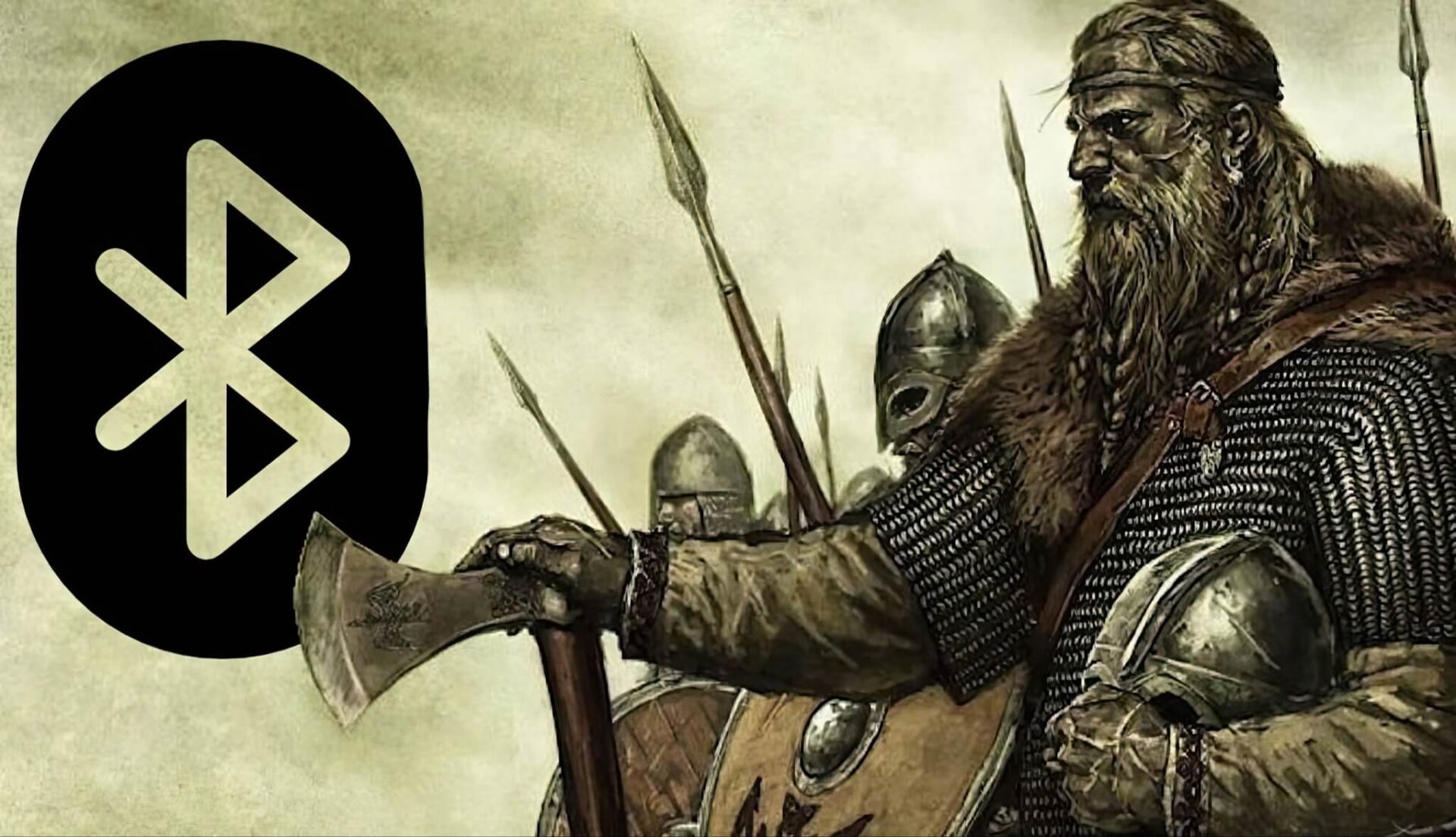
When mentioning the term "Bluetooth", most of us immediately think of a modern term, a name that seems to have been created in some luxurious meeting room in Silicon Valley. However, few know that the true origin of this name dates back over a thousand years, deep within the heroic pages of Nordic history. The birth of this wireless connection standard in the mid-1990s was the result of a multilateral collaborative effort among leading technology companies, aiming to create a short-range radio technology capable of replacing the cumbersome proprietary connection cables of that era.
The birth of a connection standard and an idea from a legendary king
At that time, industry giants including Ericsson, IBM, Toshiba, Nokia, and Intel began sitting down together to collaborate on developing a new standard. Their goal was practical yet ambitious: to define a universal, low-energy protocol that would allow different devices to communicate seamlessly. This collective effort eventually led to the formation of the Bluetooth Special Interest Group (Bluetooth SIG), the organization that continues to oversee and manage this standard to this day.
One of the key figures playing a vital role in the early stages of this project was engineer Jim Kardach from Intel. While the technology was still in its early development stages, it was Kardach who proposed the code name "Bluetooth." Interestingly, he never intended for this name to last long or extend beyond the initial phases of the project. Like many other technical code names, it was only intended for temporary use-a "placeholder" name until the marketing department could come up with a more polished and professional alternative. However, that moment of change never arrived. The name became synonymous with the technology, and "Bluetooth" ultimately became the official name of the global connection standard.

The name "Bluetooth" has deep roots in Harald "Bluetooth" Gormsson, a famous Nordic king who lived in the 10th century. He is recorded in history for his great achievements in unifying Denmark and parts of Norway during his reign. King Harald ruled Denmark from approximately 958 to 986 and also briefly ruled Norway from 970 to 986. Under his skillful leadership, the individual Danish tribes were merged, leading to the formation of a strong, unified kingdom.
Seeing this similarity, engineer Kardach envisioned Bluetooth technology as a "unifier" in the digital world. He expected this technology to bring together countless disparate communication protocols, much like how King Harald unified the scattered Nordic tribes in the past. This was a meaningful metaphor, turning a dry technical term into something vivid with historical color.
The mystery of the "Bluetooth" nickname and its global popularity
Regarding the origin of King Harald Bluetooth's strange nickname, the stories passed down vary. The most frequently mentioned hypothesis is that the king had a special fondness for blueberries, which caused his teeth to turn blue. However, there is no authentic historical evidence to prove this humorous rumor. Another more credible hypothesis argues that he actually had a "blue tooth." In the context of Old Norse, the word "blue" could be understood as dark or black. This implies that the king may have had a discolored or severely damaged tooth, leading to the nickname "Bluetooth" being associated with his name.
Today, most modern technology users rarely think about the medieval-themed backstory behind the icon glowing on their phone screens. However, the symbolism of this name remains surprisingly relevant. Bluetooth technology, originally designed only to replace old RS-232 data cables, has now become ubiquitous. It is fulfilling its "unifying" mission by connecting billions of devices worldwide-from headphones, speakers, and phones to smart home devices-continuing the legacy of connectivity that its name suggested thousands of years ago.