

Similar to its competitor Nvidia, AMD spent most of its time at the CES 2026 tech expo focusing on enterprise artificial intelligence (AI) applications. Although this technology is often associated with massive server systems, the "Red Team" has not forgotten mainstream users, making several important AI-related announcements for personal devices. Good news for the AMD graphics card community is that they will be able to access one of the company's newest and most useful tools as early as next week, promising to significantly simplify the experience of using this advanced technology.
Adrenalin software update and new AI toolkit
AMD has officially confirmed that the next version of the Adrenalin software, expected to launch on January 21st, will introduce new features aimed at streamlining the installation process for local generative AI development tools. This announcement is the next step in the multi-front AI development strategy that the company unveiled at last week's CES event. This is a highly appreciated move, helping mainstream users easily access complex technologies without needing in-depth programming knowledge.
Coming January 21st: AMD Software: Adrenalin Edition™ AI Bundle
AI Made Simple.
AI Bundle is a streamlined installer that equips your AMD-powered system with the essential tools for AI development and creative workflows.
- AMD Radeon (@AMDRadeon) January 14, 2026
While AMD has not yet released specific details on what is included in this "AI toolkit," the main highlight is an optional unified installer. This tool will bundle multiple software packages required to run local AI models into a single location. As a result, users can access image generators, local large language models (LLMs), and other AI development software much more easily. Additionally, support for PyTorch on Windows has been expanded, creating favorable conditions for developers and tech enthusiasts.
This AI toolkit seems designed to maximize the machine learning capabilities of the integrated graphics processors (iGPU) and Neural Processing Units (NPU) found in AMD's recent Ryzen AI chip lineups. Simultaneously, AMD also announced a major update to its ROCm software, which serves as the platform supporting AI tasks via Ryzen AI processors. ROCm version 7.2 now supports installation through ComfyUI, improving compatibility with both Windows and Linux, while simplifying access to new PyTorch builds on Windows.
Next-generation Ryzen AI hardware and the future of technology
To support the new software ecosystem, AMD expanded its Ryzen AI product line at CES by introducing the Ryzen AI 400 series. Laptops equipped with this new APU line-which features Zen 5 architecture CPUs and RDNA 3.5 architecture iGPUs-will be launched by many manufacturers as early as this quarter. Meanwhile, desktop versions are expected to reach users in Q2 2026. The standout in this seven-chip lineup is the flagship Ryzen AI 9 HX 475, which boasts impressive power. This chip features 12 cores, 24 threads, 16 GPU compute units, a boost clock of up to 5.2 GHz, 36 MB of cache, and AI computing capabilities of up to 60 TOPs.
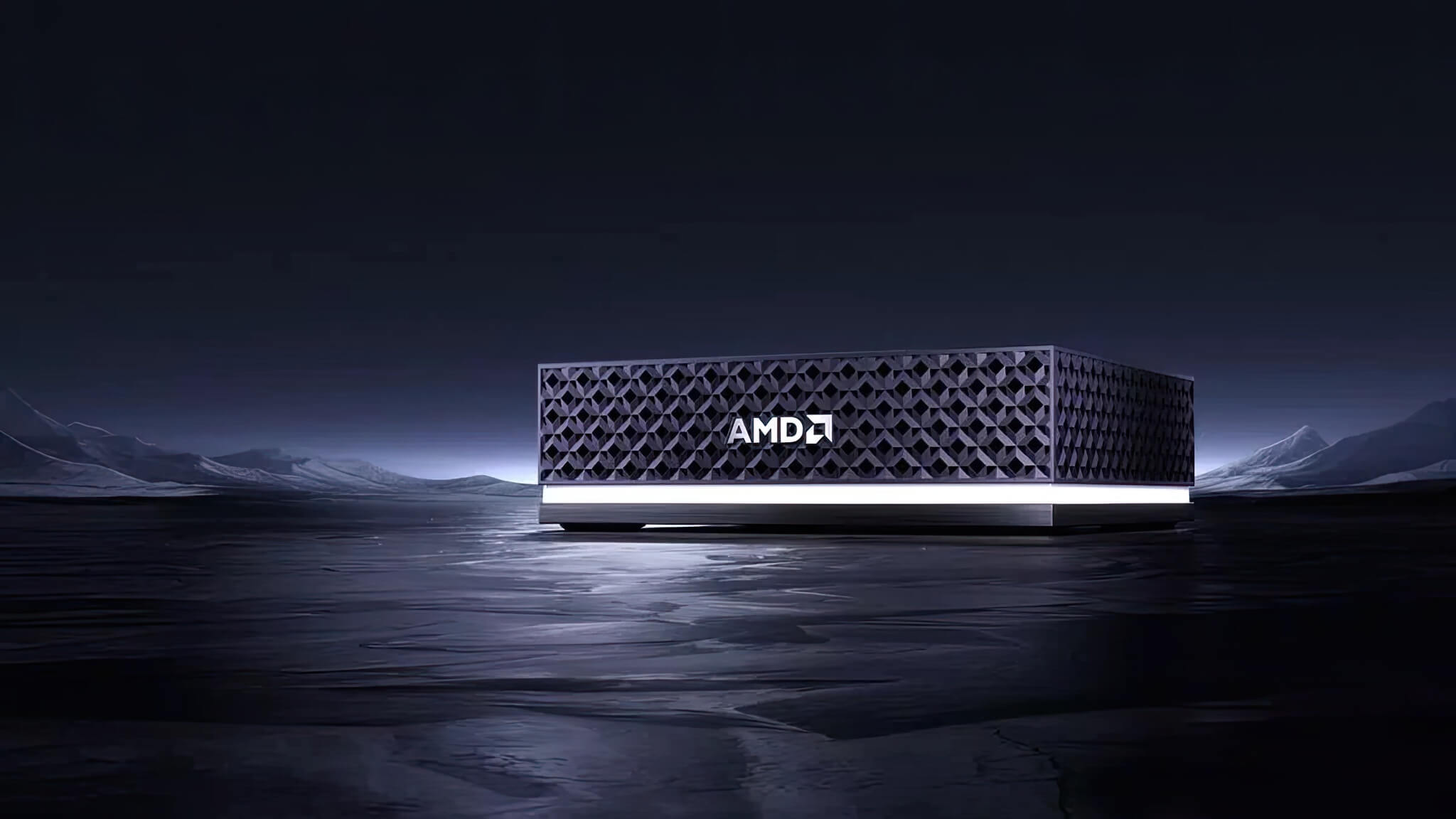
Furthermore, AMD introduced Ryzen AI Halo, a mini workstation computer using the Ryzen AI Max+ processor. This device is designed to run AI models with up to 200 billion parameters without relying on cloud servers. Featuring up to 128 GB of unified memory, RDNA 3.5 GPU performance reaching 60 Teraflops, and support for both Windows and Linux, this hardware platform shares many similarities with Nvidia's DGX Spark system.
Despite increasing negative opinions surrounding the generative artificial intelligence bubble, AMD CEO Lisa Su remains optimistic about this technology. At CES, she dismissed speculations that the industry is forming a dangerous bubble. Instead, she predicts that consumers will quickly adopt and widely apply AI in the very near future, affirming her confidence in the company's long-term development strategy.