

The JavaScript programming language has officially marked its 30-year milestone of existence and development since being announced in 1995. From humble beginnings, it has now become the "heart" powering the vast majority of modern websites worldwide, as well as the foundation for countless server-side and desktop projects. Although it has become one of the indispensable core standards of web programming, few realize that behind that success lies a thrilling history of development, fascinating misunderstandings, and legal trademark disputes that remain unresolved to this day.
Rapid Birth and Absolute Dominance
Looking back 30 years, the tech giants of that era, Netscape and Sun Microsystems, joined forces to introduce JavaScript as a new cross-platform scripting language, with the goal of building rich internet applications. The father of this language, Brendan Eich, created this technology in a programming marathon that lasted only 10 days while he was working at Netscape. It is hard to believe that a technology "cooked up" hastily in less than two weeks could become the solid foundation for the entire internet world later on.
Today, according to statistics, JavaScript is being used by approximately 98.9% of all websites globally. This is an almost absolute dominant figure. However, looking back at history, everything could have taken a very different direction if not for strategic decisions and coincidences of fate.
Initially, Brendan Eich designed JavaScript with the purpose of bringing a new level of interactivity to websites, helping them become more dynamic instead of just boring static text. At the same time, the language had to ensure accessibility for both professional and amateur programmers. To achieve this, he drew inspiration from various sources, including the Scheme dialect of the Lisp language, the Self language, and several other technologies.
The "New Wine in Old Bottles" Story and the Confusion with Java
One of the most interesting anecdotes in tech history is the name JavaScript. At that time, Sun Microsystems successfully linked JavaScript with Java, even though, in essence, the two languages are worlds apart. As editor Benj Edwards wittily reminded us on Ars Technica, the only similarity between JavaScript and Java is like the similarity between "car" and "carpet." They seem similar semantically, but their functions and structures have absolutely nothing to do with each other.
In the 90s, Sun Microsystems promoted Java as a powerful tool for building complex enterprise applications. Meanwhile, JavaScript was positioned as being born to complement Java, specializing in handling smaller client-side tasks. Looking back thirty years later, small Java-based applications (Java applets) have fortunately almost completely disappeared from the web platform due to being heavy and insecure. In contrast, the "supporting actor" JavaScript survived and thrived, appearing everywhere.
However, it is also fair to say that Java remains among the top programming languages in the world today. Although no longer the king of websites, Java remains the number one choice for enterprise software, backend services, and large-scale systems.
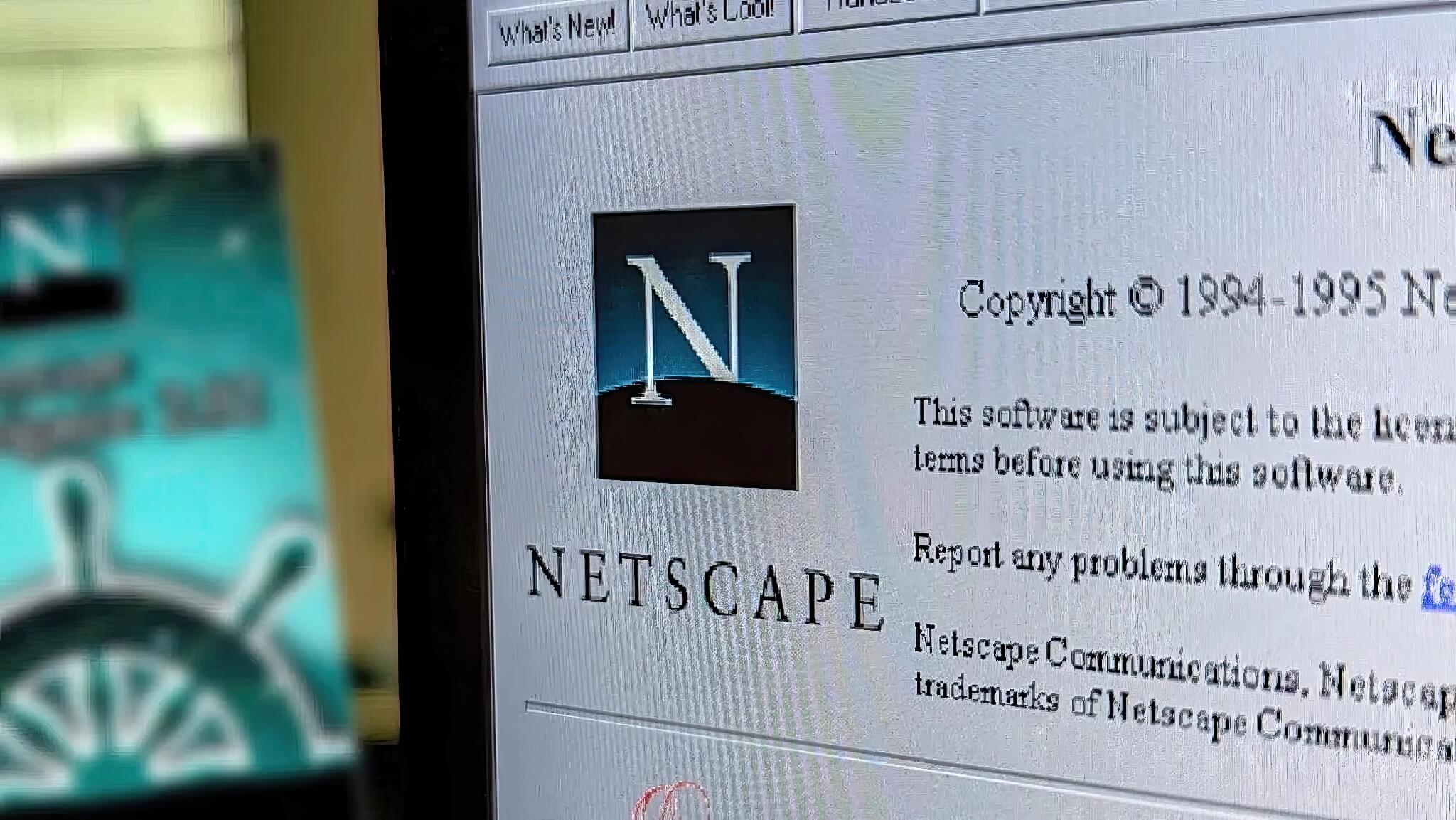
Regarding the name, Eich originally wanted to name his brainchild "Mocha." Later, Netscape briefly renamed it "LiveScript" before settling on the name "JavaScript" as we know it today. The language was first announced in December 1995 and reached its official 1.0 release in March 1996. Netscape engineers continuously refined JavaScript over time, and the first generation of internet users experienced its primitive features through the legendary Netscape Navigator browser.
Legacy, Standardization, and the Legal Battle
Before Microsoft integrated Internet Explorer into Windows 9x in an attempt to dominate the web world, Netscape's proprietary browser was the de facto standard for early internet browsing on computers running Pentium chips. Although Netscape and Navigator have long since faded into the past, the legacy they left behind-JavaScript-is still powering browsers, development platforms, and server-side frameworks for modern cloud applications.
Over time, JavaScript eventually became an industry standard through the ECMAScript specifications, with ECMA standing for the European Computer Manufacturers Association. This was a crucial turning point that helped the language achieve the unity and stability required to flourish as it does today.
However, not everything has been smooth sailing. The "JavaScript" trademark has been sparking long-standing legal conflicts between Oracle Corporation and the vast community of JS developers. Oracle is said to have acquired ownership of the JavaScript name after acquiring Sun Microsystems in 1997. Notably, despite holding the name, Oracle has not made any significant contribution to the development of this language.
The JS developer community has long desired to reclaim the right to use the name "JavaScript" legitimately, but Oracle has yet to show any intention of making concessions or returning this right. Nevertheless, regardless of what it is called or who holds the trademark, no one can deny JavaScript's backbone role to the modern internet world throughout the past 30 years.