
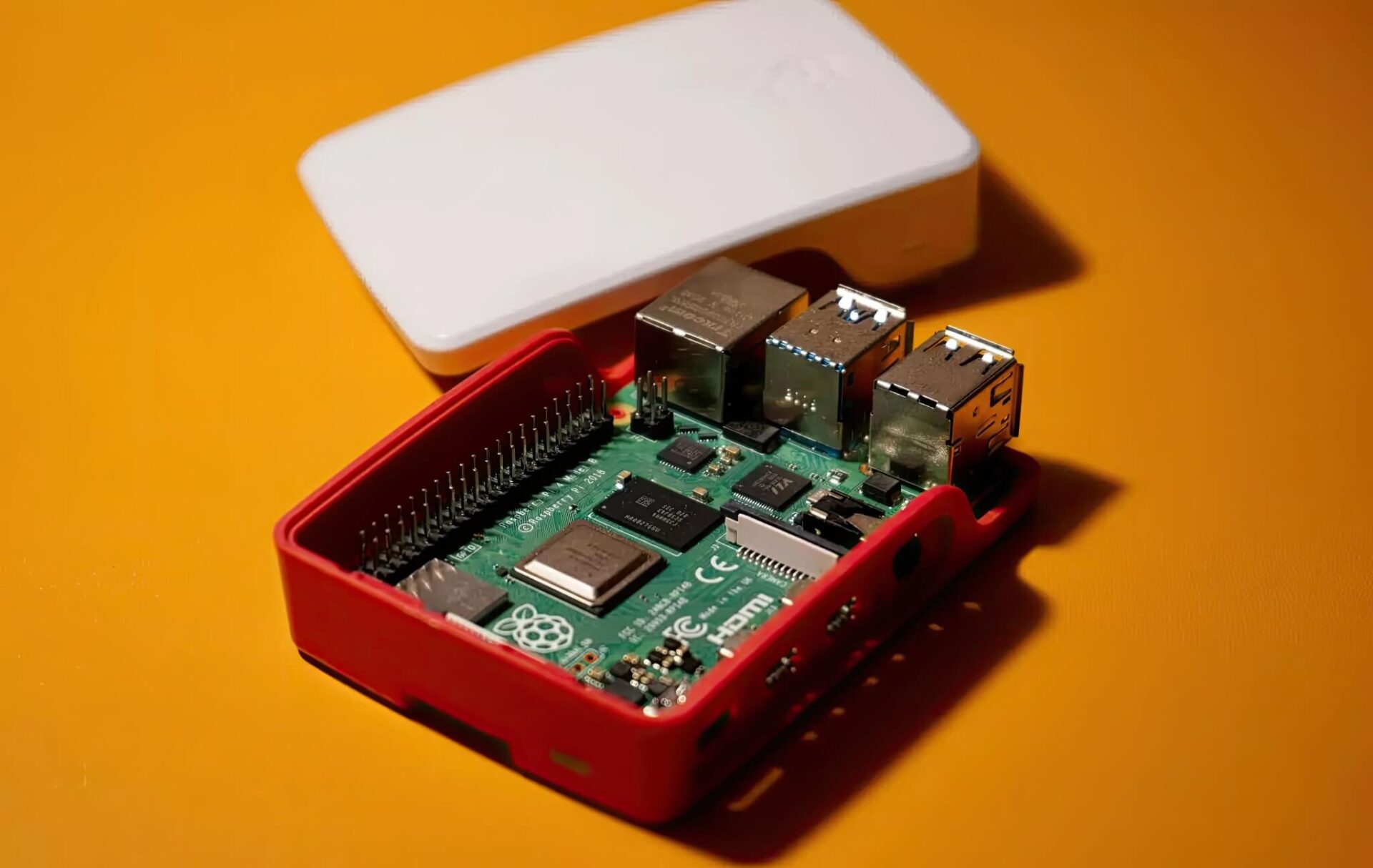
Raspberry Pi 4 has unexpectedly surfaced in a strange variant that has sent shockwaves through the tech community. This is not an active performance upgrade, but rather a direct consequence of the Artificial Intelligence (AI) craze sweeping through Silicon Valley. As Big Tech giants scoop up the entire DRAM supply to serve massive data centers, the Raspberry Pi Foundation has been forced to take a bold step to ensure survival: changing the hardware design of this best-selling product line to adapt to the global component "shortage."
Raspberry Pi 4 "Dual RAM" Edition: A Temporary Fix or a Worthy Upgrade?
In the context of DRAM scarcity and skyrocketing prices, the engineering team in the UK has decided to release a new variant named "Dual RAM" (PCN 45). The biggest change, as the name suggests, is that this board uses two small RAM chips instead of one large RAM chip as before. This is an extremely flexible move, allowing the company to leverage various component sources from different suppliers, avoiding dependence on a single type of memory chip that is currently out of stock.
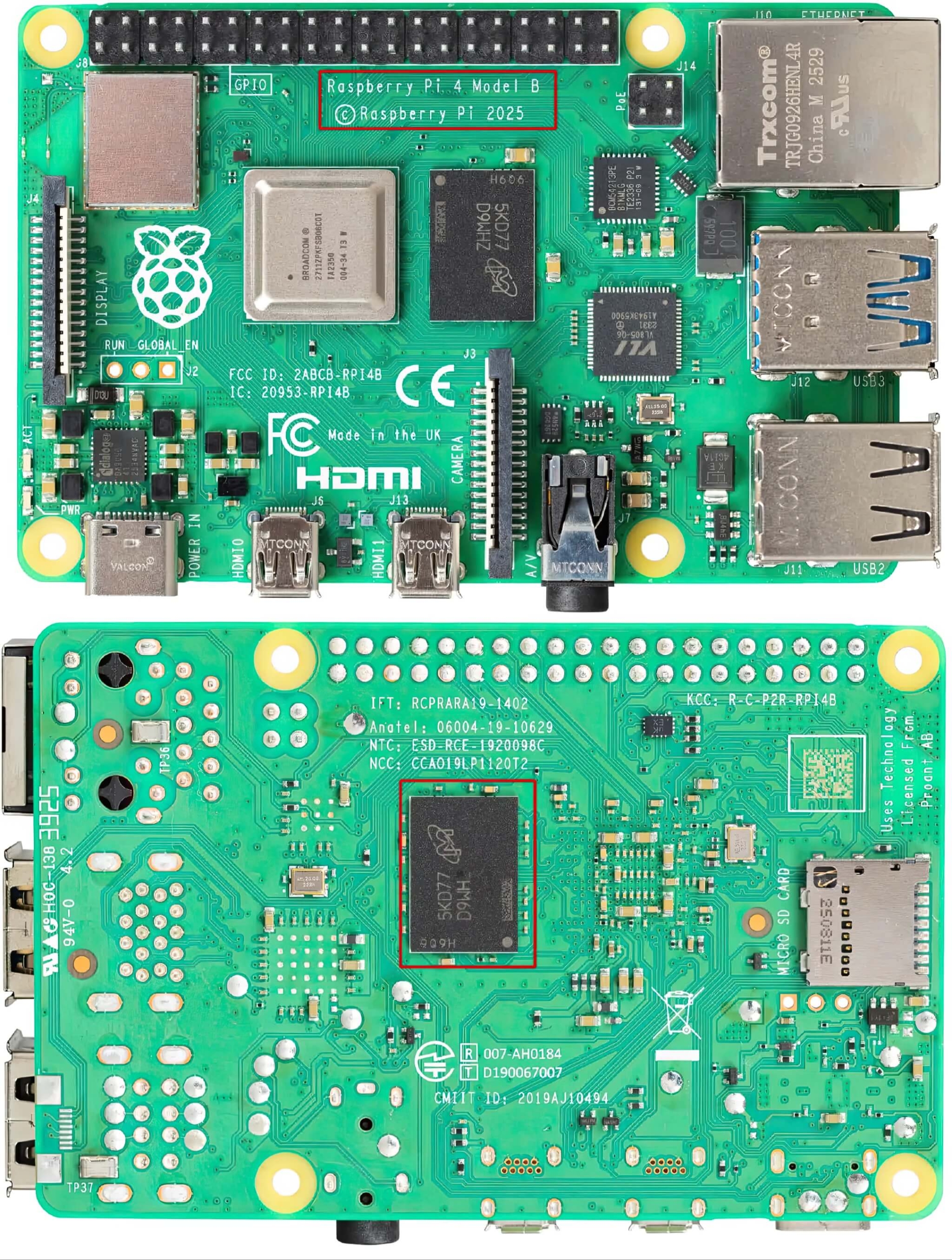
Physically, if you flip over the back of this new Raspberry Pi 4 version, you will see the appearance of a second memory chip. To achieve this, the company had to rearrange several passive components on the board. However, it is commendable that the overall dimensions and the position of the ports remain unchanged, allowing users to reuse old cases without any obstacles. Notably, this version also inherits advanced "intrusive reflow soldering" technology from the Raspberry Pi 5 line, which helps make the solder joints more secure and minimizes electronic waste.
Performance Remains the Same, but What Should Users Note?
The biggest question users are asking right now is: "Will using 2 RAM chips make the machine run slower or hotter?". The manufacturer has reassured users that they have tested this "on a large scale" and affirmed that the performance of the Dual RAM version is completely equivalent to the original. From processing speed to hardware compatibility, everything works as smoothly as if there had been no change at all.
However, there is a small software hurdle that you must overcome. Due to the change in hardware structure, the operating system requires a new "map" to recognize and access the second memory chip located on the back. Therefore, users are required to update the bootloader to the latest version (pieeprom-2026-01-09.bin). Sincere advice: use the latest version of Raspberry Pi OS or update the Linux kernel to ensure everything operates stably as soon as you plug it in.
To find out if you own this special version, you can perform a quick visual check: the front of the board will have the production year "2025" printed on it, and the back will have an additional RAM chip. Or, for a more professional approach, type the command `cat /proc/cpuinfo` in the Terminal; if the Model line appears as "Raspberry Pi 4 Model B Rev 1.5", then congratulations, you are holding a "historical witness" of the memory chip price surge era.
In reality, recent product price increases are also an inevitable consequence of the memory thirst from the AI industry. The birth of the Dual RAM version is a commendable effort to keep goods available on the shelves. If you are planning to buy an embedded computer at this time, do not be surprised if you receive a slightly different version, and remember to update your software immediately to avoid unnecessary minor errors.