
Shader Model 6.10 has just entered its preview stage alongside AgilitySDK 1.720, and this DirectX 12 update is much more than a typical API upgrade. Microsoft hasn't promised immediate FPS boosts for gamers yet, but is laying the groundwork for in-game shaders to handle matrix operations, wave-based task distribution, and more flexible GPU memory usage. In short, this is preparation for neural rendering, where a portion of real-time graphics will be supported by tiny AI models running directly within the render pipeline. According to the official announcement from Microsoft, the new preview also includes DXC 1.10.2605 and experimental drivers from AMD, Intel, and NVIDIA.
What does Shader Model 6.10 add and why should PC gamers care?
The focus of Shader Model 6.10 is LinAlg, a new linear algebra API for shaders. Simply put, this is a way for developers to call vector and matrix operations closer to the hardware, rather than having to go through hard-to-optimize code segments as before. For PC games, this change is important because many new graphical techniques require extremely fast matrix processing on the GPU.
The preview also adds Group Wave Index and Variable Group Shared Memory. The practical implication is that shaders now know exactly which processing group they belong to within the GPU, while also being able to use larger shared memory areas if the hardware allows. Tasks requiring high thread coordination-the foundation of neural rendering-will thus become less dependent on programming tricks that vary between AMD, Intel, and NVIDIA GPUs.
Microsoft has also added new raytracing intrinsics such as TriangleObjectPositions and ClusterID, along with batched asynchronous command lists to reduce sequential bottlenecks in D3D12. Initial hardware support tables show that NVIDIA has the widest coverage, while AMD and Intel are implementing features partially depending on the GPU generation.
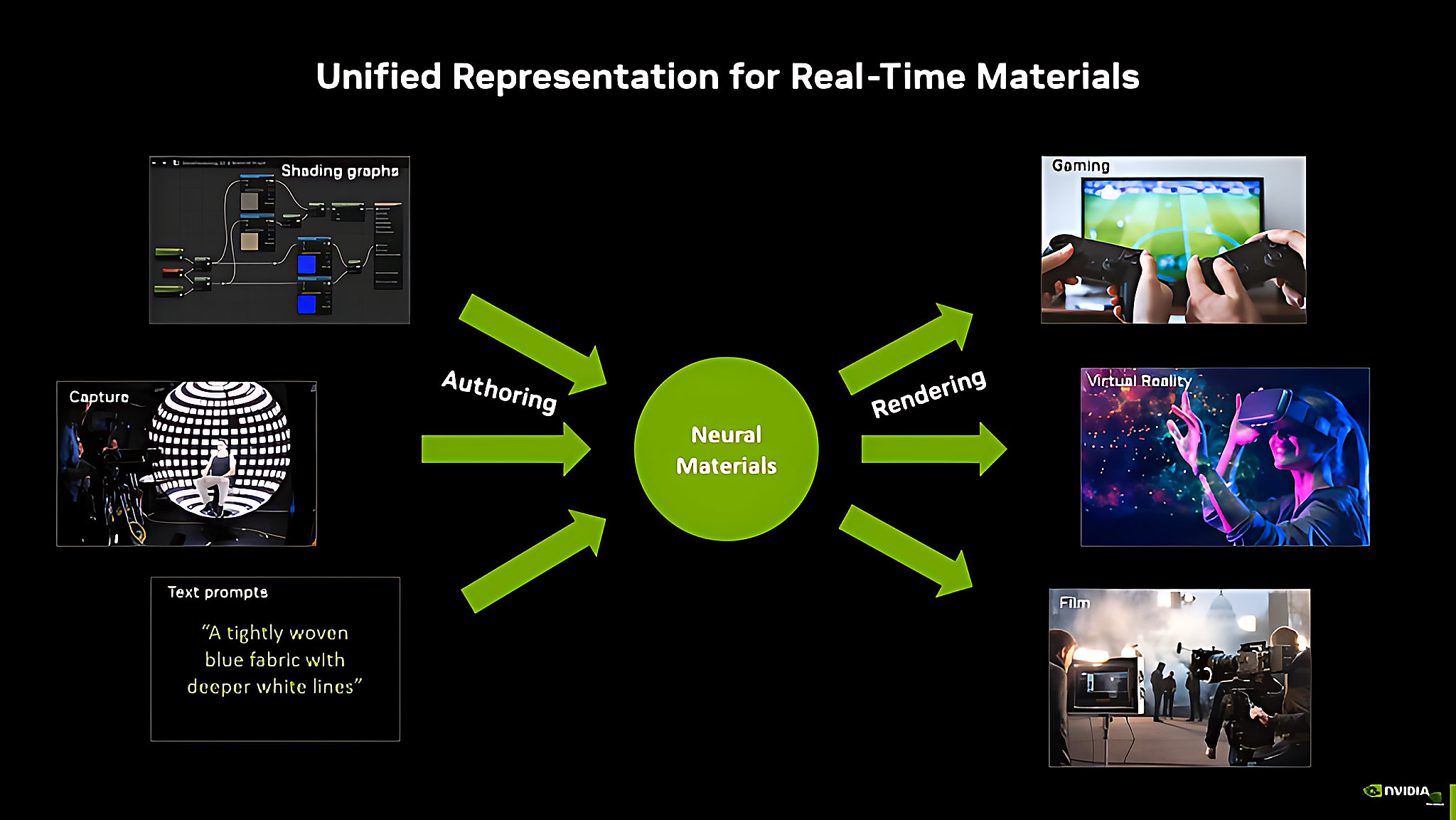
Notably, Shader Model 6.10 does not appear as a standalone feature. It comes alongside Cooperative Vectors, LinAlg, and a more flexible memory management layer so that developers can bundle many small AI processing steps directly into the graphics pipeline. If game engine developers leverage this well, PC games in the next few years could reduce VRAM pressure while maintaining more stable visuals.
What do Cooperative Vectors and Neural Block Texture Compression signal for next-gen GPUs?
If you need an easy-to-visualize example, Neural Block Texture Compression is the clearest answer. In the article regarding DirectX's Cooperative Vectors, Microsoft and NVIDIA described a new approach: instead of storing textures using fixed compression blocks and decompressing them the old way, games could use a tiny neural network to reconstruct textures exactly when the shader needs them. The goal is to reduce VRAM pressure and asset size while maintaining image quality.
| Technology | Role | Benefit |
|---|---|---|
| LinAlg / Matrix API | Calls matrix operations more directly | Lays the foundation for real-time AI shaders |
| Group Wave Index | Identifies wave position within a processing group | More stable task distribution across multiple GPUs |
| Variable Group Shared Memory | Expands shared memory based on GPU capability | Suited for large workloads and AI texture compression |
| Neural Block Texture Compression | Uses small neural networks to represent textures | Reduces VRAM and asset size |
At GDC 2025, Microsoft stated that Intel demonstrated Neural Block Texture Compression running approximately 10 times faster when utilizing Cooperative Vectors. This isn't a promise that games will load 10 times faster soon, but it shows that this direction is starting to have empirical data rather than just being a concept.
From an ecosystem perspective, this move can also be seen as the underlying piece behind the rapid advancements in upscaling technologies on PC, from AMD FSR to NVIDIA's neural shading SDKs. The difference is that Shader Model 6.10 is not a feature for users to toggle in a game menu, but a lower-level standard layer that allows developers to write more sustainable code for multiple GPUs. If driver and tool stability continues, neural rendering on Windows will move much closer to practical application.