
The battle over graphics has never cooled off, with two "giants," AMD and Nvidia, constantly playing strategic cards to win over gamers. While Nvidia is holding a temporary lead with DLSS 4.5, the "Red Team's" recent silence turns out to have been preparation for a surprising leap forward. A beta build of AMD FSR 4.1 has just leaked on major tech forums, promising a revolution in sharpness for Radeon graphics cards. In practice, this update is not only a sharp reply to its rival but also a "revival tonic" for aging rigs, making in-game visuals more vivid and detailed than ever.
Hands-on results show impressive sharpness and detail
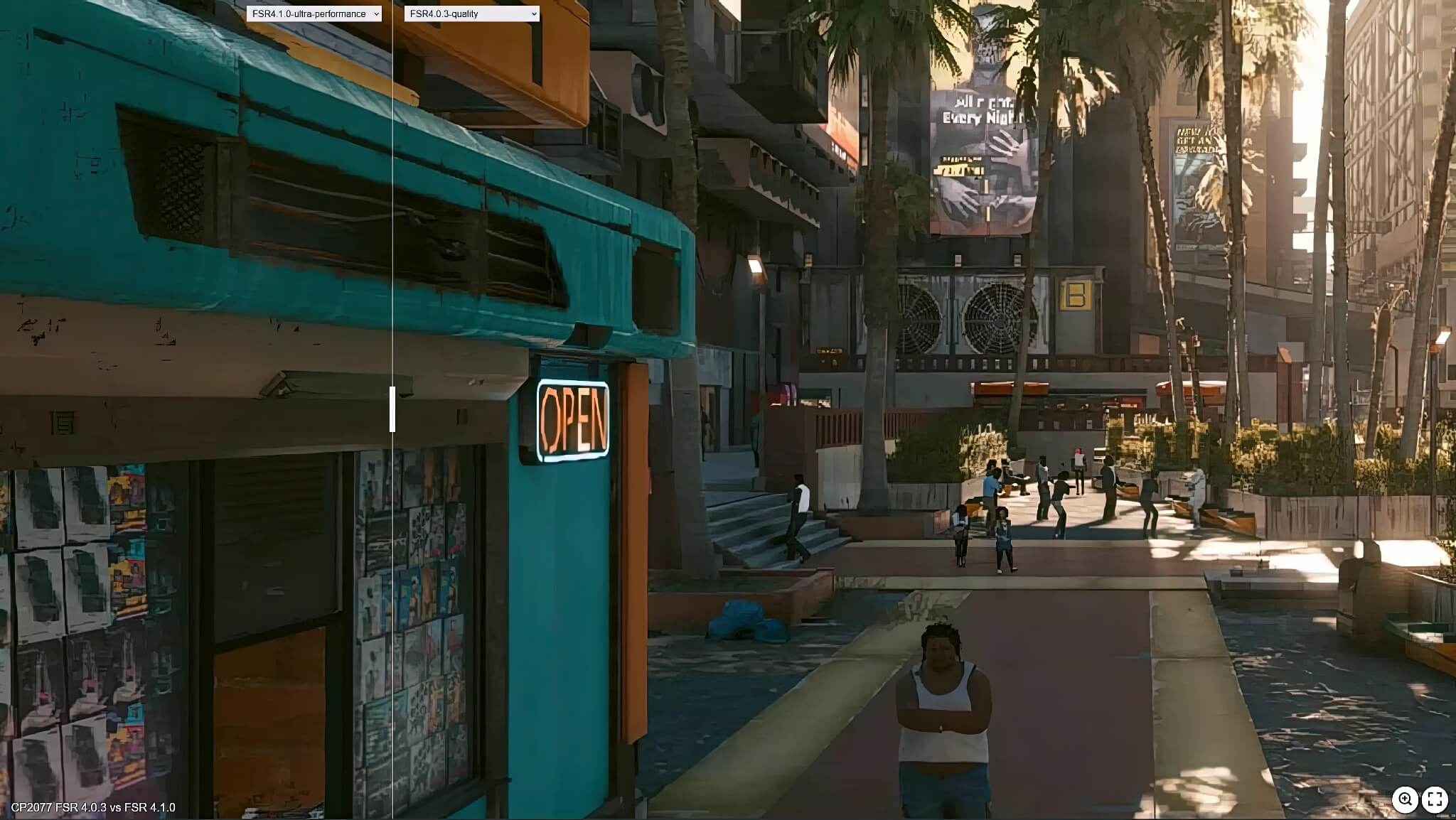
The most valuable part of the leaked FSR 4.1 update is its remarkably smart image processing, which noticeably reduces the blur that has long been a weakness of older upscaling technologies. Based on side-by-side comparison images from the community on Guru3D and Reddit, the difference between version 4.1 and the current public release is very clear, even at the same frame rate. Fine details such as fabric surfaces, gaps between leaves in a forest, and shadows at a distance are all reproduced distinctly and sharply, delivering a visual experience so faithful that it feels like looking at a photograph rather than a virtual space rebuilt by an algorithm.
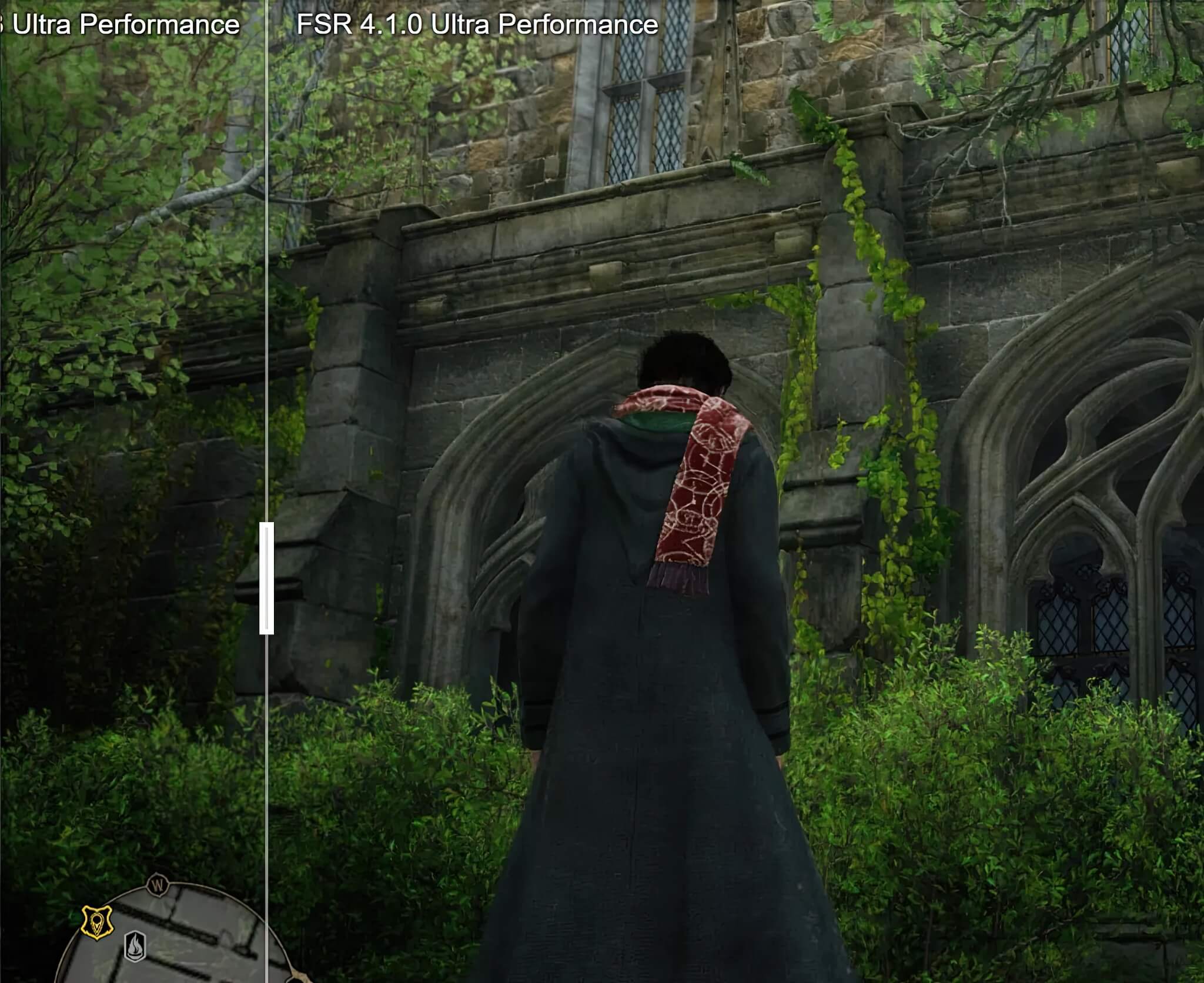
It doesn't stop there. In practice, FSR 4.1 shows its strength even in the harshest situations, such as Ultra Performance mode at 1080p resolution. In big titles like Cyberpunk 2077 and Hogwarts Legacy, surface textures on both near and distant objects improve noticeably, and the sharpness even approaches that of the older 4.0.3 version's Quality mode. In the wizarding world of Hogwarts Legacy, grass and bushes are no longer smeared blobs of color but appear crisp and clear, helping you sink fully into the game's fantasy setting. This level of image optimization shows that AMD is genuinely focused on real-world value rather than chasing flashy frame rate numbers on a spec sheet.
Hardware muscle and long-term value for older GPUs
Looking at the technical side, although FSR 4.1 is designed to get the most out of the latest Radeon RX 9000 series graphics cards, AMD has not abandoned its loyal customers. The most notable part of this leak is the unofficial INT8 mode support for older cards such as the Radeon RX 7000 and RX 6000 series. That matters a great deal to gamers who own previous-generation rigs or handheld gaming PCs with limited hardware. Although frame rates may not jump as dramatically as on newer machines, the improved image quality will extend the usable life of these components, delivering lasting economic value for professional users.
The technology's long-term usefulness is also underscored by the efforts of the modding community and tools like OptiScaler. In practice, even though AMD has not officially supported FSR 4 on the Vulkan interface, modding methods have made it relatively easy to enable the technology, opening the door to a wide range of other titles. If you're worried that your hardware is about to become obsolete, the arrival of FSR 4.1 is a quiet pledge that AMD is still working on software optimization to deliver the best results for its customers. Our practical advice is to get ready to update to the latest Adrenalin driver, because the official release may well arrive alongside the blockbuster Crimson Desert on March 19.
In short, the leaked AMD FSR 4.1 shows that the smart graphics era is entering its most explosive phase yet. A focus on real-world sharpness and image detail will make Radeon cards more competitive than ever against Nvidia's offerings. Supporting older GPUs as well is a considerate and wise move by AMD to strengthen the trust of its fans. Would you like me to walk you through checking whether your Radeon card is compatible, and how to set it up optimally so you're ready for this much-anticipated update the moment it officially launches?