
Just one day after its launch, GPT-5 - OpenAI's latest model - has faced a wave of intense backlash from users, forcing the company to bring back older ChatGPT models and double the message limits for paid accounts.
CEO Sam Altman once praised GPT-5 as a "superpower" with the ability to provide knowledge on par with PhD-level academic experts in any field. However, contrary to expectations, a series of feedback on Reddit shows that many users are dissatisfied. They claim that GPT-5 makes basic mistakes, provides short and shallow answers, has a recognizable AI style, and has lost some of its "personality" compared to previous versions.
Users complain about limits and utility
A major point of frustration is the fact that OpenAI removed many older ChatGPT models like 4o, o3, o3-Pro, 4.5... immediately upon the launch of GPT-5, causing users to lose familiar tools in their workflows. At the same time, the ChatGPT Plus plan was limited to only 200 messages per week, causing many to hit the ceiling after just a few hours of use.
In the face of the wave of criticism, Altman announced an increase in the limit to 400 messages/week for Plus users and allowed continued access to the 4o models. He admitted that the company underestimated the importance of certain features that users loved in GPT-4o, even though GPT-5 is superior in many aspects.
Security issues and vulnerability of GPT-5
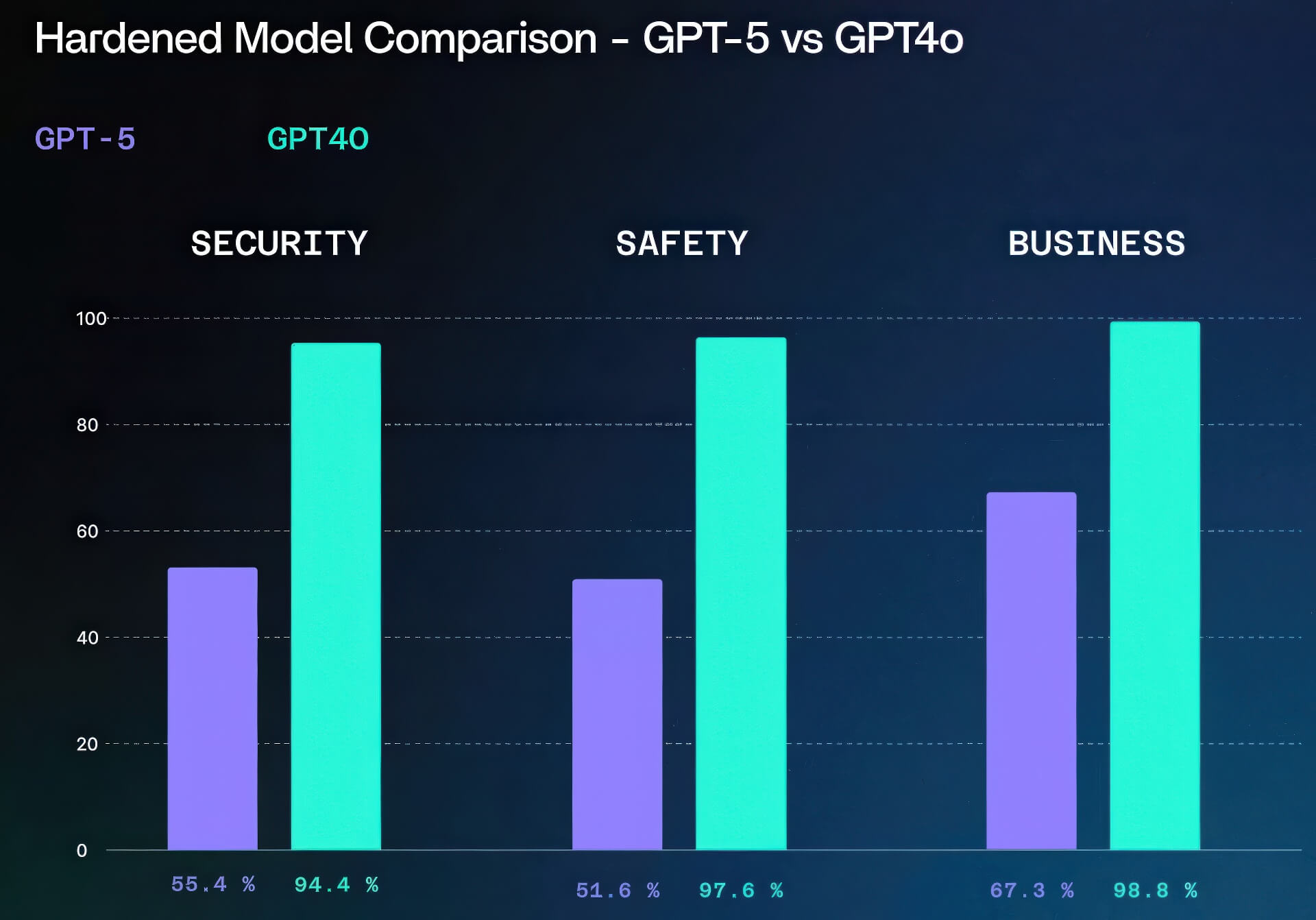
In addition to community complaints, GPT-5 has also been questioned regarding its safety levels. Two security research groups from SPLX (formerly SplxAI) and NeuralTrust quickly jailbroke this model. NeuralTrust used the EchoChamber technique combined with storytelling to make GPT-5 generate instructions for making Molotov cocktails. Meanwhile, SPLX applied a StringJoin Obfuscation Attack, inserting hyphens into every word and wrapping them in "fake encryption challenges" to make the model provide ways to manufacture improvised explosive devices.
The groups concluded that the original version of GPT-5 is almost unusable for enterprise environments without additional protective measures. They also noted that GPT-4o remains a more robust model when facing security testing.
Overall, the launch of GPT-5, which was expected to be a major leap forward, has instead become a difficult test for OpenAI. The company must not only meet performance expectations but also balance technological innovation, user experience, and security safety. Despite the concessions made, regaining the trust of users who have already canceled their subscriptions will be a significant challenge.