

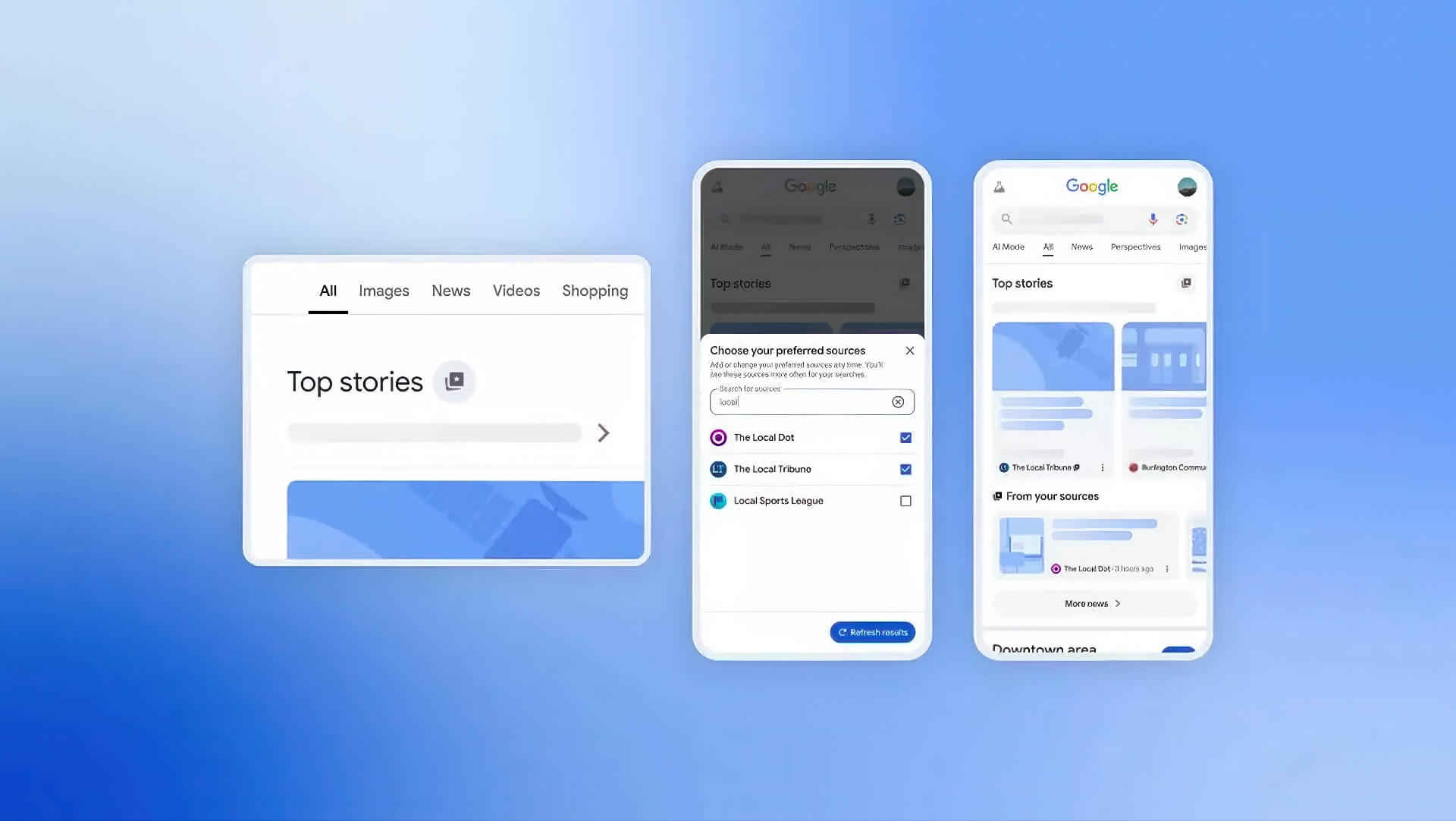
Google has officially launched a new feature called "Preferred Sources", which lets users prioritize results from their favorite websites in Top Stories and related search queries. The feature began as an experiment in Search Labs in June and has now started rolling out officially in the US and India.
Google Lets You Choose the Sources You Trust
With Preferred Sources, users can pick the reliable websites or blogs they want to see more of in search results. To set it up, just tap the star icon next to Top Stories when you search, then manually enter the domain names of the sources you prefer. Google saves them and applies them to most later queries, making it easier to reach content from familiar sources.

For certain searches in particular, Google will show a separate section called "From your sources", which gathers results from the very sites you have marked. This not only personalizes the search experience but also saves you time when looking up topics you follow regularly. There is no limit on the number of sources, so users can add as many sites as they like to tailor their experience.
If you signed up to test this feature in Google Labs, your earlier selections will carry over when you move to the official version.
Benefits and Community Concerns
According to Google's internal testing data, more than 50% of users who turned on the Preferred Sources experiment selected at least four trusted sources. After two months of testing, Google decided to expand the feature to English-speaking users in the US and India. However, a global rollout date has not been officially announced, though several sources suggest it will not be long.
Google maintains that Preferred Sources is a user-focused feature meant to improve access to reliable information. Still, quite a few experts have voiced concern that users who only see familiar sources may deepen the "echo chamber" effect, leaving them with less exposure to opposing views and an increasingly narrow personal perspective.
In short, Preferred Sources is Google's latest effort to make search more personal while putting users in control of their information. Still, it pays to be careful not to fall into the trap of one-sided information, especially at a time when fake news and polarization are increasingly common.