

OpenAI's current financial model reflects immense pressure to retain core personnel-the individuals directly driving the company's technological breakthroughs. The willingness to spend heavily on equity compensation has completely redefined the concept of competitive salaries in the artificial intelligence sector. This move not only sets a new standard but also raises the risk profile for any company participating in the race to shape the future of this high-potential tech field.
OpenAI offers unprecedented compensation in tech history
Latest internal financial disclosures reveal that OpenAI is distributing more equity per employee than any major tech startup recorded in history. According to data shared with investors, the company's stock-based compensation averages approximately $1.5 million per worker, applied across a workforce of about 4,000 people. This massive figure far exceeds any standards set by industry peers in the past.
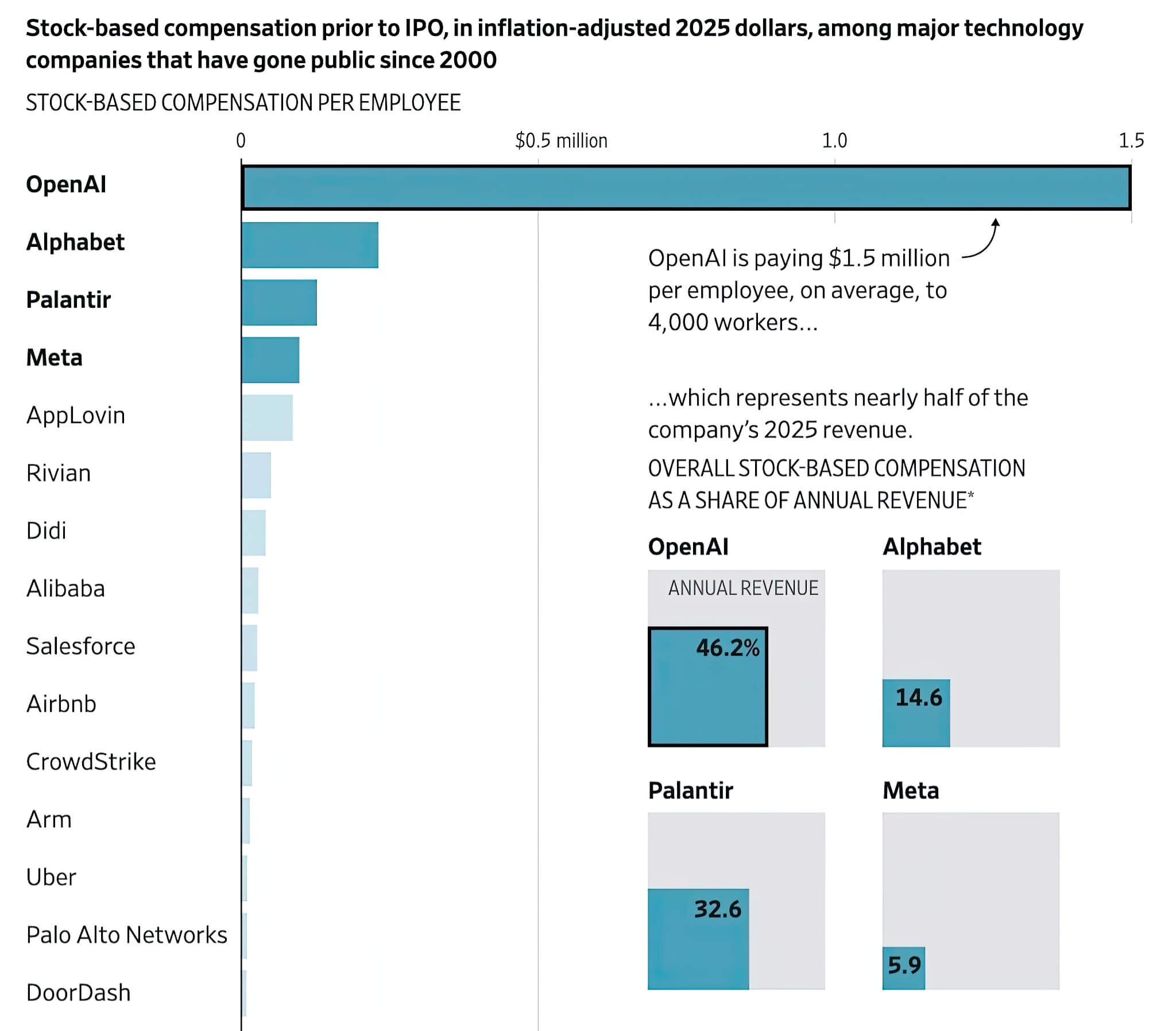
To help readers visualize the scale of this compensation, if adjusted for inflation to 2025 dollar values, this figure is seven times higher than the stock compensation reported by Google in 2003-one year before the search giant's initial public offering (IPO). An in-depth analysis by the Wall Street Journal, based on data from 18 other major tech companies, shows an even more staggering disparity. Specifically, OpenAI's average equity compensation is 34 times larger than the typical compensation for pre-IPO companies over the past 25 years, according to data compiled by compensation research firm Equilar. Currently, OpenAI has declined to comment on these figures.
This data marks an extraordinary shift in how leading artificial intelligence (AI) companies compete for talent. Founded less than a decade ago, OpenAI is now paying researchers and engineers at levels previously reserved for heavily capitalized companies nearing an IPO. According to people familiar with OpenAI's finances, these stock-based compensation packages aim to secure the company's leadership in the AI arms race, although this also means driving up operating costs and diluting shareholder value.
Fierce talent wars and future financial burdens
Personnel costs have skyrocketed as competition for elite AI specialists intensifies. This wave of salary increases accelerated significantly after Meta CEO Mark Zuckerberg began offering compensation packages worth hundreds of millions of dollars-and in rare cases, up to $1 billion-to senior AI researchers and executives as part of an aggressive recruitment campaign. This "headhunting" effort has lured away more than 20 OpenAI employees, including ChatGPT co-creator Shengjia Zhao, forcing the company to issue one-time retention bonuses last August, with some valued at millions of dollars.

Financial projections shared with investors indicate that OpenAI expects its stock-based compensation costs to increase by approximately $3 billion annually until 2030. This underscores the central role of compensation incentives in the company's growth strategy. In another move likely to drive costs even higher, the company recently terminated its policy requiring employees to work at least six months before their equity vests. This move has removed a standard barrier typically used by most Silicon Valley companies to manage turnover risk.
By 2025, OpenAI's compensation costs are projected to account for up to 46% of total revenue. This is a higher ratio than any major tech company before its IPO, with the exception of electric vehicle manufacturer Rivian, which reported zero revenue in the year before its IPO. For comparison, Palantir's stock-based compensation cost was only 33% of revenue in 2020, Google's stood at 15% before its IPO, and Facebook's was a mere 6%, according to Equilar's analysis. On average, pre-IPO tech companies typically allocate only about 6% of revenue to stock compensation, highlighting OpenAI's unprecedented level of risk-taking in the current landscape.