
The panic surrounding the computer hardware shortage is largely focused on the historic price hikes affecting RAM, but few realize that similar underlying pressures are pushing the cost of solid-state drives (SSD) to unprecedented levels. Recent price comparisons reveal a startling reality: in extreme cases, the value of an SSD today can be compared to gold, literally. Even traditional HDDs, which are famous for their budget-friendly prices, are not entirely escaping this price storm.
Comparing the actual value between SSDs and pure gold
A Reddit user nicknamed Dark_Marmot recently made the shocking claim that Western Digital's most expensive WD Black SSD line is currently worth 70% more than 24-karat gold by weight. While the average price of SSDs on the market remains much lower than the "realm" of gold, quick calculations by reputable tech sites like TechSpot and Tom's Hardware paint a different picture. Accordingly, some massive 8TB SSD models have actually surpassed the value of gold, and 4TB models are rapidly approaching this price point.
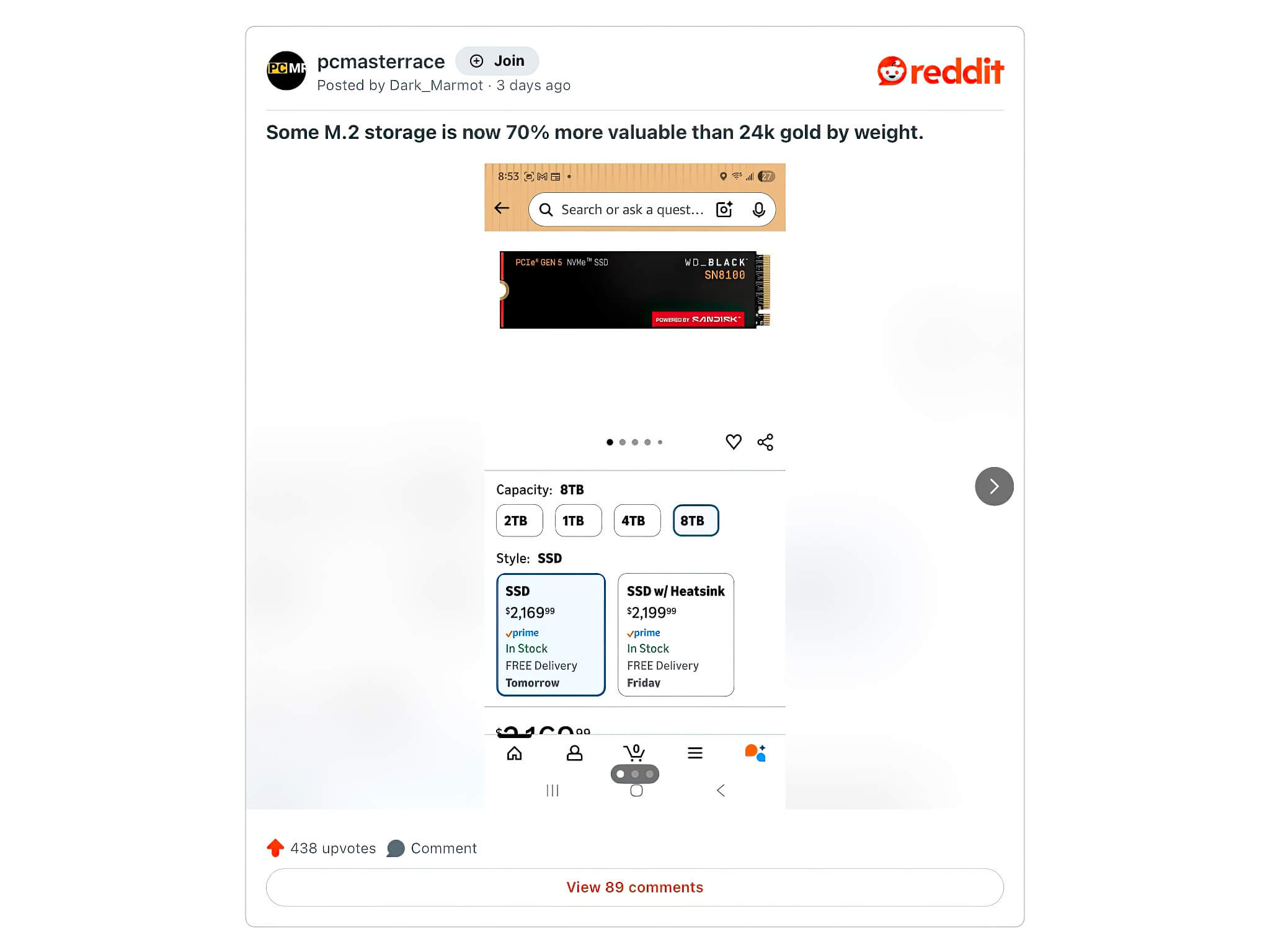
To clarify, let's look at the specific numbers. Comex Live currently prices gold at approximately $4,601 per ounce. An 8TB WD Black SN8100 SSD weighs only 8.6 grams (excluding the heatsink), which is equivalent to about $1,396 worth of gold. Last October, this SSD was priced at $1,000, meaning it was nearly at parity with its gold weight. However, the price of this product surged to $2,169.99 earlier this month (currently discounted from a list price of $2,308.99). Although this figure has not yet reached the "70% more expensive than gold" rumor, the sudden doubling of the price highlights just how strained supply has become.
Meanwhile, the 4TB version is priced at $1,144.99 and weighs only 7.5 grams. When converted, this weight corresponds to a gold value of $1,217. Thus, the value of this drive is only slightly lower than pure gold. Tom's Hardware also reported similar figures after surveying prices across various retailers.
Of course, it is important to note that the SN8100 is a high-end SSD line. Currently, it leads the list of recommended PC storage drives under the new SanDisk brand. However, the upward price trend is not limited to the high-end segment. Data from PCPartPicker shows that the average price of 2TB and 4TB SSDs has risen sharply since last autumn, currently approaching price points of approximately $300 and $600, respectively.
Impact on the HDD market and the cause from memory chip shortages
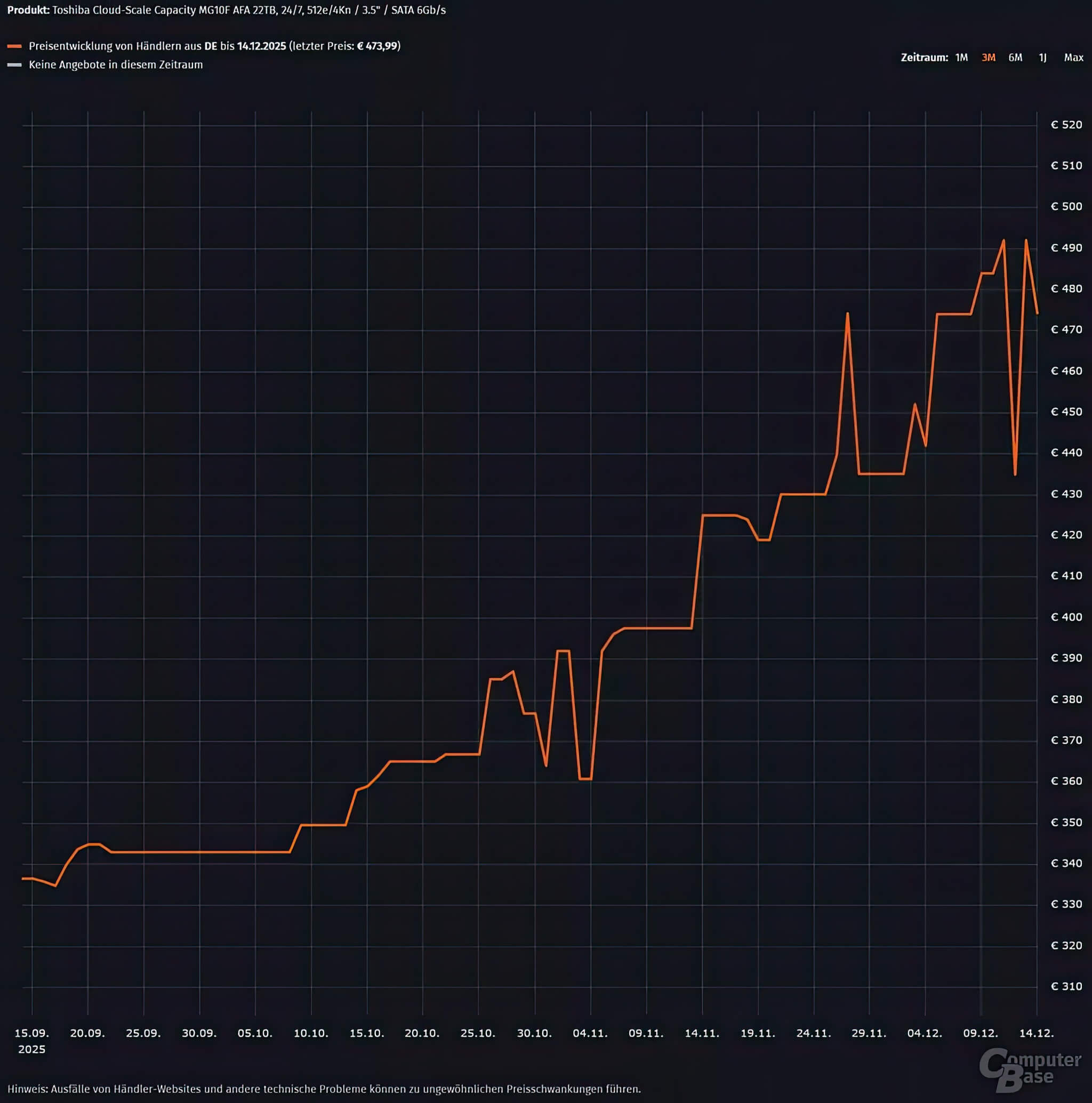
Meanwhile, while the storage thirst of the AI industry has not significantly impacted HDD prices in the United States, the situation in Europe is markedly different. According to a report from ComputerBase, the average price of HDDs in Europe has increased by 46% since September. This headline figure even masks significant volatility in reality. A survey of about a dozen hard drive models ranging from 4TB to 30TB showed that while some drives only increased in price by 20 to 30%, others are currently priced 50 to 60% higher than just four months ago.
The root cause of this situation stems from AI technology companies actively acquiring and stockpiling DRAM and NAND production capacity to serve data center expansion plans as the industry boom continues. Leading memory chip manufacturers like Samsung and SK Hynix have responded by increasing DRAM prices by up to 70%. Since early November, the spot price of 16Gb (2Gx8) DDR4 memory has more than tripled, escalating from $28 to $90. This rapid change has even driven a limited revival of the older DDR3 memory type.
With the current momentum of artificial intelligence and the massive hardware demand accompanying it, industry leaders now predict that this supply shortage will last at least until the end of 2026. This means that general consumers may continue to face expensive computer component prices for a long time to come.