

The habit of "searching Google" every time the body shows unusual signs has become a natural reflex for millions of Vietnamese users. Now, instead of having to manually filter information from dozens of familiar blue links, Google provides a neat summary synthesized by Artificial Intelligence (AI). However, a shocking recent study has revealed a worrying truth: the "doctor" behind those medical advice snippets is not prestigious hospitals or medical journals, but rather... YouTube.
YouTube becomes the number one source for Google AI
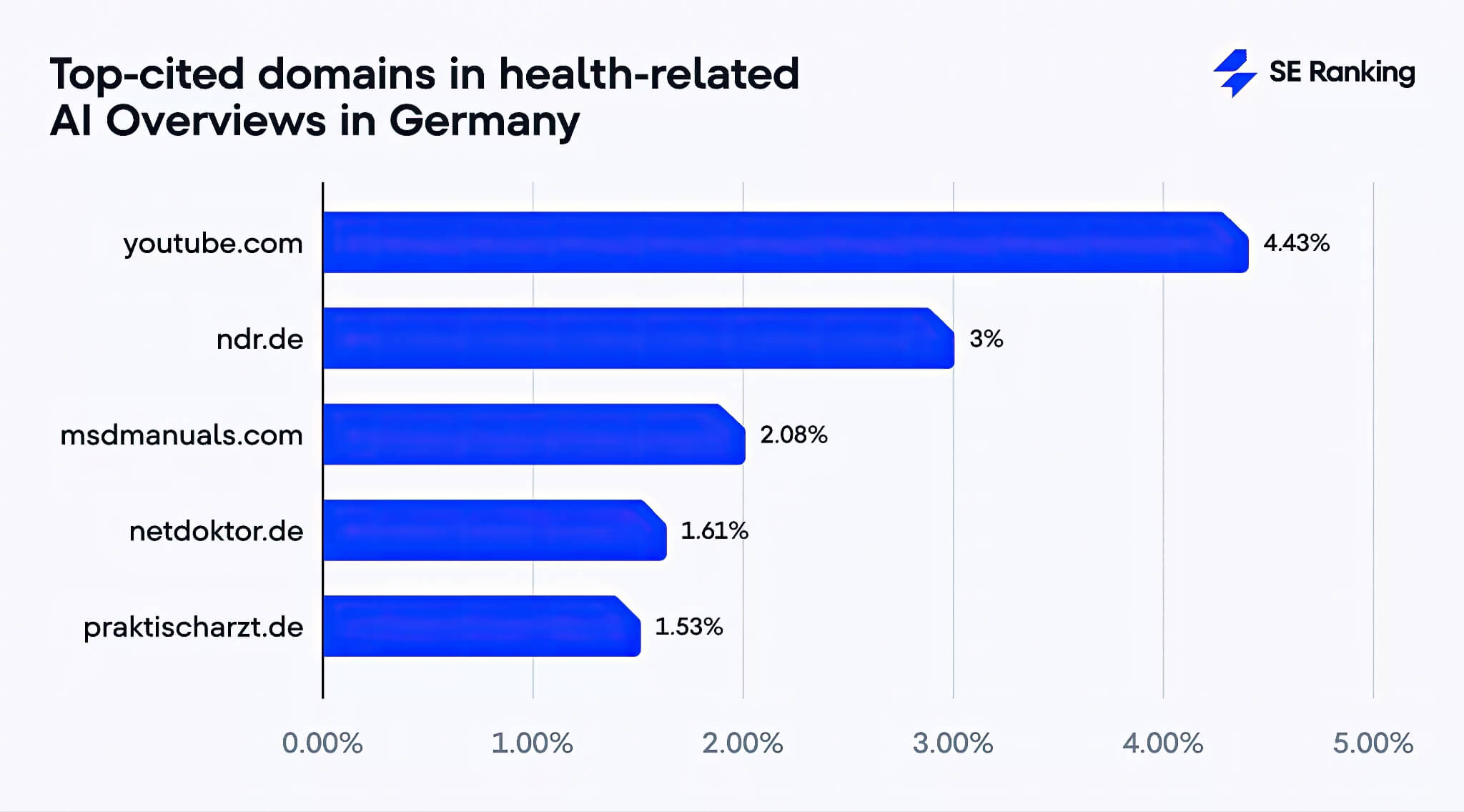
A large-scale analysis conducted by SE Ranking, a platform specializing in Search Engine Optimization (SEO), surveyed over 50,000 health-related queries in Berlin in December 2025. The results show that Google's AI Overviews feature-an automated tool that summarizes answers-cited YouTube as a source more than any other source. Specifically, this video platform appeared in 4.43% of total citations, completely surpassing renowned hospital networks, ministries of health, or specialized academic websites.
This turns YouTube, the world's second most visited website, into the most influential factor in shaping how AI explains medical conditions to users. This is an alarming paradox for a tool that Google always claims "displays high-quality content from authoritative sources." In reality, YouTube is not a medical publisher. On an open platform where anyone-from leading professors to lifestyle vloggers or even "online healers"-can upload content, the reliability of information is an extremely unpredictable variable.
In the ranking of sources favored by AI, YouTube leaves other competitors far behind. Germany's public broadcaster NDR ranked second with over 3%, followed by the prestigious medical reference site MSD Manuals (2.08%). These figures show that even in a market with strict medical censorship regulations like Germany, Google's algorithm is still being "blinded" by the popularity of videos rather than the accuracy of medical texts.
When algorithms prioritize "virality" over accuracy
Responding to this issue, a Google representative stated that their AI system extracts reliable information "regardless of format" and emphasized that many medical experts also own their own YouTube channels. The search giant argued that among the 25 most cited YouTube videos, up to 96% came from verified medical channels. However, researchers quickly pointed out a flaw in this argument: those 25 videos account for less than 1% of the total YouTube citations in the study-a figure far too small to represent the entire picture.
The core issue lies in the AI's operating mechanism. Hannah van Kolfschooten, a researcher at the University of Basel, remarked that the heavy reliance on YouTube indicates the system is being driven by "visibility and popularity" rather than "medical reliability." In other words, a video of folk remedies with millions of views and high engagement might be evaluated by AI as "more important" than a dry but accurate scientific report from a top-tier hospital.
These concerns are not unfounded. Previously, an investigation by The Guardian recorded many cases where Google's AI provided inaccurate, even dangerous, medical summaries, including misinformation about liver function tests. Although Google has temporarily suspended AI for certain sensitive queries, SE Ranking's research suggests this is a systemic error rather than an isolated incident. When AI learns from popularity, misleading but engaging information will always have the chance to sneak into your health advice.
In summary, while waiting for Google to refine its algorithm, users need to keep a cool head. AI Overviews can be very convenient for grasping preliminary information, but they should absolutely not be considered a final diagnosis. When it comes to health, verify information from official sources or consult a doctor, rather than entrusting your life to algorithms that are "addicted" to watching YouTube.